
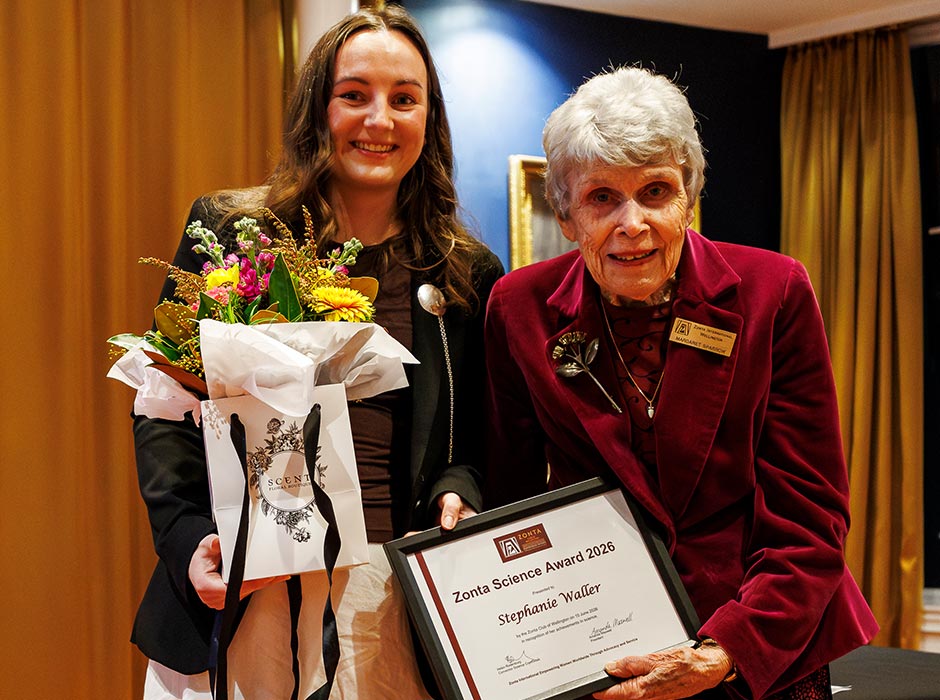
Dr Stephanie Waller being presented with her 2026 Zonta Science award by former President of the Zonta Club of Wellington and well-known New Zealand medical doctor and reproductive rights advocate Dame Margaret Sparrow.
Dr Stephanie Waller has been awarded the 2026 Zonta Science Award for her work on viruses in New Zealand wildlife and her commitment to advancing women in science.
Stephanie, a Postdoctoral Research Fellow in the Department of Microbiology and Immunology, researches the diversity, evolution, and transmission of viruses in wildlife, particularly birds and other ecologically important species in Aotearoa New Zealand. Her work helps improve understanding of emerging infectious diseases, biosecurity risks, biodiversity conservation, and public health.
The Zonta Science Award is presented biennially and recognises excellence and achievement by women in science.
Amanda Maxwell, President of the Zonta Club of Wellington, said Stephanie's work demonstrates the value of investing in scientific research and emerging scientific leaders.
“Dr Waller is conducting research with real-world relevance to New Zealand’s wildlife, biosecurity and public health. She is also an inspiring role model for young women considering careers in science, and we are delighted to support the next stage of her career.”
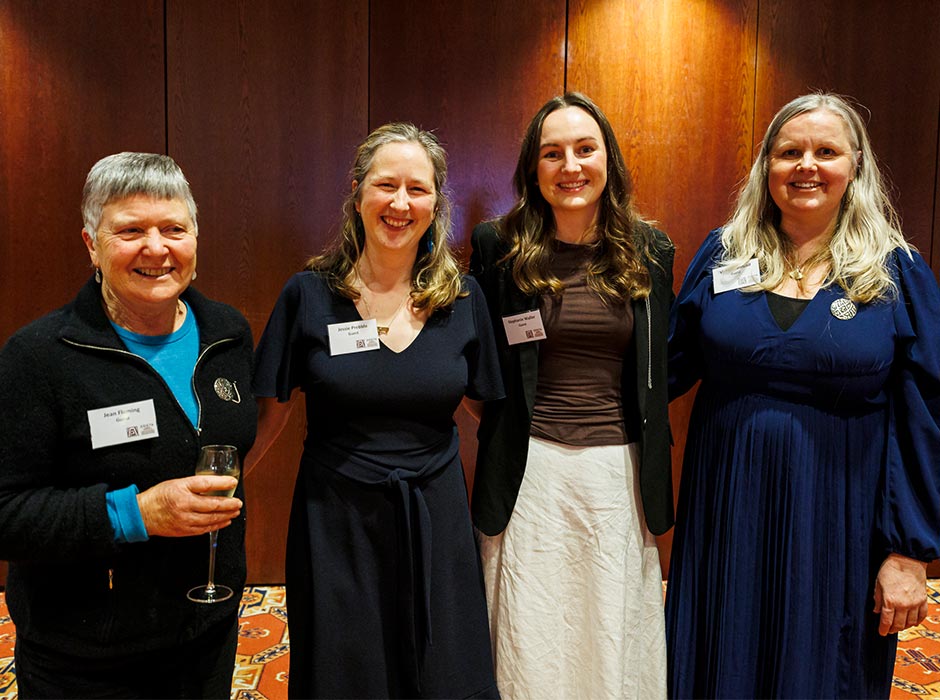
Dr Stephanie Waller (third from the left) with her 2026 Zonta Science award, alongside Professor Emerita Jean Fleming, Dr Jessie Prebble, and Dr Victoria Metcalf – all former recipients of the Zonta Science Award.
She says the judging panel was impressed by Dr Waller’s scientific achievements, growing international reputation, and dedication to science communication, mentorship, and supporting the next generation of women in STEM.
The award includes a $20,000 grant to support research and career development, enabling Stephanie to attend international conferences and professional development opportunities, strengthening collaborations and bringing new knowledge back to New Zealand.
Stephanie says she’s deeply honoured to receive the award.
“I am incredibly grateful to Zonta for their support. Awards such as this play an important role in recognising and supporting women in science, particularly at a career stage where opportunities to develop new skills, build international collaborations, and establish research independence can have a lasting impact.
"I hope this recognition helps encourage more young women to consider careers in STEM and highlights the valuable contributions women are making across the scientific community.”
The research
Stephanie is involved in several research projects using genomic approaches to understand the spread of viruses.
A major focus in her current work is the ecological factors that influence viral transmission and disease risk in birds.
“Highly pathogenic avian influenza virus H5N1 has caused millions of bird deaths worldwide and has now spread to every continent, now including Oceania. We had little understanding of the viruses harbouring in New Zealand’s migratory birds, particularly those found in the subantarctic islands, something that has created a blind spot in New Zealand’s avian influenza virus surveillance.
"Consequently, I have been involved in a project sampling thousands of migratory birds from across New Zealand and the subantarctic islands to figure out what viruses they have, and the factors promoting viral host jumping.
"To date we haven’t detected the highly pathogenic avian influenza virus H5N1 but this work has helped to better understand disease risks and support national biosecurity efforts.”
Alongside avian influenza research, Stephanie is also investigating disease in wildlife, livestock, and insects, including canine distemper virus outbreaks in New Zealand fur seals, viral pathogens in agricultural systems, and the diversity of viruses associated with mosquitoes.
– Kōrero by Claire Grant, Communications Advisor, Faculty of Biomedical Sciences
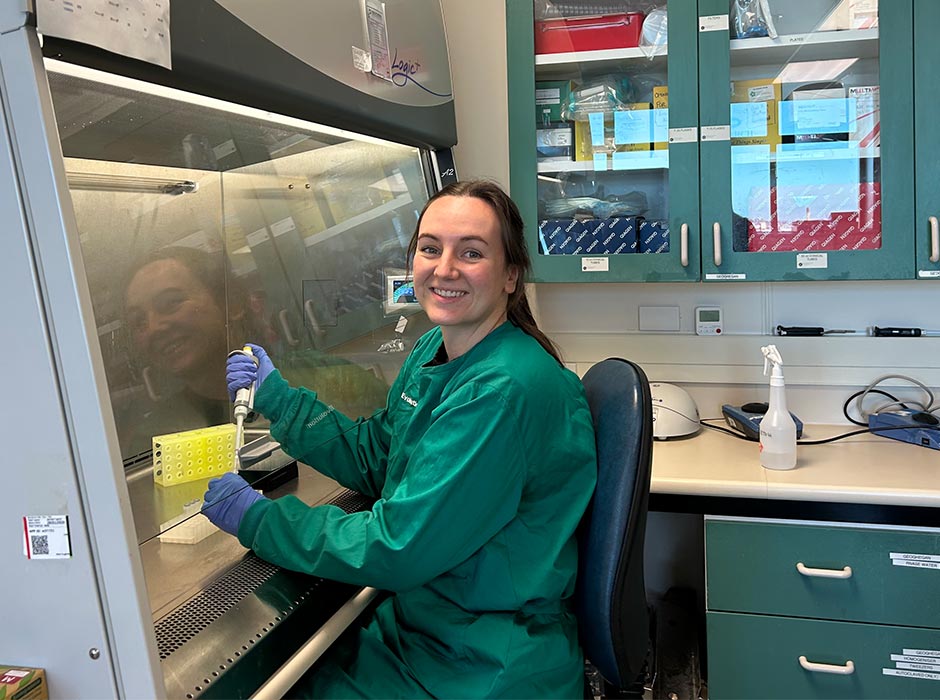
Dr Stephanie Waller, working on wildlife viruses in her Department of Microbiology and Immunology lab.
Microbiology and Immunology
The Department of Microbiology and Immunology offers high quality undergraduate and graduate training in the fields of environmental, medical and molecular microbiology, genetics and immunology.
More about the Department