
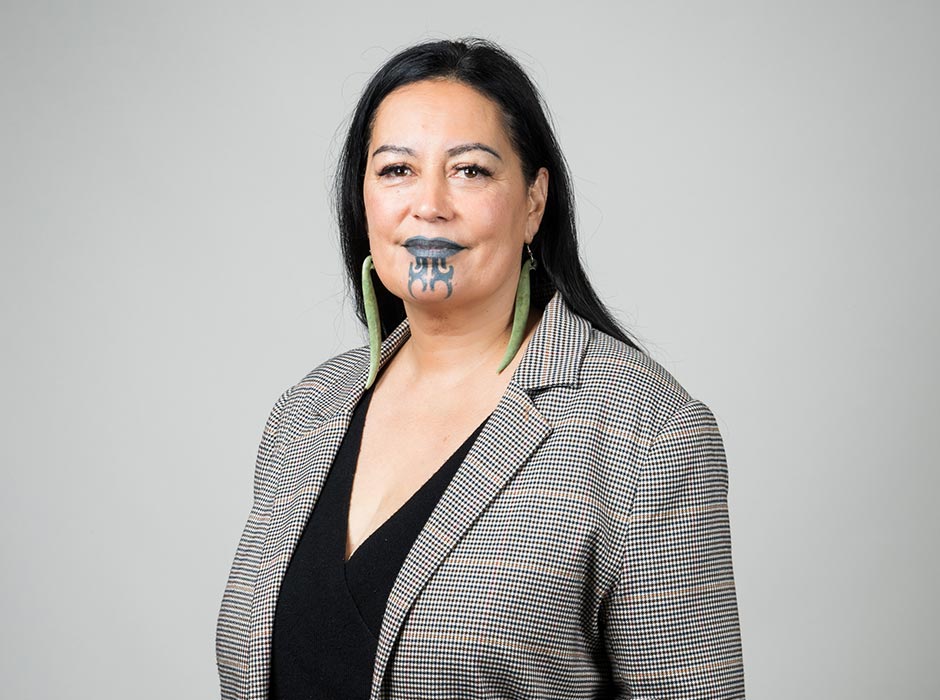
Kare Tipa begins her role as Otago’s first Kaiwhakahaere Kaupapa Toitū Te Reo kaimahi in July.
“I puta atu tēnei i Te Pakiaka
Whakawhitia ki te whaitua
Te Kopa Iti a Raureka
Ki te Kāwei Hue o Maahunui
Heke whakararo ki te Takutai o te Tītī
Murihiku whenua toto
Moeraki toto whenua
Araiteuru, māua ki uta māua ki tai
He tūhaka tēnei nā te kāhui hekeka o Tiramōrehu
Ko Kare Tipa tōku ikoa”
- Pepeha of Kare Tipa
With whakapapa to Te Tai o Poutini and Kaiapoi, born in Murihiku and raised in Ōtepoti, Te Tumu lecturer Kare Tipa is well placed to step into a new role in response to the Pae Tata strategic plan.
Kare is set to start as the University of Otago’s inaugural Kaiwhakahaere Kaupapa Toitū Te Reo kaimahi.
In her new role, Kare will help Te Reo Māori flourish amongst staff and students alike, strengthening content, delivery, and methodology.
Kare’s story reflects her upbringing in intergenerational knowledge and values that taught her what it means to be Māori.
“The Araiteuru coastline affixes me to the environments of my ancestors,” Kare says.
“Our upbringing was shaped by seasonal kai foraging, manaakitanga, and the guiding values of tapu and noa, these were the tikanga that defined what it meant for us to be Māori.”
Kare’s upbringing saw moments of adversity, there were times she experienced racial abuse during her upbringing in Dunedin, “it was like being caught in the contradictions of a colonised reality", she recalls.
Yet despite these challenges, Kare found comfort in community and culture. Te Huinga Rangatahi, a local cultural club in Dunedin, and the Rātana Church provided Kare a connection to her Māoritanga.
"Whilst waiata and kapa haka nourished me I felt I needed more; those experiences sparked a deep longing for my language.
“During the 1980s, te reo Māori was barely visible in Dunedin’s schools or public life, we were told there were few career prospects in te reo. But even then, something in me resisted that message.”
After having her first child, Kare enrolled her daughter at Dunedin’s only kohanga reo at the time. This motivated Kare’s commitment to learn te reo Māori.
In the early 1990s, she took her first grammar-based te reo Māori lessons through Te Wāhanga Māori at Ōtākou Whakaihu Waka.
“It wasn’t easy at first, but with my head in the game the fire of te reo Māori had started to flicker.”
In 1995, Kare moved to Auckland, the following year she moved to the Hawkes Bay where she eventually joined Te Whare Takiura o Kahungunu.
It was there she found herself surrounded by first-language te reo Māori speakers and passionate reo Māori advocates. Among these people she found mentors to guide her in her journey, some of whom were Tama Toa veterans who were instrumental in the 1970s language protests and policy change.
- Kōrero by Brigham Riwai-Couch, Māori Communications Adviser
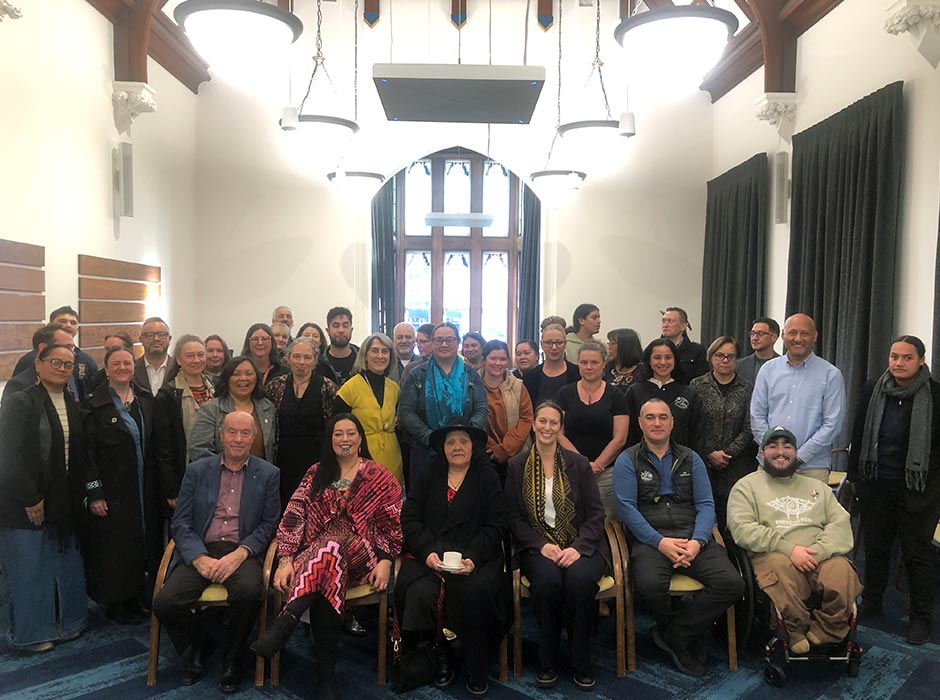
Whānau and friends gathered to support Kare at her mihi whakatau which was held on the 30 June.
One of her most influential mentors was Sir Tīmoti Karetū, the inaugural head of the Department of Māori at the University of Waikato, and the first Māori Language Commissioner in Aotearoa.
Under his guidance, Kare joined Panekiretanga, and attended international language conferences in Canada and Spain. These haerenga contributed to Tīmoti’s Travels, a documentary celebrating te reo Māori and indigenous language preservation worldwide.
Having moved back to Ōtepoti in 2021, Kare is now deeply involved in important kaupapa throughout her community, judging manukōrero and kapa haka competitions, serving as a director for Te Rūnaka o Moeraki, and supporting iwi-led initiatives.
Kare has a passion for Māori performing arts, design, and promoting a stronger awareness to care for the taiao.
She brings with her a wealth of knowledge and an array of skills, acquired over years of dedication, commitment, and passion to the University whānau.
“Te reo Māori is a conduit to culture, it connects us to living better, and thinking deeper. Te reo builds stronger relationships through engagement with the natural world and our fellow humans.
“Māori language is fundamental to any vocation here at Ōtākou Whakaihu Waka. I‘ve had the esteemed pleasure of teaching budding minds at Te Tumu, and it has been even more pleasurable to witness students’ command of the language in personal and professional contexts.
“The flow-on effect te reo has in communities on the young and old is like watching wellbeing in action.”
Kare acknowledges conscientised moments of learning from tautohito (experts), Te Wharehuia Milroy, and Materoa Haenga.
“These two stalwarts invested audaciously in the revitalisation of te reo Māori and its practices in their lifetimes.
"Through the ōhākī (parting words) of my late mother, I am conscious, ‘kia whakahaumanutia te reo Māori hei reo kōrero ia rā’ to strive and restore te reo Māori as an everyday language in every context of life.”
– Kōrero by Brigham Riwai-Couch, Māori Communications Adviser