
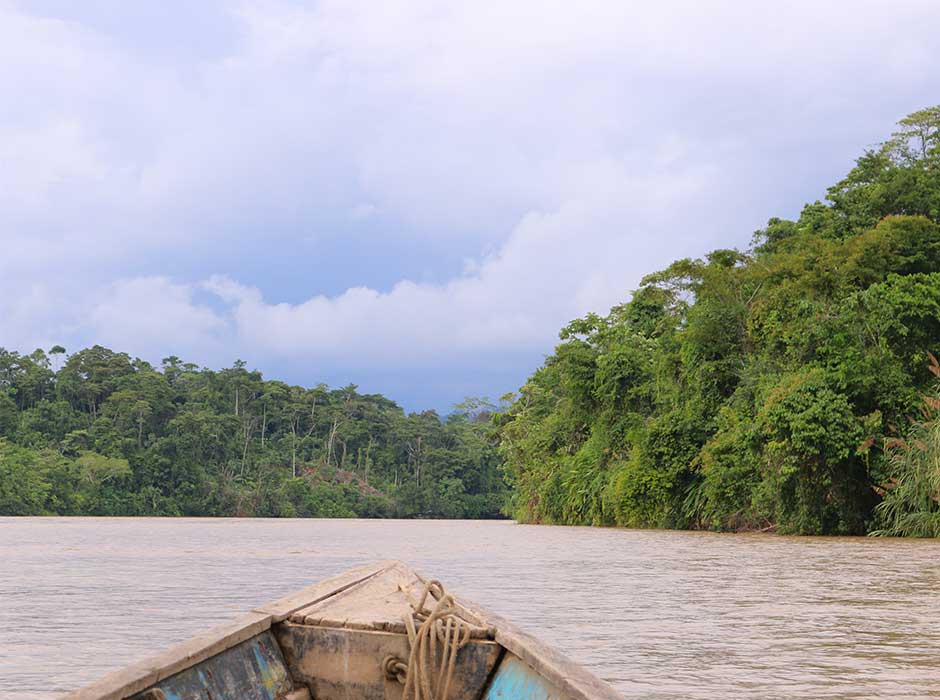
Otago linguist Dr Simon Overall has been visiting the Amazon area for over 20 years. “My research has been a great collaborative experience. I keep going back because I love it.”
There is magic in the traditional songs of the Awajún, an Indigenous people of northern Peruvian Amazonia.
Otago linguist Dr Simon Overall has been visiting this area for over 20 years and explains what gives these songs their powers.
“A magic song usually addresses a spirit or entity and asks for their favour. Traditionally there is a song for every purpose, for example gardening, hunting or love. These love songs can be to attract someone, and there’s even one for when you are returning home after cheating on your spouse.”
“They are very individual, so a person sings it to themselves. You can hum it, sing it, play an instrument, sing it in your head — it doesn’t matter, it is the intention that is important,” says Simon.
The songs are passed down by elders, and the way they are learned is also what makes them magic.The elder chews and spits out tobacco, which is widely regarded as a learning tool, and the learner inhales the juice through their nose before learning the song.
The lyrics of these songs are also performed as an art form and can be heard in songs of the ‘Cumbia’ music genre, which reaches from Colombia down through Peru.
“I am struck by how the Awajún culture is relatively modernised, but these songs are something traditional that people really latch on to,” says Simon.
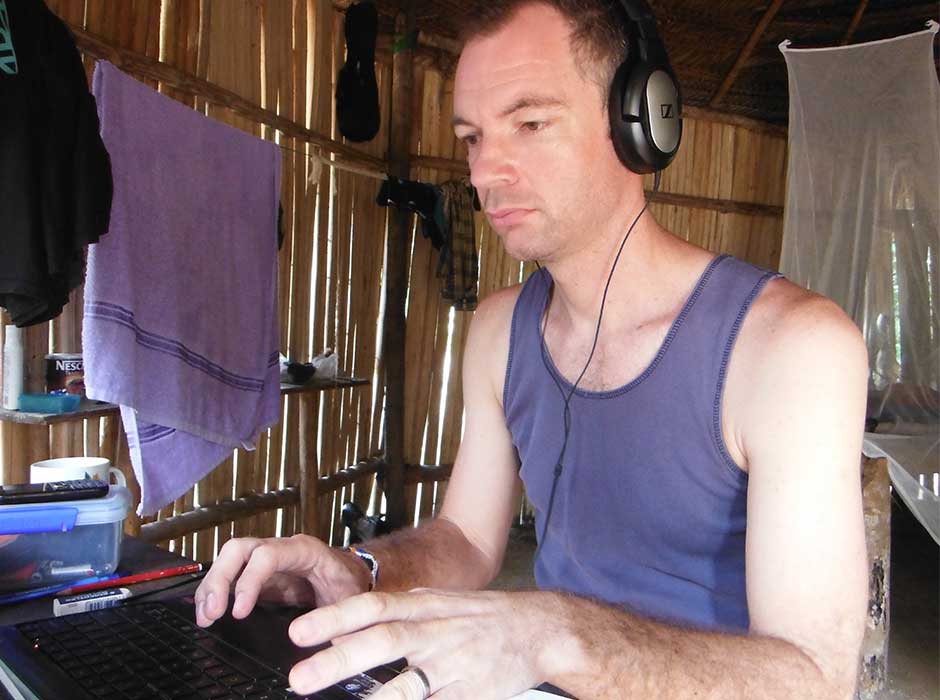
Simon has received a research grant to record the magic songs of the Awajún. The recordings will be made in close collaboration with Awajún organisations, and copies provided to the communities to support the preservation and renewal of the song form.
“These songs are incredibly interesting for many reasons. One of the things I think is really lacking in previous research is the collaboration with the singers and people who are part of that community to get a sense of their feeling about these songs, and their meaning and importance.”
Simon has received a University of Otago Research Grant to record this special genre of songs.
In the project Magic Songs of the Awajún (Northwest Amazonia) he will make audio and video recordings.
The recordings will be made in close collaboration with Awajún organisations, and copies provided to the communities to support the preservation and renewal of the song form.
The recordings will also enrich the academic community’s understanding of the tradition. Simon’s analysis will explore how cultural values are expressed through language and verbal art, and how this can foster positive environmental outcomes.
The Awajún are one of the largest Indigenous groups in Peruvian Amazonia, which is the area of the Amazon rainforest in Peru, east of the Andes and reaching Peru’s borders with Ecuador, Colombia, Brazil and Bolivia.
Simon first visited the area as a Doctoral student at La Trobe University in Melbourne. His thesis became the first published grammatical study of this language.
“Amazonian languages are known for being very linguistically interesting and very little was known about them in academic circles,” Simon says.
“My research has been a great collaborative experience. I keep going back because I love it.”
Listen to an example of an Awajún song performed in the Cumbia style in the video below.
-Nā Communications Advisor | Kaiarataki Pārokoroko Antonia Wallace
Linguistics at Otago
Linguistics is the study of language in our minds, in our cultures, and in our actions.
View