
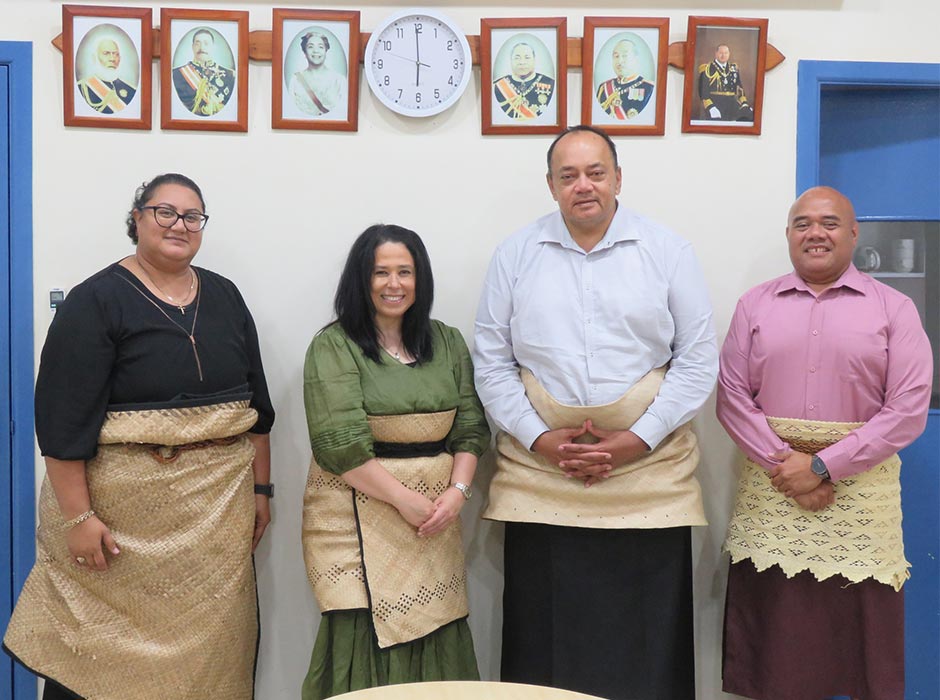
Otago’s Deputy Vice-Chancellor Pacific Professor Dianne Sika-Paotonu recently visited Tonga to talanoa and strengthen valued partnerships face to face. One of her stops was Tonga’s Ministry of Health, where discussions recognised their leadership and commitment to addressing health inequities and improving outcomes for Tonga. Pictured, from left, are Chief Nursing Officer Mele Filise, Dianne, Hon. Hu'akavameiliku Siaosi Sovaleni (Minister of Health) and Dr Reynold ‘Ofanoa.
For Otago’s Deputy Vice-Chancellor, Pacific, Professor Dianne Sika-Paotonu, a recent trip to Tonga provided opportunity for connection, engagement and talanoa.
The visit, which took place over four days in February, focused on strengthening connections through in-person engagement with key institutions and leaders. It provided an opportunity to acknowledge and honour existing relationships, while also exploring how the University can continue to support and serve these valued partnerships in practical, meaningful, and sustainable ways moving forward.
“It’s always wonderful to visit my homeland of Tonga, and although this wasn’t the first time representing the University of Otago – Ōtākou Whakaihu Waka, it was my first visit to Tonga as Deputy Vice-Chancellor, Pacific.
Meeting with Tongan leaders, academics and government officials, the conversations acknowledged longstanding partnerships and the many connections and collaborations already in existence between staff at the University of Otago – Ōtākou Whakaihu Waka and different groups and entities in Tonga.
The visit was an opportunity to celebrate longstanding partnerships and reaffirm the University’s commitment to strengthening relationships across the region.
“At their core, these relationships are grounded in a shared commitment to service,” Dianne says.
“Whether the work is centred in Tonga or in Aotearoa New Zealand, the underlying motivation remains the same: service to our communities, service to our students, and service to our staff. This shared purpose provides a strong and enduring foundation for partnership.”
Tonga National University - 'Univesiti Fakafonua 'a Tonga
One of Dianne’s key visits was to the recently established Tonga National University (TNU), where she met with the new Vice-Chancellor Dr Giulio Masasso Paunga and Deputy Vice-Chancellor Dr Tangikina Moimoi Steeen and other senior staff members.
“Otago has a strong existing relationship with TNU and both universities are keen to explore opportunities for building and strengthening collaboration further,” Dianne says.
“Our discussions together focused on the current shared goals within the tertiary sectors and higher education, teaching, research and service domains, and how our institutions could develop collaborations further to continue to build, grow and develop for Pacific moving into the future.
“Moving forward, both institutions are looking forward to exploring further opportunities for strengthening existing collaborations and building new ones.
“It was a privilege to talanoa together, and to highlight the contributions of Tongan staff members from the University of Otago – Ōtākou Whakaihu Waka, and also discuss further collaborative partnerships building on these incredible efforts made already, and moving into the future.”
Tonga’s Ministry of Health & Vaiola Hospital, Tongatapu
Dianne also had the opportunity to meet with Tonga’s Minister of Health Hon. Hu'akavameiliku Siaosi Sovaleni, who is also a former Prime Minister of Tonga. In attendance were Tonga’s Chief Medical Officer, Dr Reynold Ofanoa, and Chief Nursing Officer Mele Filise.
“This meeting acknowledged the long-standing relationships between Tonga’s Ministry of Health and the University of Otago,” Dianne says.
“The discussions gave further opportunity to support the growth and development of these pre-existing working relationships and collaborations, and also explore further possibilities around new connections and partnerships.”
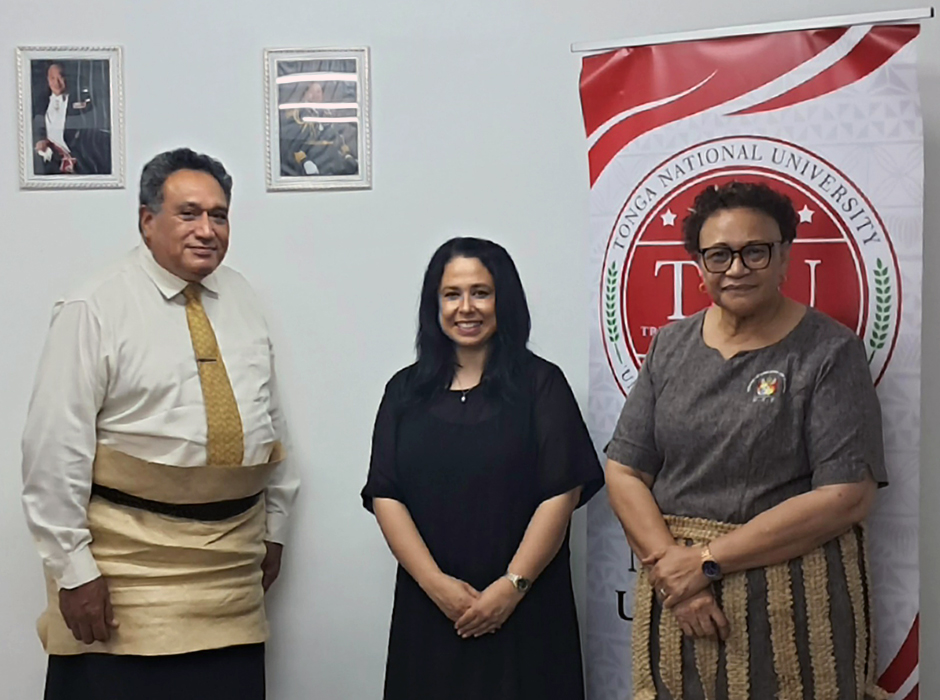
Deputy Vice-Chancellor Pacific Professor Dianne Sika-Paotonu also visited Tonga National University - Univesiti Fakafonua ‘a Tonga, where Dianne met with Vice-Chancellor Dr Giulio Masasso Paunga, left, and Deputy Vice-Chancellor Dr Tangikina Moimoi Steen.
The University of Otago has a very long history of connection and collaboration with the Ministry of Health in Tonga. Otago has played a key role in training many Tongan health professionals and doctors who are now alumni and who have spent time working in the Pacific region and beyond.
“Otago has a very proud history of impactful, inspiring and influential Pacific leaders, staff and students, and also includes many Tongans. From the Honourable Dr Sione Tapa, a former Minister of Health in Tonga, to Tongan alumnus Dr Xaviour Walker who is a medical consultant specialist with triple American Board certified in Internal Medicine, Geriatric Medicine, Public Health and Preventive Medicine. There are many other Tongans to name from a highly distinguished and inspiring list of Tongan leaders and pioneers connected with Otago, with those I’ve mentioned are only two.
“The Ministry of Health in Tonga is located in close proximity to Vaiola Hospital on Tongatapu, Tonga’s main island, and is home to the country’s principal hospital. The discussion with Tonga’s Minister of Health and senior health leaders reaffirmed the importance of maintaining strong institutional relationships that support both clinical practice and academic collaboration,” Dianne says.
Ha’apai Hospital
Another significant stop on the visit was the Princess Fusipala Hospital in the Ha’apai island group of Tonga.
Dr. Siale ‘Ataongo Hausia currently leads the Princess Fusipala Hospital and is the Senior Medical Officer there. Dr Hausia took time to offer a tour of the facilities, meeting the incredible staff along the way.
“These visits offered an important reminder of the incredible work done by incredible people in Tonga,” Dianne says.
“An opportunity also to reconnect and to reaffirm Otago’s ongoing commitment to building, growing, and supporting relationships across the Pacific.”
During her time in Ha’apai, Dianne met with dedicated health professionals, staff, and local leaders, taking the opportunity to engage directly with those delivering essential healthcare services in the region.
Opened in 2019, the hospital was built to replace earlier facilities that were severely damaged by Category 5 Cyclone Ian in 2014. The new hospital stands as a symbol of resilience and renewal for the Ha’apai community, continuing to play a vital role in delivering healthcare services across the island group.
“Recognition and understanding of the diverse contexts within Pacific communities are paramount. These are critical to building meaningful partnerships and working together effectively in service of shared goals.”
This visit also held deep personal significance for Dianne, who has family ties to Ha’apai.
“It was an honour to return to Ha’apai, the place where my mother was born. To be able to return in a professional capacity, to strengthen connections, and explore ways to give back to the local community made this experience especially meaningful for me.
“In my academic teaching role, it was always incredibly valuable to speak from my own experiences and also share pictures from the Pacific, especially with my medical students, bringing these contexts to life in a way that goes far beyond textbooks.”
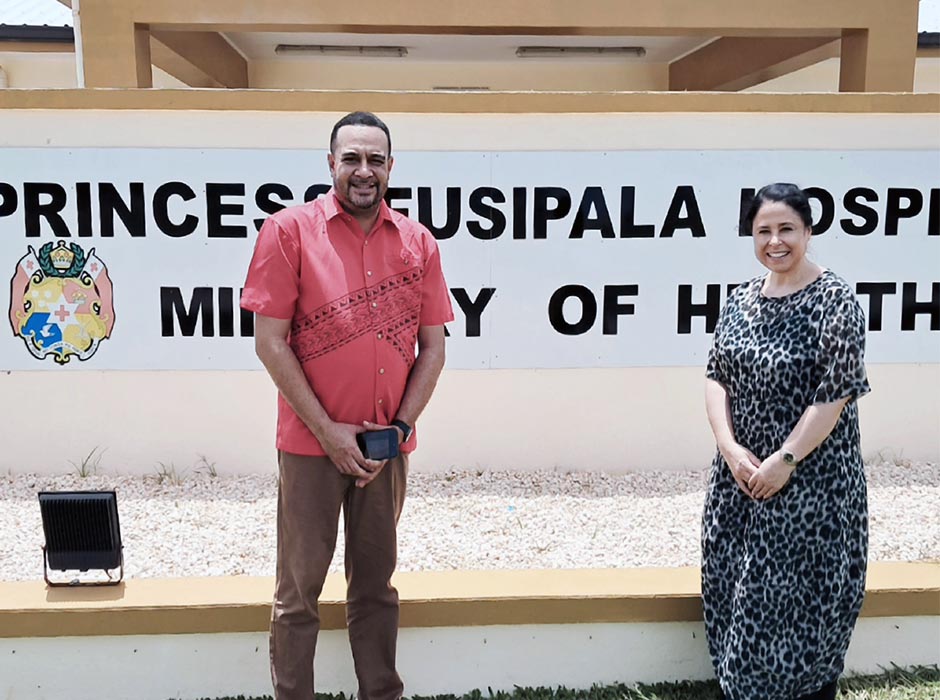
Pictured at Princess Fusipala Hospital in Ha’apai, Tonga, left to right: Chief Medical Officer Dr Siale ‘Ataongo Hausia and Deputy Vice-Chancellor Pacific Professor Dianne Sika-Paotonu. The visit recognised their shared commitment to strengthening health services and ongoing collaboration.
Looking ahead
For Dianne, these visits reflect the University of Otago’s broader commitment to the Pacific – closely aligned with its strategic priorities and its dedication to working in genuine, respectful partnership with Pacific communities.
Central to this commitment is a focus on supporting the advancement, wellbeing, and aspirations of Pacific peoples through sustained collaboration across education, health, and government sectors.
“These visits are about more than maintaining relationships - they are about deepening them in ways that are meaningful and mutually beneficial. By continuing to listen, learn, and work alongside Pacific communities, we can strengthen our support and ensure that our partnerships contribute in practical and lasting ways.”
By connecting across education, government, and health sectors, the trip represents not only a celebration of existing partnerships but also a strong foundation for continued collaboration.