
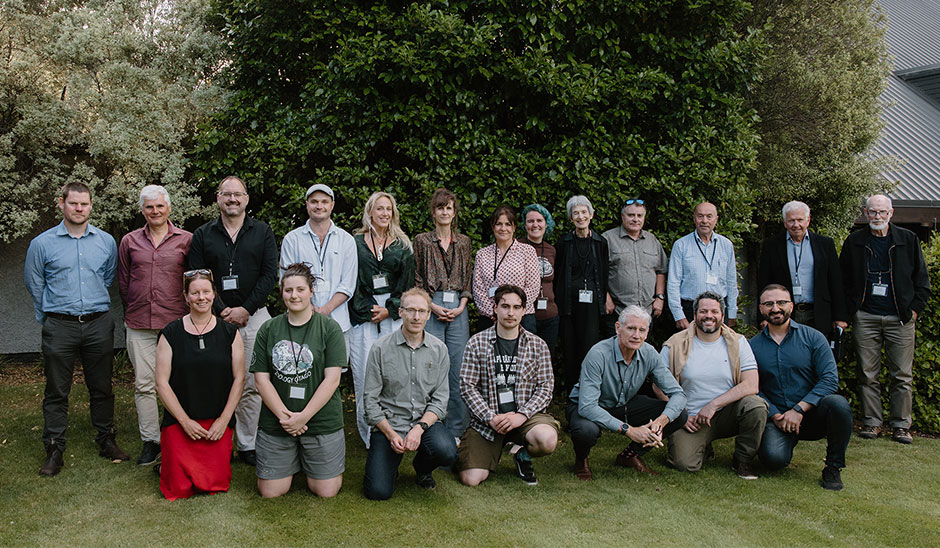
Speakers from Day 2 of the Alpine Lakes Forum including Professor Ross Thompson (back row, third from left), Emerita Professor Dame Carolyn Burns (back row, fifth from right) and scientists from University of Otago, WAI Wānaka, Otago Regional Council, Te Rūnanga o Ōtākou and a range of other agencies. Photo: Nat Symonds, Run In The Shadows
A large cohort of Otago scientists contributed their expertise to a recent wānanga held in Wānaka that focused on the health of Otago’s deep lakes and alpine freshwater ecosystems.
The 2025 Alpine Lakes Forum, hosted by WAI Wānaka and supported by the University, Te Rūnanga o Ōtākou and the Otago Regional Council, brought together stakeholders and community members connected by a shared interest in the lakes.
Otago’s inaugural Dame Carolyn Burns Chair of Freshwater Sciences, Professor Ross Thompson, says the Forum allowed stakeholders from a diversity of interests to share their views and concerns for the lakes, and an opportunity to discuss research taking place.
“We know there are growing and changing pressures on the freshwater systems of the area,” Ross says.
“The lakes are under known pressures from farming intensification, but what is becoming very clear are the additional effects of rapidly increasing urbanisation.”
He explains a key area of discussion at the Forum was what best practice looks like for development in these sensitive catchments.
“The research showcase highlighted the appetite for partnering in many ways with landowners and farmers, and with the wider community who raised interest in engaging with monitoring and citizen science activities.
“It was reassuring to hear that all the levels of government, research agencies and communities agree on the challenge and the imperative of working together to provide solutions.”
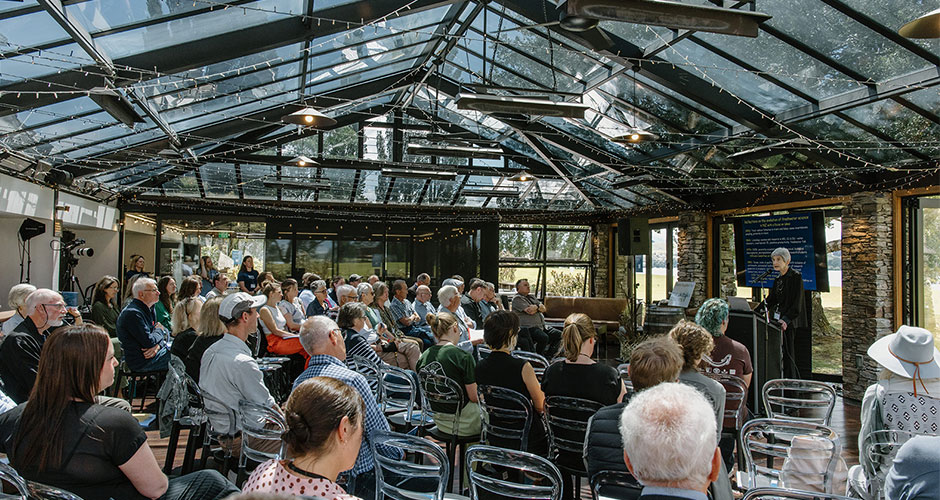
Emerita Professor Dame Carolyn Burns opens day two of the Alpine Lakes Forum with a talk on the history and function of lakes in Aotearoa New Zealand. Photo: Nat Symonds, Run In The Shadows
Emerita Professor Dame Carolyn Burns set the scene on the second day of the Alpine Lakes Forum with her opening plenary talk on the history and function of lakes in Aotearoa New Zealand.
Dame Carolyn says she was delighted to see attending members of the public take a strong interest in the Forum.
“I believe it reflects a growing public interest in, and respect for, science and science-based inquiry,” Carolyn says.
“I also believe it shows there are escalating needs for more basic scientific research on New Zealand’s freshwater ecosystems.”
Otago has been involved with a wide variety of research on Otago’s lakes, such as the extensive work undertaken on lake invasives by Associate Research Professor Marc Schallenberg.
Freshwater ecology postgraduate student Alice Gilbert also presented her work investigating microplastics in fresh water, which she has undertaken as a WAI Wānaka Summer Scholar.
WAI Wānaka CEO Cat Dillon says the partnership with academics and students is strengthening the evidence base, while building the knowledge and expertise needed to support meaningful action.
"We recognise that there are still significant gaps in our understanding of lake health, particularly around the pressures driving recent declines,” Cat says.
“Our partnership with the University of Otago brings together deep technical and research expertise with strong community engagement, helping us turn knowledge into action and accelerate better outcomes for freshwater health."
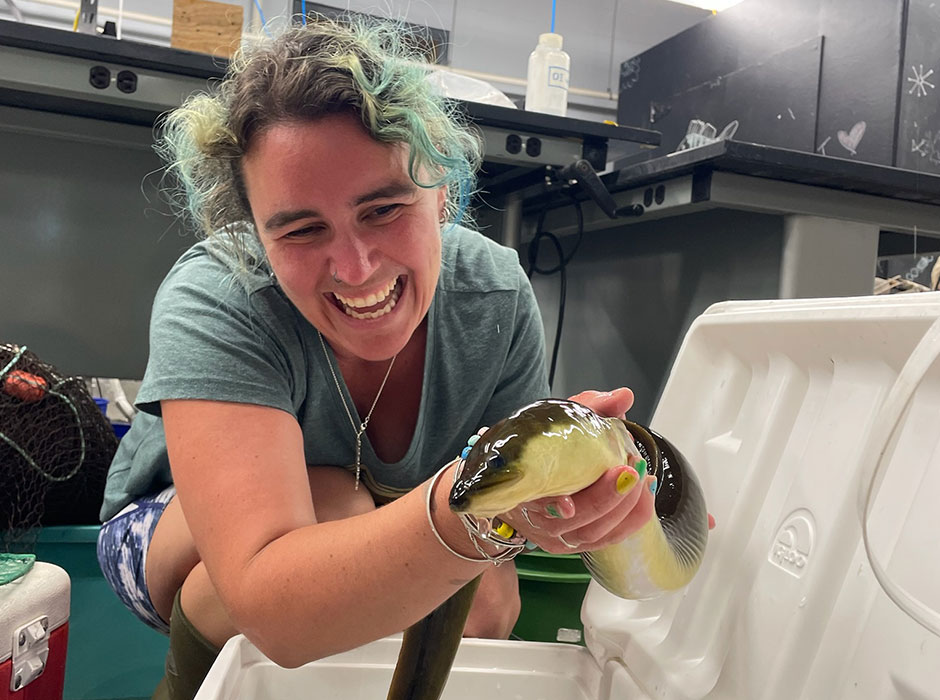
Mana Tūāpapa Future Leader Fellow Dr Roe Stuart has started researching the diversity and ecology of animals in eight deep lakes in the South Island. Here Roe holds an American eel (Anguilla rostrata) collected from Lake Champlain in Vermont, USA.
Looking ahead, Mana Tūāpapa Future Leader Fellow Dr Roe Stuart, based in the Department of Zoology, has started researching the diversity and ecology of animals in eight deep lakes in the South Island, including Lake Wānaka.
Roe says they’re excited about the project and its potential for discovery, as it’s the first of its kind to explore depths at greater than around 90 metres.
“I hope that the knowledge we gain over the course of this project will have value in informing future conservation and management priorities,” Roe says.
“The research will help with understanding what species are present, what productivity sources are supporting those habitats, and how deep and shallow aspects of the lake are connected.”
“As I see it, new knowledge is no use unless it is shared, so connecting with WAI Wānaka has been really valuable to set up a basis for knowledge sharing and communication with the community around the lake.”
Dame Carolyn says that New Zealand’s freshwater ecosystems play major roles in our economy through tourism, provision of water, and their effects on climate, biodiversity, and our well-being.
“However, many of the scientific findings and models derived from freshwater ecosystems in Europe and North America do not apply to our ecosystems and so we need to conduct our own scientific research with the necessary support to do so. This Alpine Lakes Forum gives me hope that we, in Otago, will be able to achieve this.”
-Kōrero by Guy Frederick, Sciences Communications Advisor
Watch Alpine Lakes Forum presentation videos here.
Study Ecology at Otago
Explore how life connects across mountains, forests, oceans and cities – discover your place in Ecology at Otago.
View