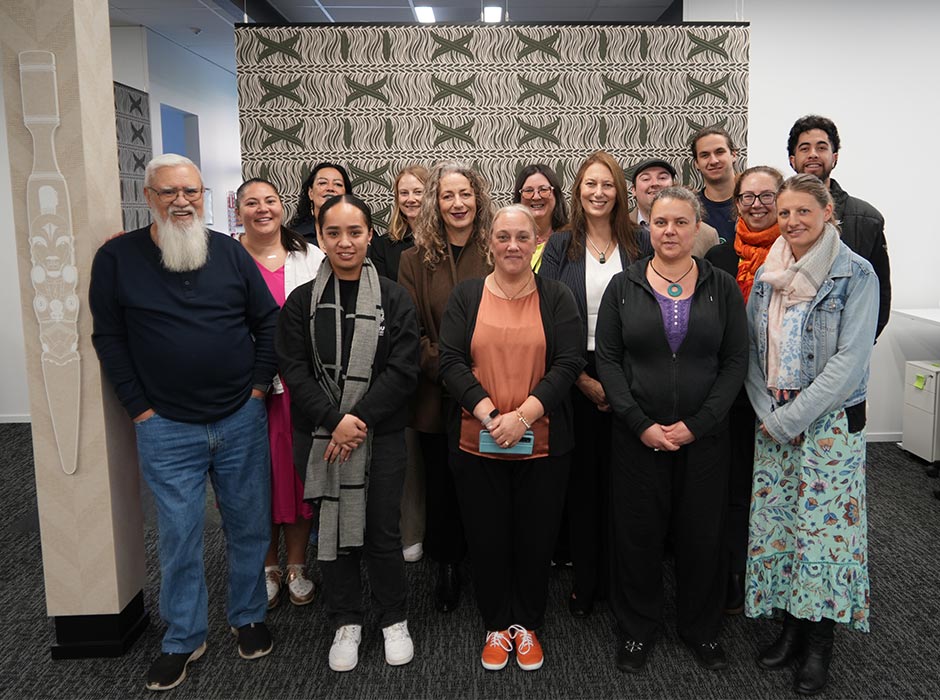
The redesign of what is now the office of the Deputy Vice-Chancellor Māori honours the memory of wāhine Māori who have provided a steady support for tauira at the University for decades.
Long before Māori student support services were formalised, women of Kāi Tahu were opening their homes, preparing meals and helping tauira far from home hold a sense of Māoritaka in Ōtepoti.
Now, their legacy has been woven into the walls of the newly redesigned office of the Deputy Vice-Chancellor Māori (DVCM).
Developed in partnership with mana whenua through rūnaka-owned consultancy Aukaha, the refurbishment of 539 Castle Street draws on cultural narratives of aroha, weaving and intergenerational care.
Guided by the Aukaha-Mana Ahurea mana whenua panel, the redesign centres on the whakaaro ‘Aroha Ki Te Takata – love for the people’.
For Kaiwhakahaere Kaupapa Toitū Te Reo Kare Tipa, the concept reflects a legacy that has always existed within Māori communities.
“It's not something we talk about, it's just what we do,” she says.
“That aroha ki te takata reciprocal relationship – that’s always been there. This isn't anything new, this is where we come from.”
The redesign acknowledges the support mana whenua and local wāhine, such as Magda Wallscott, Edna Wesley, the Paratas, Ellisons and Pickerings, extended to Māori students studying far from home.
Historical records describe Kāi Tahu whānau welcoming and caring for tauira, while members of the Māori Women's Welfare League regularly hosted dinners and gatherings for students in Ōtepoti.
“It is honouring the memory of those important wāhine because if it wasn't for them, I don't think we would be here. I really believe that.”
The symbolism also draws on Hineteiwaiwa, the atua associated with weaving, childbirth and the cycles of the moon and the tides. Throughout the space, design elements reference turuturu – weaving pegs traditionally used to support korowai weaving.
“You can imagine how long it would take to create a korowai without any aids or modern machinery. You’ve got the love, sweat and tears of your tāua producing this family heirloom for you.
“And in the same way, those turuturu pegs were also used during noble births to support women with anchoring while giving birth,” Kare says.
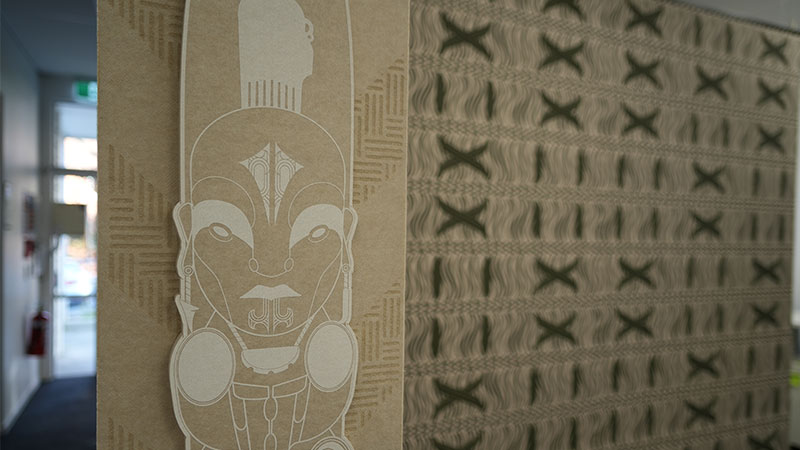
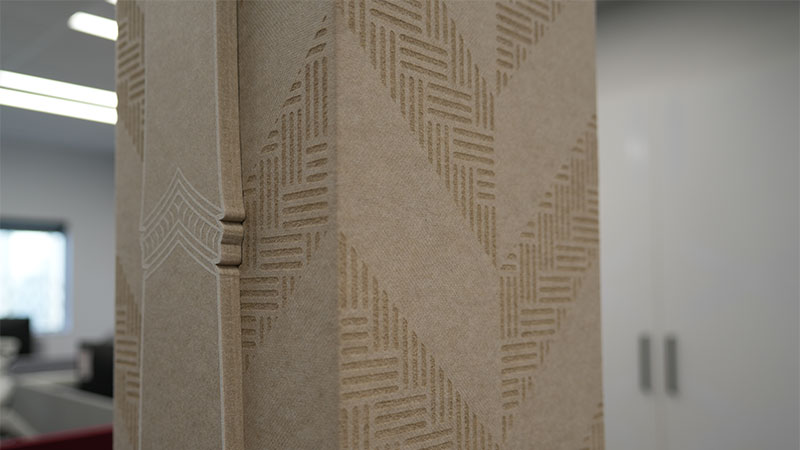
Within the office, centrally located posts symbolise both physical and metaphorical support systems, representing the work of staff who weave together relationships, knowledge and community. Displayed on the posts are designs of turuturu on one side, and wāhine Māori on the other, welcoming you into the space all while providing strength to the building itself.
Another key source of inspiration came from an intricately woven kete muka made by weavers from Puketeraki in 1910. The kete was gifted to Dr Emily Siedeberg, the first woman to graduate as a medical doctor from the University.
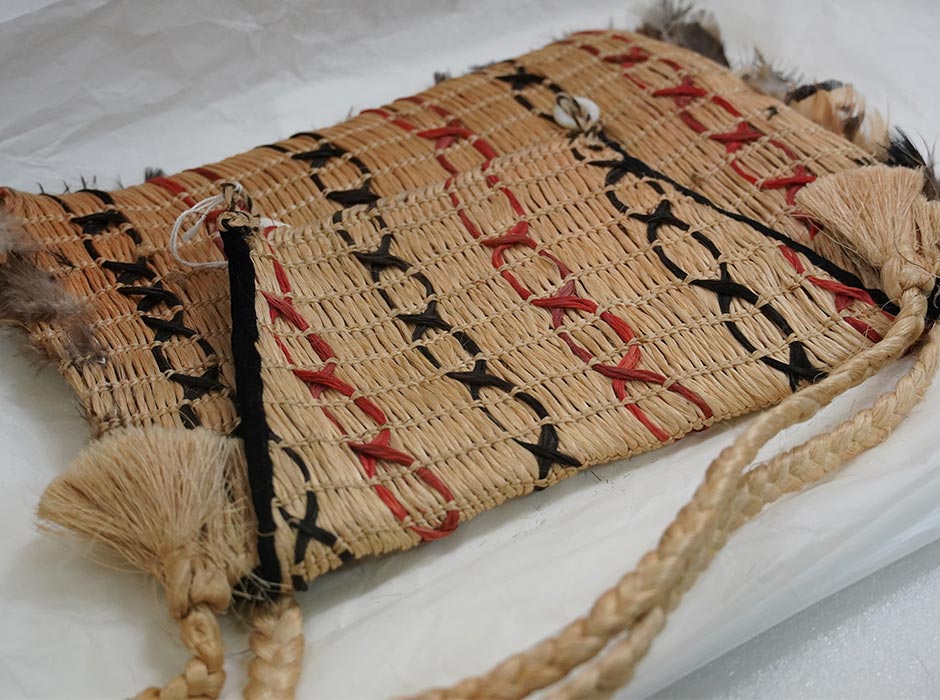
The kete muka gifted to Dr Emily Siedeberg by midwives from Puketeraki in 1910, including Mere Apes, Ria Tiakina, and others. The kete is held in the southern Māori tāoka Collection at the Tūhura Otago Museum.
While the front of the kete is adorned with feathers, it was the unseen detail and craftmanship of the reverse that inspired aspects of the redesign.
“It's that steady work underneath that holds everything together,” Kare says.
She sees the redesign as recognition of the often-unseen labour wāhine have carried for generations.
“Many narratives of atua wāhine aren't about heroes. They're about the slow and steady work – nurturing children, building homes, keeping people together. Some people might think that's mundane, but that sets the foundation for greatness.”
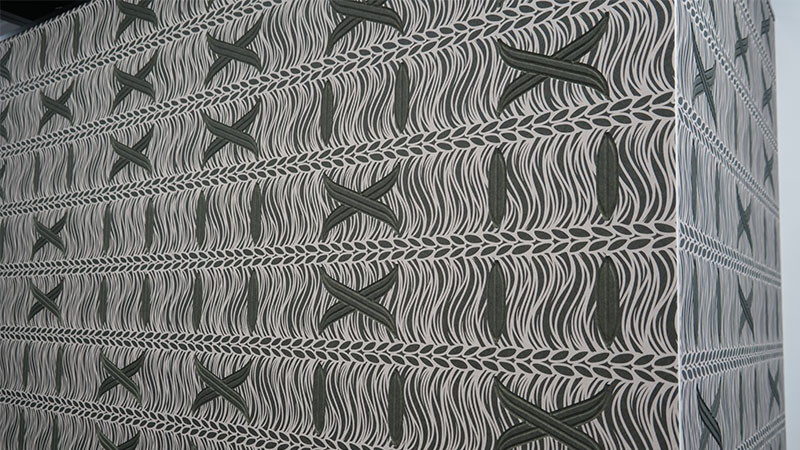
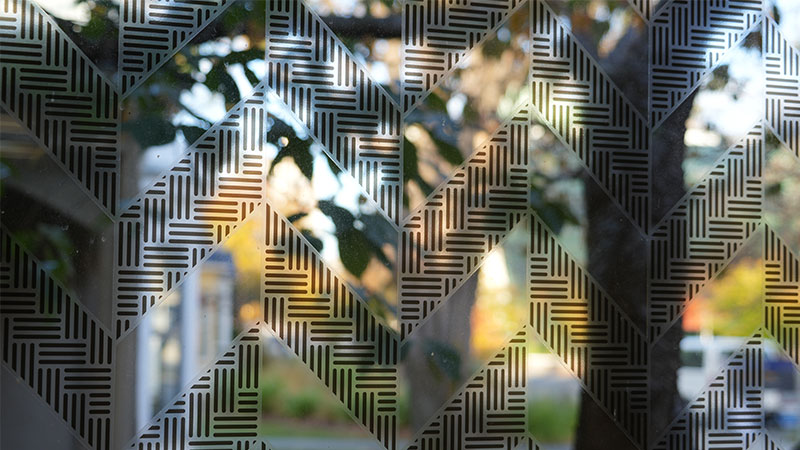
The pattern and colours of the reverse side of the kete can be seen in designs across the office, etched into the walls as you walk in and balancing the space. With more references to weaving represented in the pattern of the carpet, the windows and carved into the posts.
The final additions to the space will come through new tukutuku works created by the DVCM team, continuing the weaving together of whanaukataka, mātauraka and aroha within the space.
Kare says the wāhine who established spaces for Māori at the University did so during a time when racism was far more overt.
When she returned to Ōtepoti to study as a 20-year-old, she encountered resistance from whānau who feared university life would only bring further hardship.
“The roads hadn't been paved for someone like me back then.”
For Kare, the redesign is not only about reflecting the past, but ensuring future generations can see themselves within it.
“We've still got lots of work to do,” she says.
“But this building narrative is a beginning point to teach us about those older, steady women that paved the way for us. And now, in memory of those wāhine, we can push the waka forward.”
– Kōrero by Ani Ngawhika, Māori Communications Adviser