

Fifty-one per cent of those experiencing homelessness during the 2023 Census were women, which is notably higher than international rates.
More than half of those experiencing homelessness in New Zealand are women, often mothers of young children and living in uninhabitable housing or sharing accommodation, a researcher at the University of Otago, Wellington – Ōtākou Whakaihu Waka, Pōneke, says.
The lead author of a new study, Dr Brodie Fraser from the Department of Public Health, says 51 per cent of those experiencing homelessness during the 2023 Census were women.
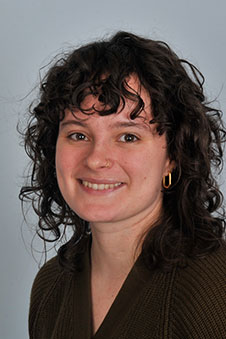
Dr Brodie Fraser
“This is notably higher than international rates, where women comprise between 30 and 40 per cent of those experiencing homelessness.”
Dr Fraser is the lead author of new research looking at the outcomes for women who were housed by the Housing First provider The People’s Project in Kirikiriroa Hamilton.
The research analysed the health, justice, income and social welfare outcomes for 204 women at one year before, and five years after, they were housed in a Housing First programme, based on data from Stats NZ’s Integrated Data Infrastructure (IDI).
The women in the study were placed in housing between 2014 and 2017 by The People’s Project in Kirikiriroa Hamilton, which places people in private rentals, Kāinga Ora or community housing, and is based on the Housing First principles of providing housing and wraparound support without preconditions, such as sobriety.
The findings are published in the international journal Discover Public Health.
Dr Fraser says 84 per cent of the women in the study had children, and most were Māori (76 per cent) and aged between 25 and 44 (57 per cent).
“Overall, five years after being housed, the women had significant improvements in their interactions with health services, with 65 per cent lower rates of hospitalisations, and more use of medicines, indicating they were making use of early medical care. The use of mental health services decreased, with emergency mental health interactions down 44 per cent over the six years.
“The women experienced positive outcomes when living in stable housing, with appropriate wraparound support, showing Housing First is an effective programme for women, as well as men.”
Dr Fraser says five years after being housed, the women’s overall incomes rose to an average of just over $20,000 a year, up from $19,676 a year.
“Many of the women were caring for children and receiving single-parent benefits, and despite the improvement in their circumstances, an income of $20,000 a year is not enough to raise a thriving family on.”
The research project, conducted in partnership with The People’s Project, is one of the few to investigate women’s experience of homelessness in Aotearoa.
Dr Fraser says New Zealand’s official definition of homelessness captures ‘hidden’ forms of homelessness that women are more likely to experience, such as sharing accommodation with other households.
“New Zealand is unique in that we measure homelessness comprehensively, and this includes people who live in uninhabitable housing, with no alternatives available to them. At Census 2023, 61 per cent of those experiencing homelessness were living in uninhabitable housing.”
Women made up 51 per cent of those experiencing homelessness, at just over 50 per cent of the general population.
“As well as being more likely to end up in unsuitable shared accommodation, women are also disadvantaged by a state that does not adequately support single mothers,” Dr Fraser says.
“We need to introduce better policies to prevent poverty and homelessness – and to increase funding for successful models, such as the Housing First programme, while also lifting benefit rates. This is even more important, given the increasing pressures on our health services.”
Publication details
The research paper, ‘Evaluating the Fifth-year Outcomes of Housing First for Women in Aotearoa New Zealand’ is published in the journal Discover Public Health.
Dr Fraser’s analysis, 'New police powers to ‘move on’ rough sleepers only mask NZ’s deeper homelessness problem' is published in The Conversation.
The research was funded by a grant from the Ministry of Business, Innovation & Employment’s Endeavour Fund.
Study Public Health at Otago
Join one of New Zealand’s leading centres for Public Health education. At Otago, you’ll learn from experts who are helping shape health policy and practice nationwide.
Explore Public Health