Career opportunities
A degree in Statistics prepares you for a world that runs on data. You will graduate with skills that employers value across science, health, business, government and technology. Wherever decisions rely on evidence, statistical expertise is in demand.
Career pathways include:
- Data analyst or statistician in government, business or research settings
- Biostatistician supporting public health, medical studies or clinical research
- Data scientist working with analytics, modelling and real-world datasets
- Market or consumer insights researcher helping organisations understand people and behaviour
- Risk analyst or financial analyst supporting smart decisions in finance and insurance
Study data for a diverse career
Discover how studying Statistics at the University of Otago opens doors to diverse fields, from health and economics to climate change, guided by leading statisticians and hands-on learning.
Read transcript
Lara Najim:
Hi, I’m Lara, and I’m a third-year student of Statistics at the University of Otago. When I was in my last year of high school, I really wanted to open as many doors as I could with my degree, and so Statistics was the perfect choice. In my degree, I get to look at data from a range of different fields, from economics, biology, and finance. So once I graduate, it’ll be really easy to slot into any field and solve a range of problems. The University of Otago is the perfect place to do it as well.
Dr Matthew Schofield:
My name is Matthew Schofield, and I’m a senior lecturer here at the University of Otago in Statistics. Statistics is all about the collection, the analysis, the interpretation, and presentation of data. Data is all around us, and so there’s a need for statistics everywhere in society. Statistics is important for everything from modelling infectious diseases, to describing the dynamics of animal populations, to designing studies that make sure our drugs and vaccines are safe.
The thing I love most about statistics is the variety. I’ve had the chance to work on problems as diverse as studying penguin movement in Antarctica, to the physiological changes in marathon runners, to climate change. John Tukey, a famous statistician, once said, “The best thing about being a statistician is that you get to play in everyone else’s backyard,” and that’s something that I certainly found to be true. I really enjoy the challenge of trying to understand what data can tell us about the uncertain world around us.
Many of our students will opt to take Statistics as a second major or a minor, and that’s because Statistics complements nearly every course of study here at the University of Otago. So, if you’re expecting to be working with data, whether that’s experiments from a lab, whether it’s the natural world, or data from business or markets, then Statistics is a really good option for you.
In your first year of study, you’ll be taking a broad introductory Statistics course that covers how statistics can be used across all disciplines here at the University of Otago. From there, in your second and third years, you’ll move on to courses that specialise in visualisation of data, the interpretation of statistical models, and also how all of these models hold together and how they work. Throughout your time here at the University of Otago, you’ll be taught by some of the very best. You’ll be taught by leading statisticians in New Zealand, leading researchers, and teachers. Our courses attract students from all corners of the campus.
Our students go on to work in some really interesting and exciting careers. Many end up working in government departments, some in Crown Research Institutes like AgResearch or Landcare Research. Others have gone on to work for business, insurance, the health sector, and some continue on with further study.
How you will learn
At Otago your Statistics learning will feel dynamic, interactive and connected to real-world problems. You'll start with a broad introductory Statistics course in your first year.
Later you’ll work on projects, use real data sets, explore visualisation and build models. Our lecturers bring in research examples, cross-discipline collaboration and industry relevance.
You’ll learn in small groups, laboratories and computer-based labs, and you’ll be encouraged to choose electives or complementary papers in another field that interest you (for example in science, commerce, arts or health).
By the end, you’ll be comfortable turning questions into data plans, doing the analysis, and explaining what the results mean to others.
Recommended high school subjects for undergraduate study
Almost any school background will allow entry to a statistics programme, but NCEA Level 3 Mathematics and Statistics is highly recommended for this programme. Also, being comfortable with computers, data and asking questions will give you a strong start.
Choose a study option
Whether you're embarking on your academic journey with our comprehensive undergraduate programmes or aiming to reach new heights through our advanced postgraduate offerings, Otago is here to support your aspirations.
Undergraduate qualifications
For new and current students studying towards a Bachelor's or other first degree. Explore undergraduate qualifications at Otago, designed to build a strong foundation in your chosen field, preparing you for a successful career or further study.
Note: this subject can also be studied as a minor.
Bachelor of Science (BSc)
A three-year degree offering flexibility to explore a major in Science along with other subjects
Bachelor of Arts and Science (BASc)
Combine two majors, one in Arts and one in Science, into a four-year degree and expand your future career prospects
Bachelor of Commerce and Science (BComSc)
Combine two majors, one in Commerce and one in Science, into a four-year degree and expand your future career prospects
Bachelor of Arts (BA)
A three-year degree offering flexibility to explore a major in Arts along with other subjects
Bachelor of Arts and Commerce (BACom)
Combine two majors, one in Arts and one in Commerce, into a four-year degree and expand your future career prospects
Bachelor of Entrepreneurship (BEntr)
A three-year degree that equips you to change the world as you create new products, services and ideas
Bachelor of Sustainability (BSust)
A three-year degree with a core sustainability focus, combined with a major from Sciences, Commerce, or Arts and Social Sciences.
Ready to apply?
Take the first step towards your future in this subject.
Further study opportunities
Whether you are looking to bridge your undergraduate studies to advanced knowledge or aiming to specialise in a specific field, Otago offers a range of graduate and postgraduate options to suit your aspirations.
Diploma for Graduates (DipGrad)
The Diploma for Graduates (DipGrad), requiring study of at least seven papers (at least four of which are at 300-level o...
Postgraduate study in Statistics
Explore postgraduate study in Statistics at Otago. Gain advanced knowledge, skills, and research opportunities in a supp...
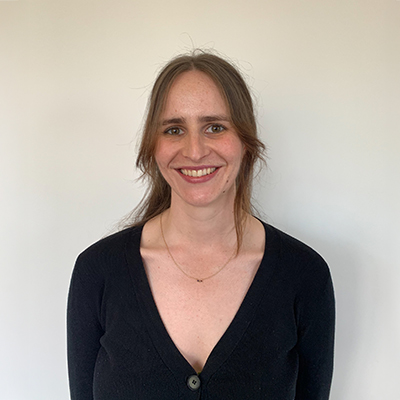
The Statistics programme provides essential skills from programming, to analysing data, and understanding reports – and it looks great to future employers! Just taking a couple of papers can really help you gain some sought after skills for your CV, and who knows, you might end up loving Stats and taking more, just like I did.
Sarah Croft
Studying for a Doctor of Philosophy
Bachelor of Science with Honours (Statistics), Bachelor of Science (Majors: Genetics, Statistics)
Related subject areas
Explore all subject areasBusiness, accounting and finance
Study business and prepare yourself for a career in the fast-paced corporate world – or even launch your own start-up
Physical sciences
Answer fundamental questions about nature and the universe and provide solutions by studying the world around us
Technology, maths and computing
Study technology, mathematics, or computing to solve real-life problems – harnessing the power of information and data
Where world-class research meets outstanding teaching
You will learn from leading statisticians in New Zealand – leading researchers and teachers who work on problems as diverse as animal populations, public health, and climate change.
There are clear pathways into postgraduate study and research, especially in areas such as ecology and evolutionary genetics, mathematical and numerical relativity and computational statistics. You can also explore our Data Science programme, which combines statistics with computer science and prepares students for roles at the intersection of data, technology and decision-making.
Benefit from small class sizes and approachable teaching staff, learning alongside peers who bring diverse interests and perspectives to statistical problems.
Programme details
Compare programmes for this subject.
| Level | Papers | Points |
|---|---|---|
| 100-level | STAT 110 Statistical Methods or STAT 115 Introduction to Biostatistics | 18 |
| MATH 130 Fundamentals of Modern Mathematics 1 | 18 | |
| MATH 140 Fundamentals of Modern Mathematics 2 | 18 | |
| 200-level | STAT 210 Applied Statistics | 18 |
| STAT 260 Visualisation and Modelling in R | 18 | |
| STAT 270 Probability and Inference | 18 | |
| MATH 202 Linear Algebra or MATH 203 Calculus of Several Variables | 18 | |
| 300-level | STAT 310 Statistical Modelling | 18 |
| Three further 300-level STAT papers, including at least one of STAT 370, STAT 371, STAT 372 | 54 | |
| Plus | 162 further points; must include 36 points at 200-level or above. | 162 |
| Up to 90 points may be taken from outside Arts. | ||
| Other papers approved by the Head of Department may be substituted for up to two papers at either 200- or 300-level | ||
| Total | 360 |
| Level | Papers | Points |
|---|---|---|
| 100-level | One of STAT 110 Statistical Methods STAT 115 Introduction to Biostatistics COMO 101 Modelling and Computation | 18 |
| MATH 130 Fundamentals of Modern Mathematics 1 | 18 | |
| MATH 140 Fundamentals of Modern Mathematics 2 | 18 | |
| 200-level | STAT 210 Applied Statistics | 18 |
| STAT 270 Probability and Inference | 18 | |
| DATA 201 R for Statistics and Data Science | 18 | |
| 300-level | STAT 310 Statistical Modelling | 18 |
| One of STAT 370 Statistical Inference STAT 371 Bayesian Data Analysis STAT 372 Stochastic Modelling | 18 | |
| Two further papers from STAT 300-level, DATA 302 | 36 | |
| Plus |
180 further points; must include 36 points at 200-level or above. Up to 90 points may be taken from outside Science Notes: (i) STAT 310 can be replaced with STAT 370 for students who complete STAT 310 to satisfy programme requirements in another major or minor. (ii) MATH 202 and 203 are required for entry into an Honours degree majoring in Statistics. (iii) Other papers approved by the Head of Department may be substituted for up to two papers at either 200- or 300-level. | 180 |
| Total | 360 |
A minor subject can be included in many of our undergraduate degrees. To earn a minor, you typically must complete a minimum of 90 points in that subject, with at least 18 points at the 300-level.
Your minor can be a subject more commonly taken for a different degree. For example, a BCom majoring in Marketing can include Japanese as a minor subject. To include this subject as a minor in your application, first find a major subject through our Subject Search or Study Match.
You can check what’s required to receive the minor accreditation in the programme details below.
Available as a minor subject for a Bachelor of Arts (BA), Bachelor of Music (MusB), Bachelor of Performing Arts (BPA), Bachelor of Theology (BTheol), Bachelor of Science (BSc), Bachelor of Commerce (BCom), Bachelor of Entrepreneurship (BEntr), Bachelor of Health Science (BHealSc), Bachelor of Arts and Commerce (BACom), Bachelor of Arts and Science (BASc) or Bachelor of Commerce and Science (BComSc) degree
| Level | Papers | Points |
|---|---|---|
| 100-level | STAT 110 Statistical Methods or STAT 115 Introduction to Biostatistics Students who have passed BSNS 112 before enrolling for Statistics as a minor subject may substitute BSNS 112 for STAT 110 or 115 | 18 |
| 200-level | STAT 210 Applied Statistics STAT 260 Visualisation and Modelling in R | 18 18 |
| 300-level | Two of: | 36 |
| Total | 90 |
A minor subject can be included in many of our undergraduate degrees. To earn a minor, you typically must complete a minimum of 90 points in that subject, with at least 18 points at the 300-level.
Your minor can be a subject more commonly taken for a different degree. For example, a BCom majoring in Marketing can include Japanese as a minor subject. To include this subject as a minor in your application, first find a major subject through our Subject Search or Study Match.
You can check what’s required to receive the minor accreditation in the programme details below.
Available as a minor subject for a Bachelor of Arts (BA), Bachelor of Music (MusB), Bachelor of Performing Arts (BPA), Bachelor of Theology (BTheol), Bachelor of Science (BSc), Bachelor of Commerce (BCom), Bachelor of Entrepreneurship (BEntr), Bachelor of Health Science (BHealSc), Bachelor of Arts and Commerce (BACom), Bachelor of Arts and Science (BASc) or Bachelor of Commerce and Science (BComSc) degree
| Level | Papers | Points |
|---|---|---|
| 100-level | MATH 130 Fundamentals of Modern Mathematics 1 | 18 |
| MATH 140 Fundamentals of Modern Mathematics 2 | 18 | |
| 200-level | STAT 270 Probability and Inference | 18 |
| 300-100- | Two of: Note: DATA 201 is a prerequisite for STAT 371, but may be waived for students with suitable programming experience | 36 |
| Total | 90 |
Note: Students taking a Statistics major will not be permitted to take a Mathematical Statistics minor.
Papers
View a list of all related papers below.
STAT papers
| Paper Code | Year | Title | Points | Teaching period |
|---|---|---|---|---|
| STAT110 | 2026, 2027 | Statistical Methods | 18 points | Summer School, Semester 1 |
| STAT115 | 2026, 2027 | Introduction to Biostatistics | 18 points | Semester 2 |
| STAT210 | 2026, 2027 | Applied Statistics | 18 points | Semester 1 |
| STAT260 | 2026 | Visualisation and Modelling in R | 18 points | Semester 2 |
| STAT270 | 2026, 2027 | Probability and Inference | 18 points | Semester 1 |
| STAT310 | 2026, 2027 | Statistical Modelling | 18 points | Semester 1 |
| STAT311 | 2026, 2027 | Design of Research Studies | 18 points | Not offered in 2026, Semester 1 |
| STAT312 | 2026, 2027 | Modelling High Dimensional Data | 18 points | Semester 2 |
| STAT370 | 2026, 2027 | Statistical Inference | 18 points | Semester 2 |
| STAT371 | 2026, 2027 | Bayesian Data Analysis | 18 points | Semester 2 |
| STAT372 | 2026, 2027 | Stochastic Modelling | 18 points | Semester 1 |
| STAT399 | 2026, 2027 | Special Topic | 18 points | Not offered in 2026, Not offered in 2027 |
| STAT401 | 2026, 2027 | Applied Statistical Methods and Models | 20 points | Semester 1 |
| STAT402 | 2026, 2027 | Regression Models for Complex Data | 20 points | Semester 2 |
| STAT403 | 2026, 2027 | Case Studies in Statistics | 20 points | Semester 2 |
| STAT404 | 2026, 2027 | Advanced Statistical Inference | 20 points | Semester 1 |
| STAT405 | 2026, 2027 | Probability and Random Processes | 20 points | Semester 1 |
| STAT423 | 2026, 2027 | Bayesian Modelling | 20 points | Semester 2 |
| STAT424 | 2026, 2027 | Research Design and Methods | 20 points | Not offered in 2026, Semester 1 |
| STAT425 | 2026, 2027 | Statistical Learning | 20 points | Semester 2 |
| STAT435 | 2026, 2027 | Data Analysis for Bioinformatics | 20 points | Semester 1 |
| STAT441 | 2026, 2027 | Topic in Advanced Statistics | 20 points | Semester 2, Not offered in 2027 |
| STAT442 | 2026, 2027 | Topic in Advanced Statistics | 20 points | Not offered in 2026, Not offered in 2027 |
| STAT490 | 2026, 2027 | Dissertation | 40 points | Full Year, 1st Non standard period (13 July 2026 - 25 June 2027), 1st Non standard period (12 July 2027 - 21 June 2028) |
| STAT498 | 2026, 2027 | Special Topic | 20 points | Not offered in 2026, Not offered in 2027 |
| STAT499 | 2026, 2027 | Special Topic | 20 points | Not offered in 2026, Not offered in 2027 |
More information
Have a question or need support? AskOtago can connect you with the right team for personalised help.
This information must be read subject to the statement on our Copyright & Disclaimer page.
Regulations on this page are taken from the 2026 Calendar and supplementary material.
Not sure what to study?
Take our short quiz to uncover study options matched to your background and interests.
Take the quiz