
Delivering optimal weight gain advice to pregnant women by Lead Maternity Carer midwives (DOT study)
This mixed-methods case study in Te Tai Tokerau, the Northland region of Aotearoa New Zealand (NZ) will examine the acceptability, accessibility and impact of a pragmatic midwife-delivered gestational weight management tool in a real-world setting. The study also seeks to understand the factors that influence implementation and delivery of the intervention, specifically its workability and integration into practice.
Weight gain in pregnancy
Healthy weight gain in pregnancy can be difficult to achieve. Gaining more weight than recommended during pregnancy occurs in up to 70% of women who birth. Excess gestational weight gain ( GWG ) increases the risk of adverse outcomes such as gestational diabetes, postpartum weight retention, large for gestational age babies and adiposity in children.
Individual costs, healthcare costs and societal costs are increased, and the impact is greater for Māori wāhine and Pacific women compared with New Zealand (NZ) European women. Easily accessible and affordable interventions are needed to support pregnant women to achieve their recommended GWG and thereby improve maternal and perinatal outcomes.
Although antenatal lifestyle interventions can limit excess GWG , successful translation of interventions into routine antenatal care is uncommon and few interventions involve midwives.
Study aims
The specific aims of this study are:
- To determine whether the DOT intervention for achieving recommended maternal GWG is acceptable to Lead Maternity Carer ( LMC ) midwives practising in Te Tai Tokerau, NZ
- To determine whether the LMC midwife-delivered DOT intervention for achieving recommended maternal GWG is acceptable and accessible to Māori and non-Māori pregnant women in Te Tai Tokerau, NZ
- To cost the LMC midwife-delivered DOT intervention for achieving recommended maternal GWG
- To describe the proportion of women achieving recommended GWG and the rate of GWG and pregnancy outcomes, including birthweight among Māori and non-Māori pregnant women in Te Tai Tokerau, NZ
- To examine factors that influence implementation and delivery of the DOT intervention in Te Tai Tokerau, NZ.
 About 15-20 independent Lead Maternity Carer midwives will be trained to deliver the DOT intervention to 150-200 pregnant women aged 18 years or over. Women with pre-existing health conditions requiring specialist obstetric or dietetic care identified at the first antenatal visit will be excluded.
The DOT intervention will be delivered over three visits, the first before 15 weeks gestation then 3-4 weekly. Routinely recorded clinical data including self-reported ethnicity, gravidity and parity, estimated date of delivery, anthropometry, blood pressure, antenatal blood tests, date and mode of delivery and infant birth weight will be collated. Costs associated with intervention delivery will be identified.
The DOT study is registered on the Australian New Zealand Clinical Trial Registry (Trial ID: ACTRN12623001228673: 29 November 2023).
Our people
The DOT Study is a collaboration between the University of Otago, Victoria University of Wellington and Te Whatu Ora Health New Zealand - Te Tai Tokerau (Northland). The study is funded by the Health Research Council (HRC 21/911).
Study investigators
- Associate Professor Kirsten Coppell, University of Otago, Wellington
- Dr Helen Paterson, University of Otago, Dunedin
- Professor Bev Lawton, Victoria University of Wellington
- Dr Nicole McGrath, Te Whatu Ora, Northland
- Dr Kendall Stevenson, Victoria University of Wellington
- Mel Rackham, Te Whatu Ora, Dunedin
- Professor Katrina Sharples, University of Otago, Dunedin
- Associate Professor Trudy Sullivan, University of Otago, Dunedin
- Associate Professor Rosemary Hall, University of Otago, Wellington
Assistant Research Fellows
- Kimberley King, University of Otago, Dunedin
- Naomi Waldron, University of Otago, Wellington
- Monique Williams, University of Otago, Wellington
Postgraduate student
- Madeleine Stephenson, University of Otago, Wellington

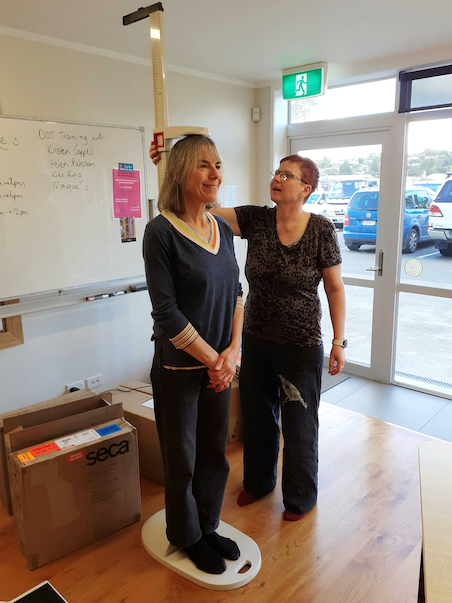
DOT Study team at LMC midwife training in Whangarei, May 2024. Left to right: Kirsten Coppell, Monique Williams, Kim King, Helen Paterson.