
What is ‘Size-inclusive screening stories’ about?
This research aims to understand how well cervical screening works for big-bodied people in Aotearoa New Zealand.
We want to talk with big-bodied people* to understand what their cervical screening experience was like. This includes things like ease, comfort, how things were explained, what the room, layout and equipment were like and how people were treated by staff. This will tell us what is working well, and what may need to change so services are more comfortable and inclusive for everyone the in future.
* We know people describe their own bodies in different ways and will have different terms to describe their own size and shape. 'Big-bodied' is used here as a neutral description of body size and shape.
The study is being led by Associate Professor Lesley Gray from the University of Otago, Wellington, and is funded by a Health Research Council project grant (H25/132).
Why is this study needed?
Cervical screening has changed recently. Many people can now choose to do a self-test. This means a person can take their own vaginal swab sample. The sample is then checked for a common virus (human papillomavirus or ‘HPV’) known to cause most cervical cancers.
Research shows many people like the HPV self-test and find it easy to use. So far, none of the research has specifically asked what this experience is like for big-bodied people. It is important that the new way of screening works well for people of all body sizes.
People from the Wellington and Auckland regions are invited to take part, with the option to talk about cervical screening experiences in an individual interview or in a small focus group.
Why might I consider taking part?
Many health services are not designed for people of all body sizes, and big-bodied people are often left out of research. This project gives people an opportunity to share their experiences and ideas to help make screening better for everyone.
Your voice is important. Health services should meet the needs of the people who use them. When screening is designed to work well for all people, it can support more people to take part in screening and any follow-up care, leading to better screening outcomes.
How can I take part?
- Check whether you meet the study eligibility criteria below.
- Read the participant information sheet (link below) to understand what the study involves.
- Email us to check if the study is right for you.
Eligibility criteria
Who can take part?
Big-bodied people with a cervix who have had a cervical screen or colposcopy in the past 3 months (or who plan to have one soon) and are willing to talk about their experience.
This research might be for you if you relate to experiences like these:
- You rely on specific retailers (including online) or custom-made clothing due to limited size ranges in most shops.
- You find yourself thinking ahead or checking when you arrive whether spaces are set up to be safe and comfortable for a range of body sizes (e.g. sturdy seating without restrictive arms).
- You've experienced environments where equipment or safety features aren't designed to work for a range of body sizes (e.g. hospital gowns, blood pressure cuffs, plane seatbelts).
Planning to screen?
If you plan to screen in the coming months, we would love to talk with you afterwards. Recruitment will be open until we reach our target of 70 participants.
Unable to screen?
If you were eligible for screening, but for some reason found you could not proceed, please contact us.
What does taking part involve?
Participants will be invited to complete a brief questionnaire and talk with a research team member within 3-4 months of having their cervical screen.
The questionnaire asks for some background details (demographic and screening details), and the discussion will focus on your most recent screening test or colposcopy and how you found the process. You can choose to skip any questions you do not want to answer.
Please see the participant information sheet for full details on what sorts of questions are asked and why we are asking them.
Size-inclusive Screening Stories participant information sheet (PDF)
Research partners
We are working with Mana Wāhine in Wellington and Total HealthCare PHO in Auckland to help us connect with people who might like to take part.
- Mana Wāhine is an organisation that signposts and supports Māori to access health services including cervical screening.
- Total HealthCare PHO is the largest primary health provider to Pasifika in Counties Manukau, Auckland and Waitematā, delivering services to nearly 80,000 Pasifika across 40 primary care practices.
These groups can help anyone who is due or overdue for a cervical screen to get a screening appointment, even if they do not want to join the study.
You do not need to know or be part of these organisations to take part in cervical screening or this study.
You can have your cervical screening done with your usual healthcare provider, or with one of our partner organisations if that works better for you.
What else do I need to know?
For more details, please access the participant information sheet:
Size-inclusive Screening Stories participant information sheet (PDF)
Is information collected from any other sources?
No. We will not contact your doctor or look at any health records. We only have access to the information you choose to share with us.
Do I need to have my cervical screen somewhere specific?
No. We want to hear from people who have had screening in a range of places. This could be with your usual healthcare provider (at home or in the clinic), in a community setting or through a support-to-screen service.
If you have not had your cervical screening but are due, you can go to a service of you choice and take part in the research afterwards.
The research itself does not provide any healthcare - all participants stay under the clinical care of their usual healthcare provider.
This research is not about:
Judging or making assumptions about weight or body size.
Only looking at negative experiences, all kinds of experiences are of interest to us.
Blaming or shaming anyone. Our goal is to learn what is working well and anything that could be improved to make screening better for everyone.
Contact
For more information or to ask questions, please contact us via:
Text message
Lesley (Study lead)
+64 21 029 39279
Our team
Our team cares about making healthcare welcoming for people of all body sizes. We work closely with big-bodied people in our research and teaching, with the goal of making our health systems more ‘size-inclusive’, and better for everyone.
Team leads
Dr Lesley Gray
Lesley is a size-inclusive researcher and the team lead for this project, she is an Associate Professor at the University of Otago, Wellington.
Dr Sally Rose
Lesley is supported by Sally who has a background in sexual and reproductive health, and health-services research and is a senior researcher at the University of Otago, Wellington.
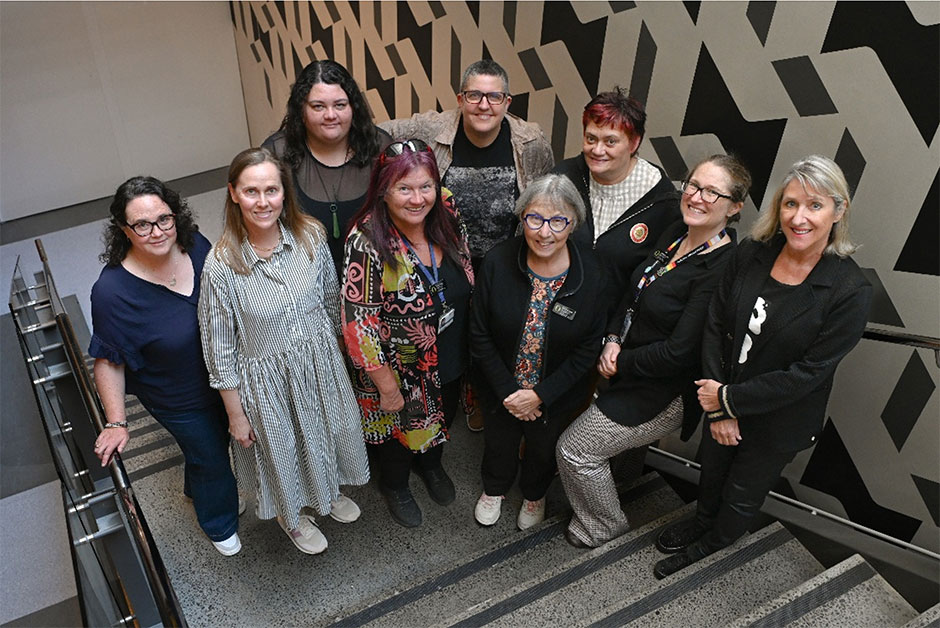
Left to right: Abby, Sally, Ashlea, Lesley, George, Lynn, Carmen, Emily, Kate. Absent: Tua, Sarah.
Interviewers
Wellington
Carmen Timu-Parata
Carmen is a registered nurse, and an emerging Māori researcher (Ngāti Kahungunu) with experience in community-based research, she is based at the University of Otago, Wellington.
Abby Dunlop
Abby is a European/Samoan researcher at the University of Otago, Wellington, and a practicing midwife.
Auckland
Sarah McLean-Orsborn
Sarah is a Samoan/European health researcher at the University of Auckland.
Other team members
Dr Tua Taueetia-Su’a
Tua is a Samoan researcher with a nurse background and has held leadership and advisory roles to strengthen screening equity for Pacific people.
Dr George Parker
George is a researcher and senior lecturer at Te Herenga Waka Victoria University of Wellington, and a registered kahu pōkai (midwife).
Dr Ashlea Gillon
Ashlea (Ngāti Awa, Ngāpuhi, Ngāiterangi) is a kaupapa Māori researcher and lecturer at Waipapa Taumata Rau University of Auckland.
Dr Emily Cavana
Emily is a GP and a senior lecturer at the University of Otago, Wellington, and has been a clinical advisor to the National Cervical Screening Programme for many years.
Professor Lynn McBain
Lynn is a GP and head of the Department of Primary Health Care at the University of Otago, Wellington.
Research partners
Anania Kerehoma-Cook
Anania is the kaiwhakahaere at Mana Wāhine in Wellington.
Kate Moodabe
Kate is the general manager of Total HealthCare PHO in Auckland.
Ethics committee approval
This study has been approved by the University of Otago Human Ethics Committee (Health) – Te Pae Matatika Tangata (Hauora), Ōtākou Whakaihu Waka on 29th May 2026 (Reference: H26/0044).