
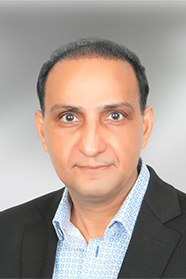
Contact Details
- Phone
- +64 3 364 1790
- mak.sarwar@otago.ac.nz
- Position
- Research Fellow
- Department
- Department of Obstetrics and Gynaecology (Christchurch)
- Research summary
- My research aims to uncover the molecular mechanisms that drive cancer, particularly in gynaecological malignancies, and to identify therapeutic targets that can be exploited for treatment.
- Memberships
- Co-chair, Gynaecological Cancer League (GCL)
- Australia New Zealand Gynae Oncology Group (ANZGOG)
- European Association of Cancer Research (EACR)
- New Zealand Gynae Cancer Group (NZGCG)
- Australia New Zealand Gynae Oncology Group (ANZGOG)
- American Association for Cancer Research (AACR)
- American Society of Clinical Oncology (ASCO)
- Royal Society of New Zealand (RSNZ)
- Medical Sciences Council of New Zealand
- New Zealand Society for Oncology (NZSO)
Research
Kinase-targeted therapy: My research opened several lines of investigation into the aetiology of ovarian cancer and novel therapeutic strategies, including combination treatments involving tyrosine kinase inhibitors targeting Focal Adhesion Kinase (FAK) and Src (proto-oncogene tyrosine-protein kinase) PI3K, MEK, RAS/RAF, aimed at treating ovarian tumours that are otherwise unresponsive to conventional chemotherapy.
Molecular diagnostics: Working alongside world-renowned clinical geneticists, I am actively involved in the development of cost-effective and locally accessible molecular assays to enhance targeted cancer treatments. A Special emphasis is on the development of assays to detect Homologous Recombination Deficiency (HRD), an important biomarker for predicting response to therapies such as PARP inhibitors (PARPi) for ovarian cancer patients. This research is set to play a pivotal role in improving access to precision treatments and advancing personalised cancer care. In addition, we are currently investigating the feasibility of methylation testing in identifying hrHPV-pos women with, or at, future risk of high-grade cervical abnormalities using self-collected vaginal swabs. This approach, of molecular triage, is likely to address a number of the concerns associated with cytology triage and be a step forward towards the equitable elimination of cervical cancer as a public health problem.
Drug delivery systems and Antibody drug conjugates: Another key area where my previous and ongoing research has had a significant impact is the development of drug delivery systems and antibody-drug conjugates (ADCs), particularly in improving their design for ovarian cancer treatment. Collaborating with world leaders in drug discovery, our pioneering work on linker technologies, tumour specificity, payload optimisation, and resistance mechanisms has made invaluable contributions to the development of next-generation ADCs. As cancer drug discovery continues to evolve, the insights gained from our ongoing research will play a central role in shaping the future of targeted therapies, offering hope for more effective and personalised cancer treatments.
Investigating rare ovarian cancers: I am also conducting studies to examine the therapeutically important genomic abnormalities and deleterious molecular rearrangements in New Zealand lowgrade serous ovarian carcinoma, to get a better understanding of the molecular characteristics of lowgrade serous carcinoma in New Zealand women and their subsequent clinical behaviour, providingprognostically useful information for patients and potential treatment targets for clinicians.
Additional details
Dr Sarwar is a research fellow in the Department of Obstetrics and Gynaecology at the University of Otago, Christchurch. He specialises in cellular and molecular oncology, with a primary interest in the molecular mechanisms underlying gynaecological cancers and the development of targeted therapies. His research includes kinase-targeted combination treatments for chemotherapy-resistant ovarian cancer, tumour-specific drug delivery, and fourth-generation antibody-drug conjugates designed to treat resistant tumours, in collaboration with international experts. Dr. Sarwar is also actively involved in molecular diagnostics, investigating assays such as Homologous Recombination Deficiency to guide precision therapies, and developing novel triage methods for cervical cancer screening to enhance access for underserved populations. Additionally, he studies rare ovarian cancers to uncover genomic features relevant to prognosis and treatment.
Dr Sarwar mentors doctoral candidates and provides strategic leadership by co-chairing national women’s cancer forums, serving on research boards, and organising major oncology conferences. Dr Sarwar’s commitment to equity is reflected in establishing frameworks that engage Māori and ethnic communities, recognised by the Community Engagement and Impact Awards. Building on groundbreaking drug development research, he founded Inceptogen Therapeutics, a startup translating ADC research into next-generation cancer therapies. Grounded in robust preclinical data, this venture bridges bench-to-bedside innovation to deliver effective treatments to patients.
Service to the University / Health New Zealand / professional bodies: I have played a leading role in organising and chairing key national events focused on women’s cancer research and care. Demonstrating both scientific vision and strategic leadership, I established collaborative clinic-scientific forums such as the Gynaecological Cancer League (GCL) in partnership with the New Zealand Society for Oncology (NZSO) and the New Zealand Gynaecological Cancer Group (NZGCG). The GCL facilitates national collaboration between clinicians and researchers working in gynaecological cancers, promoting knowledge exchange and capacity-building across Aotearoa New Zealand. Since 2021, I have regularly co-chaired GCL summits and symposia held in Christchurch, Auckland, Napier, and Ōtautahi. I also serve on the boards of the New Zealand Association of Breast Cancer Research (NZABC) and the Early and Mid-Career Researcher (EMCR) Group within the Otago Division of Health Sciences. Additionally, I have contributed to the organising committees of major national oncology meetings, including the ANZGOG Conference and the New Zealand Breast Cancer Symposium.
Another significant aspect of my contribution has been the development of structural frameworks to foster enduring relationships with Māori and ethnic communities. In recognition of this work, I received the Community Engagement and Impact Award in 2021 and 2023, which supported the establishment of an outreach programme aimed at introducing underserved communities to developments in biomedical and clinical research. As part of this initiative, the Māori Practices Advisory Group was formed under the leadership of Kathy Simmons (Ngāti Kahungunu ki Wairoa), strengthening our commitment to culturally responsive research. These efforts have helped us connect meaningfully with diverse communities across Aotearoa, spanning varied ethnic, economic, ideological, and cultural backgrounds. Regular meetings, chaired by Dr Jo Ghullam, bring together key clinicians and researchers with the goal of improving health outcomes for Māori and Pacific peoples and ensuring that our research and clinical practices reflect their needs and priorities.
Translational innovation and leadership: Building on my research in antibody-drug conjugates, I have recently founded a biopharmaceutical startup, Inceptogen Therapeutics, for developing next-generation targeted cancer therapies. Although early in its lifecycle, this commercial spinoff is grounded in robust preclinical data and harnesses novel linker technologies and tumour-specific payload delivery platforms developed through my academic work. By bridging the gap between bench and bedside, this venture represents a significant step forward in translational oncology, with the goal of bringing innovative and effective treatments closer to patients.
Publications
Sarkar, D., Gyanwali, G. C., Patel, J., Shevchuk, P., Jeffs, A., Woolley, A. G., Wang, S., Sardari, M., Bhandarkar, A., Siddiqui, H., Ratajska, M., Sarwar, M., … Drummond, C. J., McKinney, C., Antony, J., McCormick, S. P., Braithwaite, A., & Mehta, S. (2026). TP53 mutation at codon 179 metabolically reprograms cancer cells to promote invasion. Cancer Gene Therapy. Advance online publication. doi: 10.1038/s41417-026-01045-4 Journal - Research Article
Wang, S., Shafaei Pishabad, Z., Sarkar, D., Arun Bhandarkar, A., Sarwar, M., Jeffs, A., Reid, G., Braithwaite, A., & Mehta, S. (2026). YBX1 expression marks proliferative tumour states with context-dependent genomic instability: A pan-cancer analysis. International Journal of Molecular Sciences, 27(10), 4340. doi: 10.3390/ijms27104340 Journal - Research Article
Schiemann, A. H., Sarwar, M., & Sattlegger, E. (2025). Functional analysis of the yeast counterpart to the human GCN2 p.Glu738_Asp739insArgArg variant. microPublication Biology. doi: 10.17912/micropub.biology.001767 Journal - Research Article
Prescott, H., Sarwar, M., Dickens, M., & Sattlegger, E. (2025). GCN2 in cancer: Molecular mechanisms to therapeutic potential. Current Cancer Drug Targets. Advance online publication. doi: 10.2174/0115680096325045241120113825 Journal - Research Other
Sarkar, D., Gyanwali, G., Li, K., Sarwar, M., Braithwaite, A., & Mehta, S. (2024, August-September). Can YB-1 expression levels be used to classify immunotherapy responses of chromosomal instable tumours based on cGAS-STING activity? Verbal presentation at the Queenstown Research Week (QRW) Cancer Meeting, Queenstown, New Zealand. Conference Contribution - Verbal presentation and other Conference outputs