
A Physical Containment level 3 (PC3) facility enables health researchers to work safely to investigate live pathogens that are responsible for causing serious infectious diseases.
PC3 indicates the second highest level of microorganism containment. The facility uses filters and negative pressure to prevent pathogens (disease-causing microorganisms) from escaping containment.
Aiding development of antimicrobial drugs, vaccines and diagnostics
The PC3 facility enables research investigating:
- Development of new and rapid tuberculosis diagnostics
- Drugs and diagnostics to treat and diagnose SARS-CoV-2
- Improved tuberculosis vaccine development
- Adaptation of Mycobacterium tuberculosis to host tissues enabling the identification of novel drug targets
- Testing new inhibitors against Mycobacterium tuberculosis to identify new drug candidates
PC3 facility advice and information
The French-built biocontainment facility was installed on the Microbiology building roof in 2011. The facility is available to researchers within, and external to, the University of Otago.
Contact for advice and information:
Email hod.microbiology@otago.ac.nz
PC3 capability advances understanding of tuberculosis
Many infectious diseases are becoming drug resistant and antibiotics are losing effectiveness as a result. This makes new treatment approaches vitally important.
Tuberculosis (TB) kills approximately 1.3 million people per year and 10 million new cases are diagnosed each year. Of these 10 million new cases, 5% are multi-drug-resistant posing a serious threat for TB treatment.
No new drugs have been licensed for TB in 40 years and the recent reports of extensively drug-resistant (XDR), and totally drug-resistant TB strains threaten to return us to the pre-antibiotic era for this disease.
Read about Associate Professor Matt McNeil's work on TB
Laboratory links
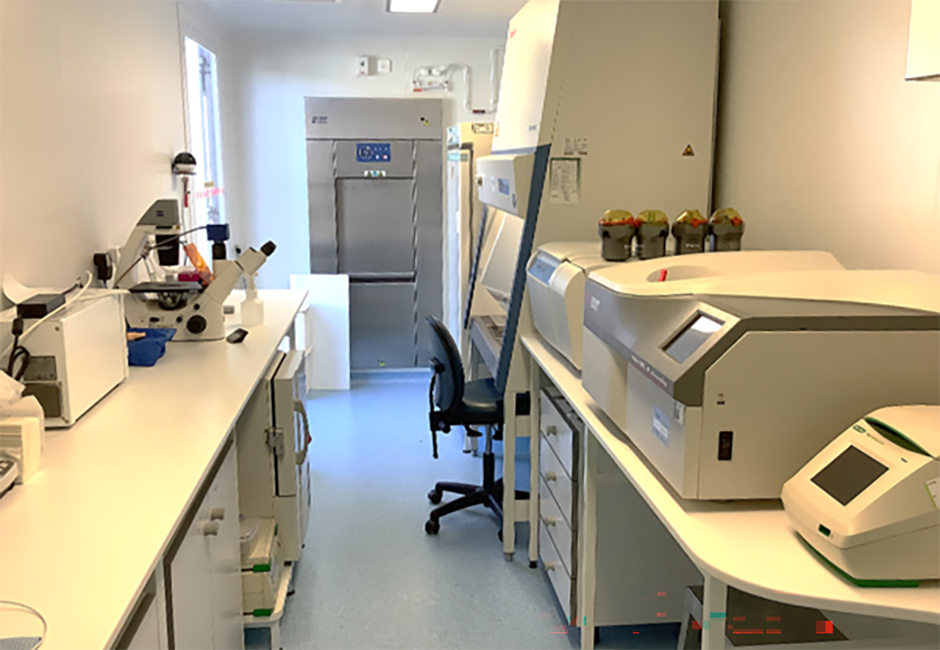
Inside the PC3 laboratory.
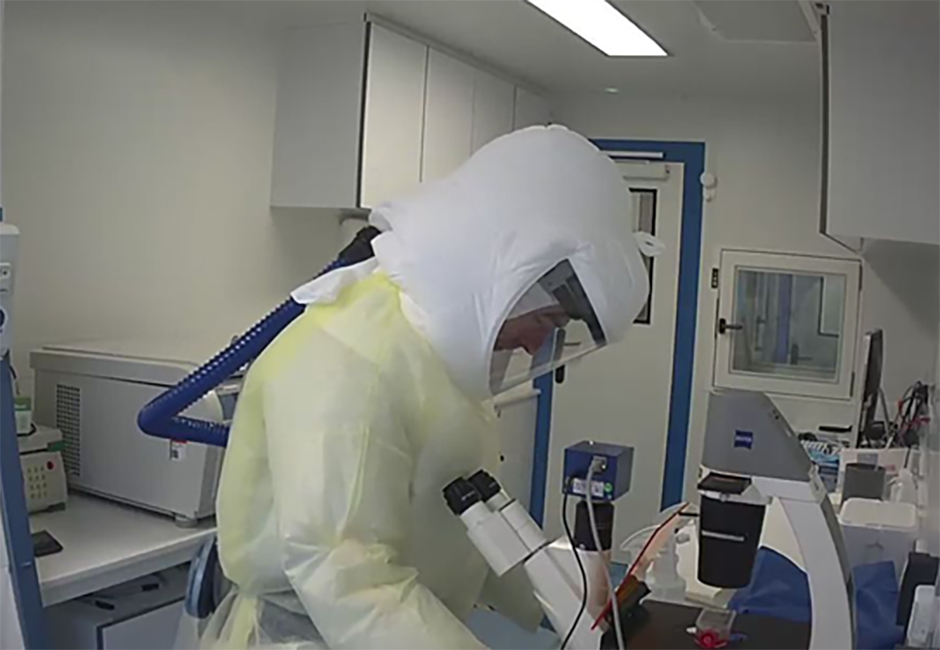
Dr Rhodri Harfoot wearing personal protective equipment (PPE) to keep safe while working on SARS-CoV-2 infected cells in the PC3.