
International food researcher Dr André Brodkorb is truly committed to science. Not only does he use simulated models and real-life research participants to understand the digestion of various foods, but he also experiments on himself.
The Principal Research Officer at Ireland’s Teagasc Food Research Centre Moorepark once swallowed a wireless camera to get an inside view of milk protein digestion. During another experiment, he had an electrode placed in his stomach to measure the acidity. It was these experiments that sparked his scientific curiosity, and he is now best known for his work on digestion methods and how food structure changes during food digestion.
But it’s André’s experience with oats that will be under the microscope when he’s in New Zealand as 2026 Harraways 1867 Visiting Professor.
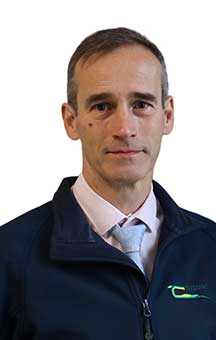
Dr André Brodkorb
André’s research has shown that different oat varieties have diverse nutritional values. For example, a bowl of porridge made from some oat varieties packs more protein than two eggs.
It’s research that excites the Head of Marketing and Product Innovation at Harraways, Peter Cox.
“It’s going to be interesting hearing about André’s research, and how it relates to New Zealand grown and made breakfast foods, like Harraways Oats,” Peter says.
The professorship programme was established in 2017 to celebrate Harraway and Sons Ltd’s 150th anniversary.
“It is a partnership vision set by the board of Harraways alongside the University of Otago,” says Peter, who looks forward to seeing André’s insights build upon contributions made by previous visiting professors.
“We’ve had a good mix of different professors over the years. Dr Susan Tosh provided perspectives around what can be said about oats. One angle surprising us was the positive effect of oats on mental health. Being a lower GI-type food, it’s very good at regulating blood sugar and mood, so helps a positive mindset.
“Professor R Paul Singh provided a milling efficiency perspective, whereas Professor Rickey Yada had a background in developing new plant food applications. He validated Harraways’ direction.”
Harraways is currently undertaking a mill update influenced in part by inaugural visiting Professor Marc Hendrickx.
“Marc was very connected into thermo-processing and the effect on plant-based foods as it went through a heat milling process,” Peter says.
“Key questions from us then were whether we needed to retain the kiln process. Kilning slows the whole process down, yet keeps milled oats fresher for longer, and gives our oats our famous nutty flavour. We realised we’d get rid of the kiln at our peril.”
Peter says Harraways and the University of Otago are “kindred spirits”.
“We were formed at around the same time. We do a lot of science work together on Food Science, Marketing and Human Nutrition. It’s a real ecosystem that we have down here in Otago and Southland. And with 80 to 85 per cent of our oats coming from the greater Southland/Otago region – it is a low food miles story, which is extremely important too.”
The sole remaining oat mill in the country, Harraways has an impressive legacy – but the once steam-powered mill is now fueled by STEM.
André says that focus on innovation is one of many food and agriculture parallels between New Zealand and Ireland.
“Both are food exporting countries, have a very advanced food research sector with top-class researchers, and both countries are punching well above their weight, which is great.”
Pro-Vice-Chancellor Charles Brennan, himself a Professor of Food Science, says André’s visit will include a plenary talk at the New Zealand Institute of Food Science and Technology conference, a presentation to Harraways staff, meetings with Food Science and Human Nutrition postgraduate students and a free public lecture.
“André’s work reveals the connections between food design and nutrition. The consumption of oats provides the population with the ideal balance of carbohydrates, proteins, lipids and essential dietary fibre. The research work being undertaken illustrates how real-world research can have both commercial applications and health outcomes for us here in Dunedin,” Charles says.
“His visit is a fitting capstone to the Harraways 1867 Visiting Professor series.”
The trip also has a personal resonance for keen mountain runner and white-water kayaker André, who’s looking forward to exploring the Otago region.
“The last time I was in Dunedin was 30 years ago in 1996, backpacking with my then girlfriend (now wife) as part of a year's trip around the globe. So, I am curious about what has changed in New Zealand, and Dunedin in particular.”
Free public lecture
Morning breakdown: breakfast fuel and your gut!
Castle 1 Lecture Theatre. 75 Albany Street, Dunedin North
8am, Tuesday 14 July
Complimentary breakfast will be served from 7.45am at the Human Nutrition food truck, Union Lawn
Livestream link here
Harraways 1867 Visiting Professor series
Dunedin's Harraway and Sons Ltd made the annual visit by an eminent scholar possible for five years as part of its 150th anniversary of starting operations with a steam-powered flour mill. Originally planned to run from 2018 to 2022, the series was slightly disrupted due to the Covid-19 pandemic.
Harraways 1867 Visiting Professors
2026: Dr André Brodkorb
2025: Dr Susan Tosh
2024: R Paul Singh
2019: Professor Rickey Yada
2018: Professor Marc Hendrickx
Department of Food Science
Combine your understanding of scientific disciplines such as biology, chemistry and microbiology, with consumer insights to design safe, nutritious and sustainable foods for a wide variety of markets.
View