
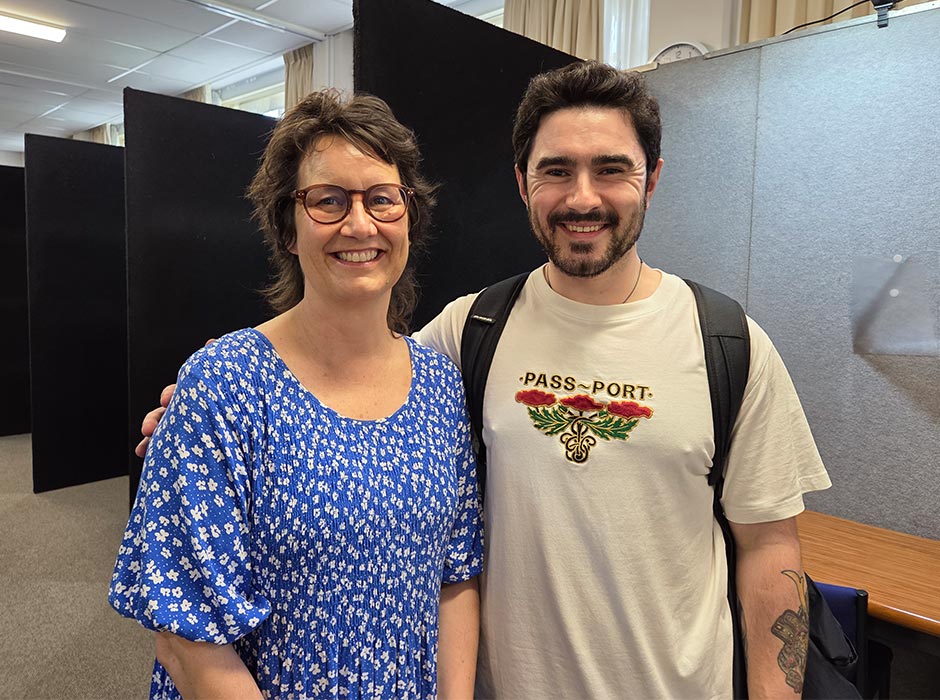
Disability Information and Support (DIS) Supervisor Lara Valentine and first-year Commerce tauira Nate Hamilton are both fans of the low-distraction booths that have been officially introduced this semester.
Sitting exams has just gotten a little less stressful for tauira in need of a low-distraction environment.
Custom-designed, semi-enclosed booths have officially been introduced by Disability Information and Support (DIS) this semester for students who, due to their disability or impairment-related needs, require a low-distraction environment to perform at their best during exams.
DIS Manager Melissa Lethaby says students approved for a low-distraction space have typically sat their exams in separate or small shared rooms.
“While these settings are quieter than the main exam venues, they can still present challenges, particularly when multiple students with different needs are placed together.
“Background noises, movement and sensory distractions can significantly affect concentration.”
As the number of students requiring a low-distraction setting has grown, it has become increasingly difficult to find enough spaces to meet the need, she says.
“We also had to ensure that the spaces truly met the intent of low distraction.”
In Semester 1, DIS – in collaboration with Student Administration – ran a small-scale pilot using a booth-style configuration within one of the University’s exam venues, which offered “privacy, calm and focus” within a larger supervised room.
“The goal was to test whether the semi-enclosed spaces could provide an effective solution for students needing low-distraction conditions, while also making more efficient use of space.
“The pilot was very successful, and students reported feeling more comfortable, focussed and less anxious. Supervisors also found the setup easy to manage.”
Following the success of the pilot, three low-distraction spaces have been established this semester: two at the College of Education, which can each accommodate 16 students, and one at the Otago Business School, which can accommodate 10 students. Students can be sitting different exams at different levels within the same room.
“Looking ahead, we’re exploring opportunities to further increase capacity and refine the design. We’re hugely appreciative of the work done by Impressions Audiovisual to provide the panels and set these spaces up,” Melissa says.
“Having asked for low distraction for my exam, I honestly don't know how they could make it any better." – Nate Hamilton
One student who’s already benefitting from the new spaces is Commerce tauira Nate Hamilton, who is finishing his first year of university after completing the Te Huarahi pathway programme at the beginning of the year.
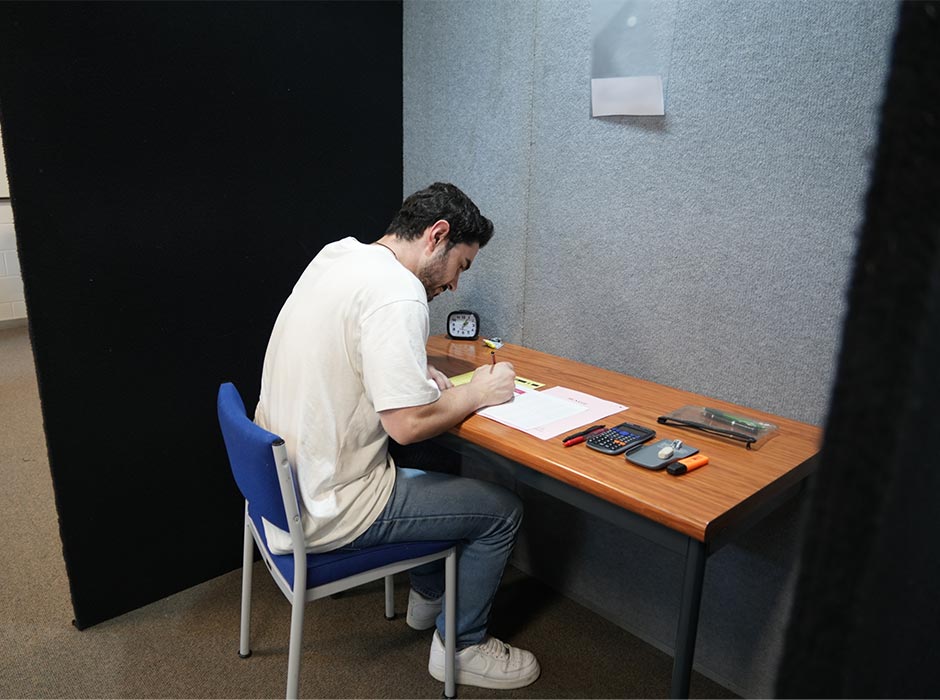
Nate Hamilton, demonstrating one of the new spaces, says the booth gave him peace of mind and no distractions during his actual exam. “I honestly don't know how they could make it any better.”
“The booths were a great option for me as I already struggle with education, exams etc... I dropped out when I was very young. After an eye injury in 2024, I decided to start an educational path.”
The experience of using one of the booths during his exams was “phenomenal”, he says.
“Having asked for low distraction for my exam, I honestly don't know how they could make it any better. I've never had a low-distraction room like that. It looked like a lot of the other students were also thoroughly impressed with the layout.
“I have dyslexia and slight ADHD so I can become distracted incredibly easily, which is not great in an exam. The booths allow me to have peace of mind and no distraction in my own wee space to completely focus on my exam.”
Melissa says students who believe they may benefit from a low-distraction venue should make an appointment with a Student Advisor at DIS.
“During this appointment the Advisor will determine appropriate accommodations in line with supporting medical or professional documentation. Students can then apply for alternative arrangements via eVision before the appropriate deadlines.”
The booth-style venues are a good example of working innovatively to meet the ever-changing and evolving needs of students, she says.
“It’s great to see such a practical solution has maximised the spaces we have on campus. As working and learning environments increasingly move toward shared spaces, it’s important that we continue to think creatively about how to balance accessibility, flexibility and efficiency."
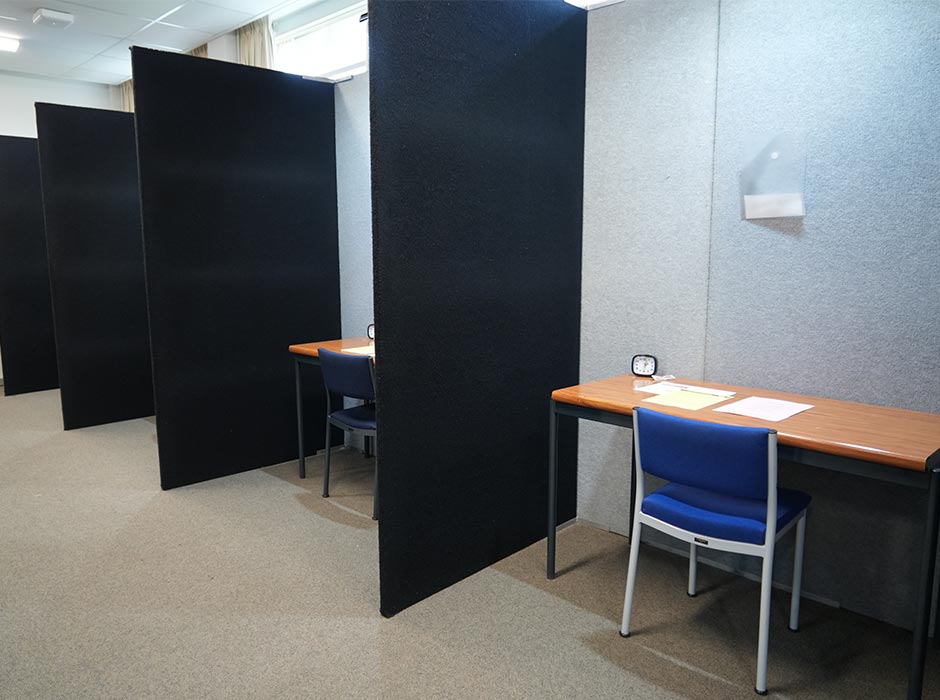
The low-distraction spaces are a good example of how considered design can support inclusion without requiring major structural change, Disability Information and Support Manager Melissa Lethaby says.
“It’s a good example of how considered design can support inclusion without requiring major structural change. It’s all about creating environments where students can focus and perform at their best,” she says.
Nate first learned about DIS when he attended Te Huarahi and he highly recommends fellow students go along and find out what they’re eligible for.
“DIS has been so helpful these past two years for someone that has learning difficulties. They are all extremely organised and put in 110% effort to help all of the students that are a part of their service.
“I'd like to give a special shout out to Rachel, who helps me with all of my exam organisation and is my main point of contact. Also to Kelly, who is always smiling and welcoming at reception, and Gillian who sat with me for most of my exams when I was at Te Huarahi.”
If you never ask about what you’re able to utilise, you'll never know, Nate says.
“I live by ‘if you don't know, ask’. If you never ask your best answer will always be no. So go along and speak with the team at DIS!”
– Kōrero by Internal Communications Adviser Laura Hewson
Te Pokapū Hāpai Huka Hauā
If you have a disability, impairment, injury or medical condition that affects your ability to study, Disability Information and Support can help you.
Find out more