
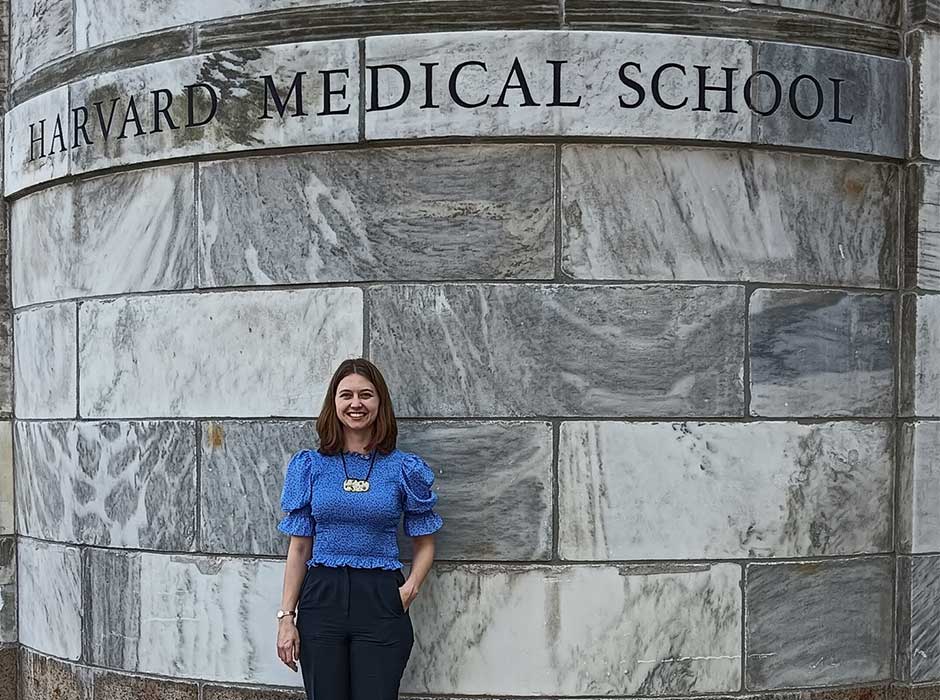
It can be daunting moving countries, however Alice says that she has been given a warm welcome since arriving. "The Harvard community has a really lovely kiwi community that take care of you as soon as you arrive. I got fed, I got taken to the supermarket, I got given a rice cooker, it was just so miharo to have a soft landing and a very warm welcome."
A proud descendant of Ngā Puhi, Alice Eruera came to the University of Otago – Ōtākou Whakaihu Waka from Whangārei to do her bachelor’s degree, ten years later she is conducting research at Harvard Medical School in the US.
Alice attributes a lot of the opportunities that have been presented to her, and her own professional development, to her time spent at Ōtākou Whakaihu Waka. She graduated with a PhD in Microbiology and Immunology in 2022.
“Otago definitely played a part in me ending up at Harvard. I learnt so much and I had a lot of opportunities offered to me over the years that allowed me to build my kete of knowledge around rangatiratanga and responsibility.”
Alice says she fell into the opportunity when she met Piotr Sliz, the founder of a computing service SBGrid, which started at Harvard Medical School.
She was able to introduce herself when he visited Aotearoa New Zealand as a guest speaker - the start of a life changing journey for Alice.
“I used SBGrid services all the time when I was a PhD student. I had this idea of a particular kind of service that I always wished SBGrid offered which would have made my life much easier back then, so when I had the chance to meet him, I told him my idea and suggested they could work on it at some point in the future,” Alice says.
“I genuinely didn't think anything would come of it, but then a week later, I suddenly got an email from him. He said he was really impressed with my thinking and he wanted me to know that he was going to remember me, and if I was ever in Boston, I should contact him.”
Thinking this would never happen, Alice continued on with life, until coincidentally some time later she found herself attending a conference in Southbridge, Massachusetts.
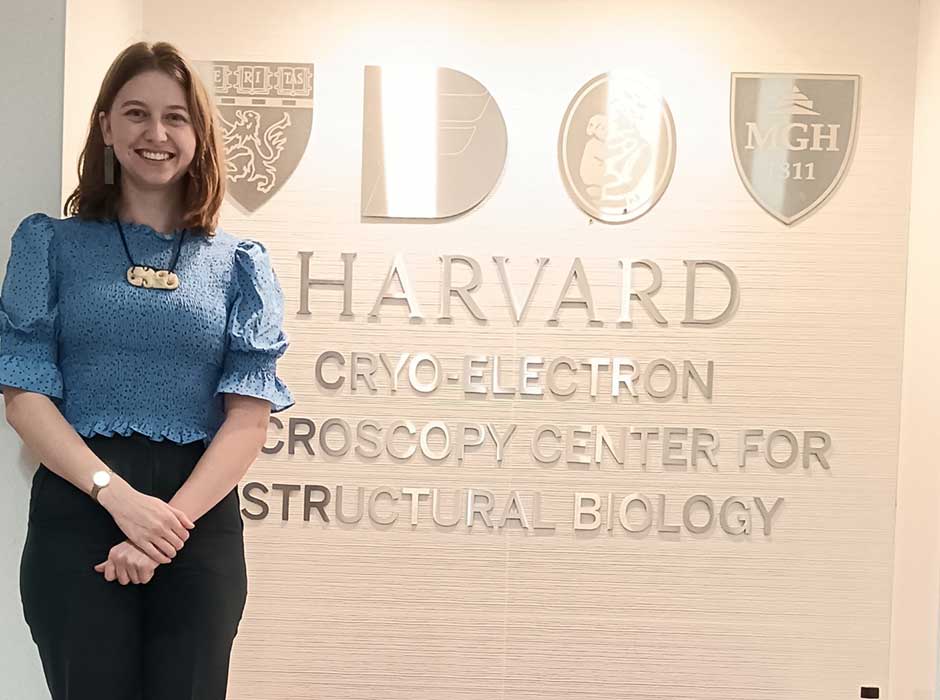
Alice speaks fondly of her time at Otago, emphasising on the network it provides and the opportunities that came through her connection to the University.
He manu hou, he pī ka rere.
A young bird, ready to take flight.
“This was my first time in America, and I had to transit through the nearest big city, which was Boston. So I emailed Piotr, and he really did remember me. He invited me to give a seminar to the Department of Biological Chemistry and Molecular Pharmacology at Harvard Medical School.”
Alice delivered her seminar, but unknowingly was taking part in a job interview. She only realised when Piotr and his team started asking questions regarding work opportunities at Harvard.
Thanks to her talent, hard work, and some Ngā Puhi charm, Alice is now on a one year contract with Harvard Medical School as a research fellow.
Alice says the relationships that she made during her time at Ōtākou Whakaihu Waka have been instrumental in receiving the āwhina and support she’s needed to get to where she is today.
“I made some really important connections at Otago who provided me with so much support and mentored me throughout my first postdoc, especially my incredible (ex) boss Mihnea Bostina and my kaiārahi Nathan Kenny. They really helped me grow in the role and taught me a lot about the academic process, which really prepared me for my new role now.”
“I did all my tertiary schooling at Otago and my first postdoc was at Otago as well, so Otago is the place where I learned to become a scientist. I really loved my time there. I would even love to return to Otago when my time at Harvard is up, if they'll take me.”
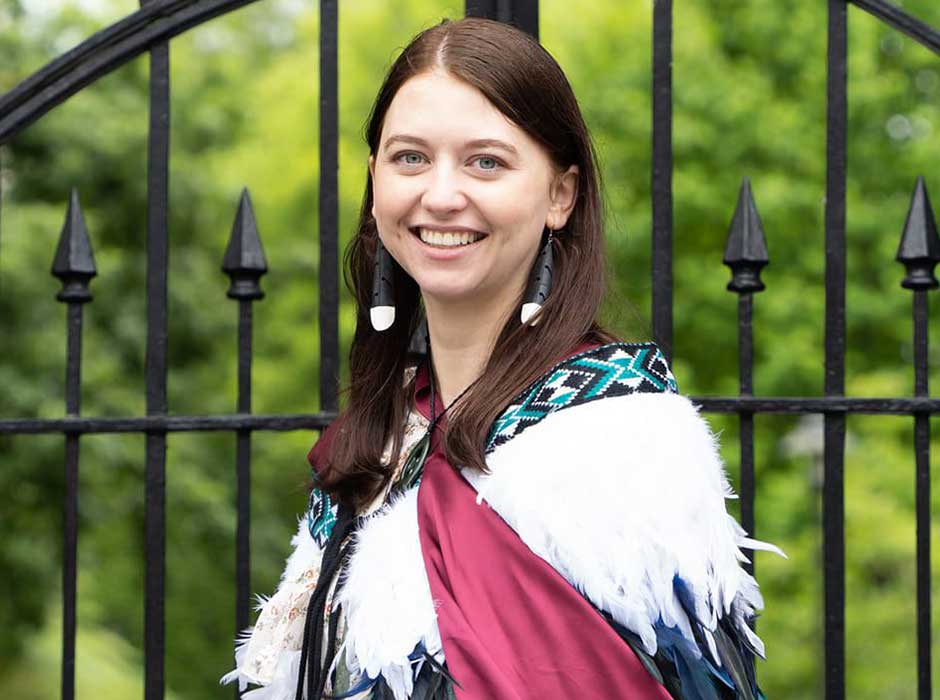
With a new chapter ahead of her, Alice is excited for the adventure this new opportunity brings, but she’ll never forget where home is.
Alice is working on a computational research project and is loving every minute of her new mahi. The project is based on the idea she originally pitched to Piotr Slizher, now her boss.
“There is a type of scientific technique called electron tomography. Electron tomography uses a powerful electron microscope to take pictures of tiny objects from different angles, like a CT scan but at the nanometer scale.
“A computer then combines these 2D images to build a detailed 3D model of the object’s structure. This allows scientists to see the inner organisation of cells or other biological specimens. The computing part of this whole pipeline, where you go from 2D images to a 3D model on your computer, is extremely difficult to do.
“It's time consuming, it's frustrating, and it's hard to learn. You need to master linux, bash scripting, a decent amount of Python and about eight to 14 different pieces of rather janky software, which for the average biologist is really asking a lot. It's almost at the intersection of computer science and biology. My mahi is trying to solve this problem and flatten the learning curve.”
Alice is building a databank of curated sets of tomography data that students and new users can go to for training. She says they'll be able to download datasets from the databank, as well as detailed step-by-step instructions on what to do, which will help them complete practice tutorials, learn how to use different pieces of software, and learn all the skills they need apply into their own mahi to process their own data.
She is also working on building a teaching curriculum using the principles from her databank project. Alice says she has a passion for teaching, so this makes her job even more enjoyable.
– Kōrero by Māori Communications Adviser Brigham Riwai-Couch
Te Tari Moromoroiti me te Ārai Mate
Microbes are essential for maintaining life on Earth. They comprise more than 50 per cent of the life forms on our planet, yet only around 1 per cent have been identified and studied. Infectious microorganisms, including bacteria and viruses, can attack our bodies and we rely on our immune system to protect us. Thus the relationship between microbes and immune cells is critical for our survival.
View