
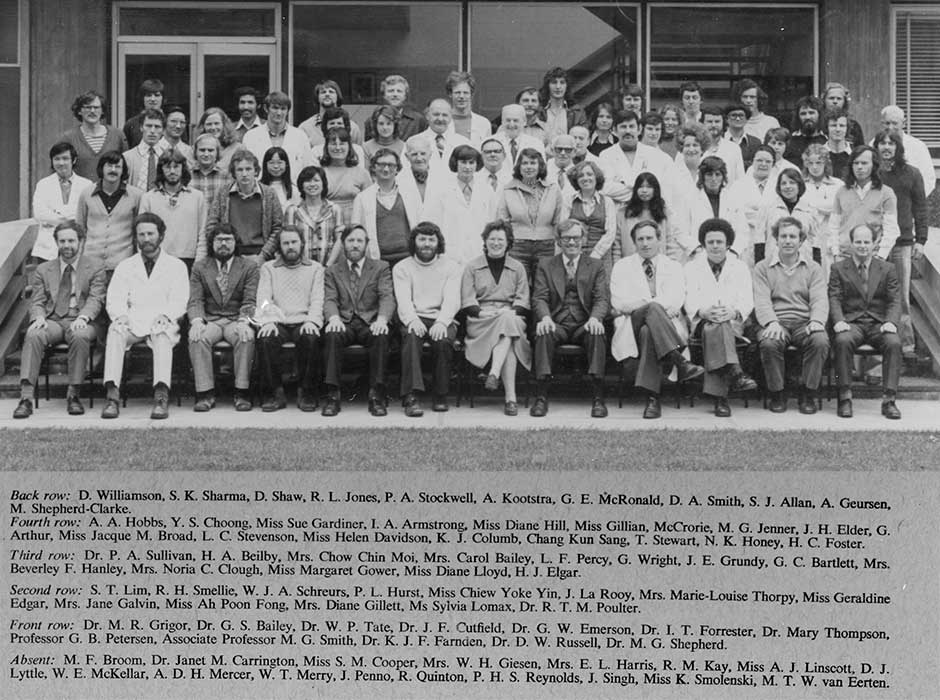
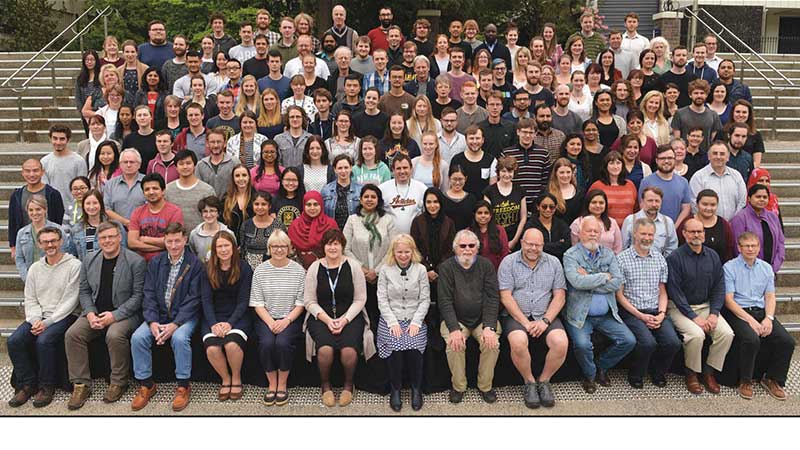
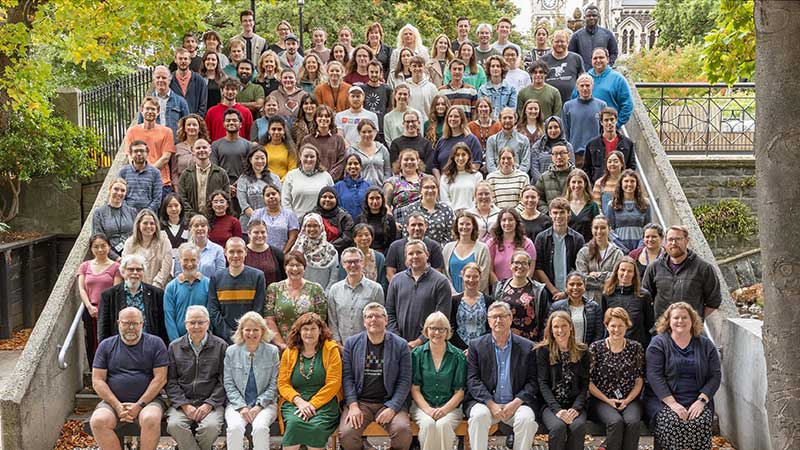
Department of Biochemistry staff 1976.
What will biochemistry research look like in another 50 years given the advances in technology and innovations over the last five decades?
The Department of Biochemistry has taken a moment to reflect on the successes of its students, in particular the research its fourth-year students are undertaking, at the Biochemistry Department Research Society’s 50th Annual Meeting.
The Research Society’s Annual Meeting brings together staff and students to hear 400-level students present their research projects. The event showcases the breadth of research taking place across the department, while recognising the students taking their first steps into serious scientific investigation.
The 50th anniversary was a significant milestone to celebrate. To mark the historic occasion, Professor Catherine Day presented a retrospective look at the careers of former 400-level students, highlighting alumni who have gone on to make significant contributions to science both in New Zealand and internationally.
She says it’s been fascinating to look over the past five decades.
“Many have gone on to careers in research and academia, while others have taken their scientific training into medicine, biotechnology, government advisory roles, education, science communication, technology and many other fields, both in New Zealand and overseas.
“Their diverse careers reflect the broad value of the analytical, experimental and problem-solving skills developed while doing research.”
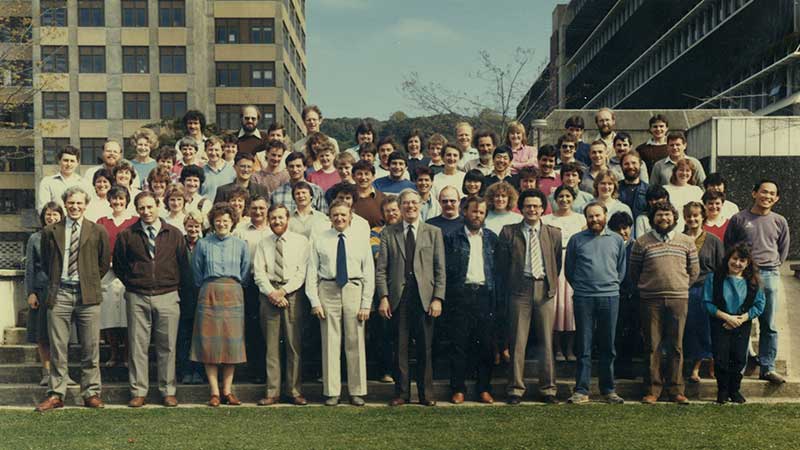
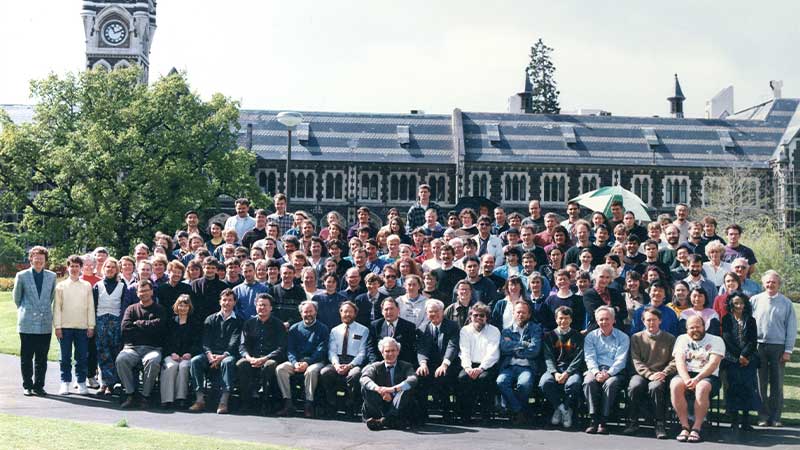
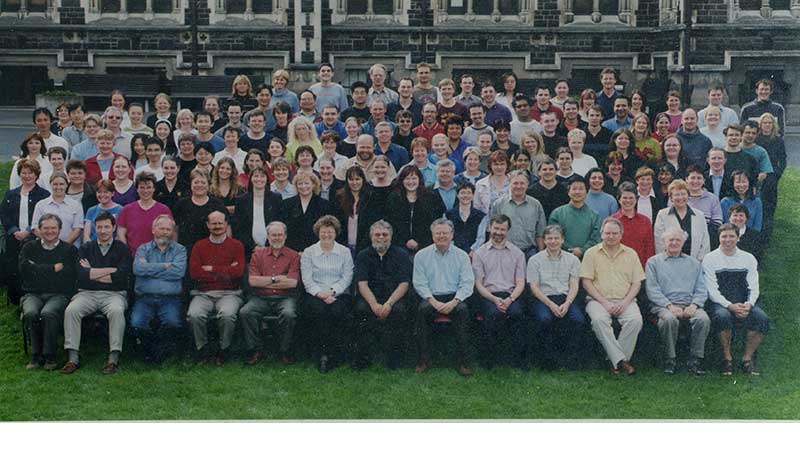
She also noted that many former 400-level students have not moved far - several current staff members and postgraduate students once stood in the same position as this year's presenters, having themselves delivered talks at previous Research Society meetings.
“Some lead significant research programmes including a Professor of Biochemistry at Oxford in the UK. And many others are now teaching the new generation of researchers,” she says.
“Biochemistry has changed enormously over the past 50 years, and it is difficult to predict where advances in areas such as molecular medicine, biotechnology and computational approaches will take the field over the next 50.
“What seems certain though is that understanding biological systems at the molecular level, and developing new ways to investigate and manipulate them, will remain central to addressing many of the world’s challenges ahead.”
This year's meeting featured presentations from 12 students, who shared their research journeys, outlining their projects, the work they have completed so far, and what they hope to achieve before submitting their final dissertations.
The diverse range of topics highlighted the department's wide-ranging research strengths.
Two projects explored the molecular mechanisms behind rare developmental genetic disorders, and four projects focused on cancer - improving models of cancer, developing new diagnostic tests, advancing immunotherapies, and better understanding why some cancers occur. Another project had a plant focus - how flowering in ryegrass is influenced by interrupted night-time light exposure; and yet another project was entirely computational - creating tools to discover new functional RNAs.
Some projects revolved around the study of particular proteins - developing methods to produce receptors in the laboratory, investigating how proteins function in cellular signalling, and examining details of photosynthetic machinery in cyanobacteria.
The day also included opportunities for socialising, with a time-honoured tradition being home baking supplied by the 400-level students themselves for afternoon tea. As is also traditional, the 400-level students were each presented with a keepsake, a metal lab spatula engraved with their name.
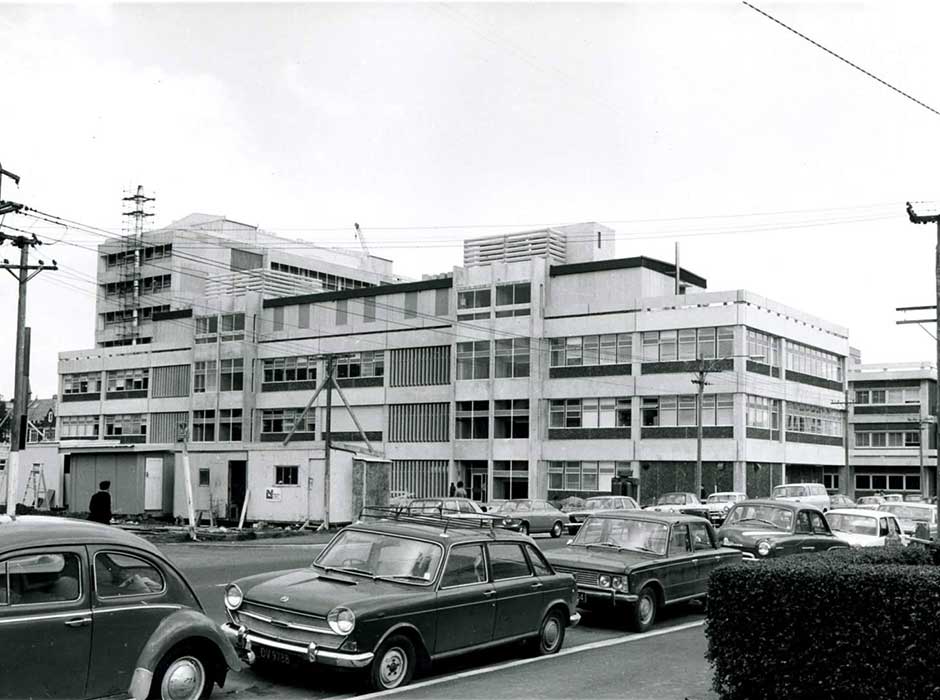
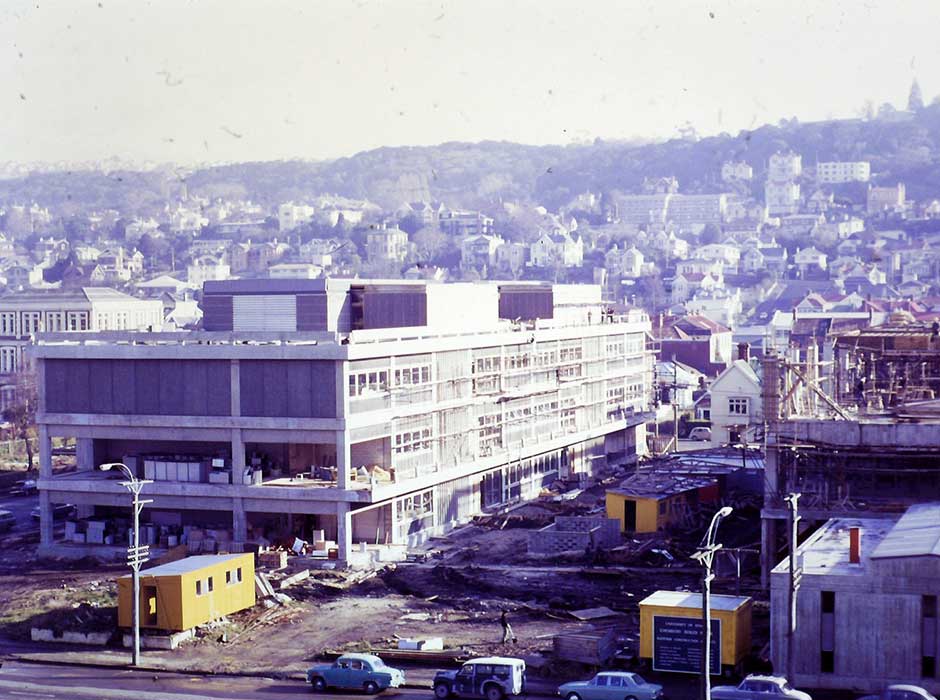
So why was the Research Society Meeting started in 1976? Biochemistry became a separate department much earlier, when it split from Physiology in 1949. It was only after moving into its own purpose-built building in 1971 that the department entered a period of significant growth, recruiting new academic staff and increasing student numbers. The Research Society Meeting was established to provide these students with an opportunity to present and discuss their research. Fifty years on, the event remains a cornerstone of the Department of Biochemistry, celebrating both its scientific research and the next generation of researchers.
-Kōrero by Claire Grant, Communications Advisor, Faculty of Biomedical Sciences - Te Kaupeka Mātai Rokoā-Koiora
What makes life work?
Biochemists find out how the molecules in living things work. By unravelling the secrets underlying fundamental biological processes, we can find innovative approaches to challenges in medicine, biotechnology and agriculture.
View