
Partner with us, the University of Otago – Ōtākou Whakaihu Waka, a globally ranked, research-intensive university with a strong track record of international collaboration.
Work with our experts across health, environment, technology and society to tackle shared challenges, explore new ideas and advance research with global impact.
Research strengths at Otago
With proven experience of over 1,800 projects and partnerships across Europe, Otago's strengths include:
- Infectious diseases and global health
- Rare genetic diseases and genomics
- Longitudinal studies
- Regenerative medicine and bioengineering
- Antarctic, Southern Ocean, climate and environment
- Indigenous health and health equity

Collaborate with us
New Zealand's Southern Hemisphere location opens up distinctive research opportunities, including counter-seasonal studies, biodiversity research and access to Antarctica and the Pacific region.
We also bring substantial research infrastructure, established support systems and the experience to support successful international collaborations.
Visit Wai Ora, our recently completed $220M medical facility.
Contact our Horizon Europe adviser
Get in touch to explore a research partnership with Otago.
Horizon Europe projects
Amplifying brain research
“Researchers in a single country cannot solve this important and complex problem – significant progress will be made when the best researchers across brain research disciplines form large, transdisciplinary teams that include people living with brain conditions, advocates, technology specialists and industry.”
Professor Louise Parr-Brownlie, (Ngāti Maniapoto, Te Arawa).
The strength of brain research in New Zealand will be highlighted thanks to an international partnership with a global mission.
The University, in conjunction with the Ministries of Health and MBIE, is the New Zealand host of a Horizon Europe Brain Health Partnership.
Professor Parr-Brownlie says teamwork is key to finding real-world solutions, such as new ways to deliver health services, detect brain changes or develop new treatments, to improve brain health.

Professor Louise Parr-Brownlie (Ngāti Maniapoto, Te Arawa).
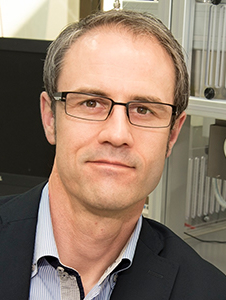
Professor Tim Woodfield.
3D bioprinting for tissue repair
"What’s really exciting with this research is the likelihood of incorporating patients' cells into the 3D printing process to regenerate their tissue rather than replacing it with an orthopaedic implant.”
Professor Tim Woodfield.
A research team at the University of Otago, Christchurch has been chosen as an international partner in a major Horizon Europe-funded consortia project focused on advancing 3D bioprinting and regenerative medicine.
Professor of Regenerative Medicine and CReaTE Director Tim Woodfield says his team will play a major role in an eight million euro micro@MACRO (m2M) project tasked with advancing the exciting field of bioprinting technology for cartilage tissue repair in human patients.
Shaping rare disorders research
“I am excited to learn how New Zealand can be involved in rare disorders research on such a large scale, and I also hope to share our unique perspective in considering Indigenous views on genetics with European researchers.”
Professor Louise Bicknell.
Otago is one of only a handful of non-European partners to become part of the European Rare Diseases Research Alliance (ERDERA). Backed by the European Union, over 170 organisations have united, with over 150 million euros in funding available for rare disease research over the next seven years.
Otago's Faculty of Biomedical Sciences Professor in Genetics, Louise Bicknell, who is leading the local contribution, is proud that New Zealand has been able to participate in such a large, closed membership initiative.
Louise has also been appointed as the New Zealand Representative to the Governing Board of ERDERA, where she will be able to contribute to shaping future priorities.

Professor Louise Bicknell.

TB and diabetes
“Through our Horizon Europe research project, PROTID, we will perform the world’s first randomised controlled trial with a focus on a group of people at a particularly high risk of contracting TB – those with diabetes”
Professor Philip Hill.
Professor Philip Hill is the senior epidemiologist leading the trial that is being conducted in Tanzania and Uganda, with partners in Europe and Africa.
The goal is to identify whether preventive treatment against the development of tuberculosis should be a priority for people with diabetes mellitus who live in a country with a high incidence of tuberculosis.

These projects have been partially or fully funded by the European Union, Horizon Europe programme.
What is Horizon Europe?
Horizon Europe is the European Union's key funding programme for research and innovation. New Zealand is an associate of Pillar II which focuses on science and technologies to address major global challenges. Funding opportunities are tightly defined requiring applicants to show how they will address specific outcomes and expected impact.
The University of Otago welcomes opportunities to collaborate with consortia seeking funding from Horizon Europe.
As an associate of Pillar II, the University of Otago – Ōtākou Whakaihu Waka maintains commitments to gender equity:
Visit our Horizon Europe Gender Equality Plan
University of Otago researchers can participate fully in collaborative projects and consortia.
MSCA Global Postdoctoral Fellowships
The University of Otago can host the outgoing phase of Marie Skłodowska-Curie Actions (MSCA) Global Postdoctoral Fellowships. This provides an opportunity for European researchers and institutions to develop research collaborations with Otago in Aotearoa New Zealand. Visit EURAXESS for details.