
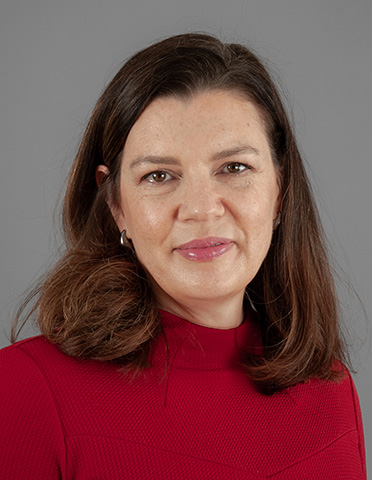
 Professor
Background and interests
Professor Angela Ballantyne is a Professor of Bioethics at Ōtākou Whakaihu Waka, Pōneke (University of Otago, Wellington), New Zealand, and an internationally recognised scholar in bioethics, research ethics, and health data governance. Her research examines how health systems can responsibly harness data, AI, and medical research while promoting equity, fairness and public trust.
Angela has led influential work on learning health systems, public-private data partnerships, precision medicine governance, and public attitudes towards health data use, including collaborative projects in Singapore and internationally
Her work has shaped national and international policy on benefit sharing and inclusion of underrepresented populations in research and responsible data innovation. She has advised governments, the World Medical Association, and international organisations on the ethical governance of health data, AI, organ donation and clinical ethics.
She is a member of New Zealand's National AI and Algorithm Expert Advisory Group, and the Ethics Committee on Assisted Reproductive Technology, as well as the Lancet Commission on Precision Health. She has previously served as President of the International Association of Bioethics, a member of the New Zealand Health and Disability Ethics Committees, the national COVID-19 Immunisation Implementation Advisory Group (IIAG); a founding member of Birth Trauma Aotearoa; and has worked for the Human Genetics unit at the World Health Organization.
Research interests
Angela's research spans:
- Research ethics
- Feminist bioethics
- Reproductive ethics
- Global health
She has published on:
- Exploitation
- Vulnerability
- Unconscious bias
- Trust
- Informed consent
- The governance of emerging health technologies
Much of her work examines how power imbalances and structural inequities influence participation in research, access to healthcare, and the distribution of the benefits of scientific innovation.
Across these diverse areas, her work aims to develop ethical frameworks that are both philosophically rigorous and responsive to the practical challenges faced by patients, clinicians, researchers, and policymakers.
Current research
Her current research brings together empirical and normative approaches to address ethical challenges in precision health, data sharing, public interest, consent, trust, fairness, and equitable access to innovation.
Publications
Towns, C., Ballantyne, A., Konstantinova, P., Drew, C., & Rosser, A. (2026). Planning advanced therapy trials for Huntington's Disease: Ethical considerations. Molecular Therapy. Advance online publication. doi: 10.1016/j.ymthe.2026.09.035 Journal - Research Article
Davies, D., Ballantyne, A. J., & Nie, J.-B. (2026). Panoptic pain and women's disciplinary governance in the persistent pain clinic. International Journal of Feminist Approaches to Bioethics. Advance online publication. Journal - Research Article
Ballantyne, A., Schaefer, G. O., Newson, A. J., Xafis, V., Toh, H. J., Ong, S., … Tai, E. S. (2026). Trustworthy governance of genomic and health-related data: Lessons from Singapore. Asian Bioethics Review. doi: 10.1007/s41649-025-00397-7 Journal - Research Article
Lim, J. E., Siddiqui, F. J., Ballantyne, A., Dunn, M., Prince, S., Wilkinson, D., … Schaefer, G. O. (2026). Ethical, legal, and social issues of AI use in emergency healthcare: A scoping review. BMC Medical Informatics & Decision Making. Advance online publication. doi: 10.1186/s12911-026-03355-x Journal - Research Other
Hatherley, J., Søgaard, A., Ballantyne, A., & Pauwels, R. (2026). Federation opacity and the promise of federated learning in healthcare. American Journal of Bioethics. Advance online publication. doi: 10.1080/15265161.2026.2637093 Journal - Research Article
2026
Journal - Research Article
Towns, C., Ballantyne, A., Konstantinova, P., Drew, C., & Rosser, A. (2026). Planning advanced therapy trials for Huntington's Disease: Ethical considerations. Molecular Therapy. Advance online publication. doi: 10.1016/j.ymthe.2026.09.035
Davies, D., Ballantyne, A. J., & Nie, J.-B. (2026). Panoptic pain and women's disciplinary governance in the persistent pain clinic. International Journal of Feminist Approaches to Bioethics. Advance online publication.
Ballantyne, A., Schaefer, G. O., Newson, A. J., Xafis, V., Toh, H. J., Ong, S., … Tai, E. S. (2026). Trustworthy governance of genomic and health-related data: Lessons from Singapore. Asian Bioethics Review. doi: 10.1007/s41649-025-00397-7
Hatherley, J., Søgaard, A., Ballantyne, A., & Pauwels, R. (2026). Federation opacity and the promise of federated learning in healthcare. American Journal of Bioethics. Advance online publication. doi: 10.1080/15265161.2026.2637093
Moerenhout, T., Hunter, I., & Ballantyne, A. (2026). A novel pathway for integrating ethics into digital technology design: A person-centred co-design approach developed in the context of assistive technologies for older adults. Science & Engineering Ethics, 32, 18. doi: 10.1007/s11948-026-00584-1
Garrett, S., Ballantyne, A., Gladman, T., & Swift, M. (2026). Exploring the personal impact of cluttering: A scoping review of current evidence. Journal of Fluency Disorders, 87, 106197. doi: 10.1016/j.jfludis.2026.106197
Ballantyne, A., Style, R., Stubbe, M., Murton, S., & Dowell, T. (2026). Using AI scribes in New Zealand primary care consultations: An exploratory survey. Journal of Primary Health Care, 18(1), 75-81. doi: 10.1071/HC25079
Journal - Research Other
Lim, J. E., Siddiqui, F. J., Ballantyne, A., Dunn, M., Prince, S., Wilkinson, D., … Schaefer, G. O. (2026). Ethical, legal, and social issues of AI use in emergency healthcare: A scoping review. BMC Medical Informatics & Decision Making. Advance online publication. doi: 10.1186/s12911-026-03355-x
2025
Journal - Research Article
Smedinga, M., Ballantyne, A., & Schaefer, G. O. (2025). Why de-identified data sharing for research should be in the public interest [Extended essay]. Journal of Medical Ethics. Advance online publication. doi: 10.1136/jme-2025-110825
Nord‑Bronzyk, A., Savulescu, J., Ballantyne, A., Braunack-Mayer, A., Krishnaswamy, P., Lysaght, T., … Dunn, M. (2025). Assessing risk in implementing new artificial intelligence triage tools: How much risk is reasonable in an already risky world? Asian Bioethics Review, 17, 187-205. doi: 10.1007/s41649-024-00348-8
Muyskens, K., Ballantyne, A., Savulescu, J., Unais Nasir, H., & Muralidharan, A. (2025). The permissibility of biased AI in a Biased World: An ethical analysis of AI for screening and referrals for diabetic retinopathy in Singapore. Asian Bioethics Review, 17, 167-185. doi: 10.1007/s41649-024-00315-3
Journal - Research Other
Ballantyne, A. (2025). Gender norms, altruism and susceptibility to the social value misconception. American Journal of Bioethics, 25(8), 85-87. doi: 10.1080/15265161.2025.2526746
Conference Contribution - Published proceedings: Abstract
Muralidharan, A., Hunter, D., & Ballantyne, A. (2025). Philosophical perspectives on A.J. London's egalitarian research imperative. Proceedings of the Australasian Association of Bioethics and Health Law (AABHL) Conference. Retrieved from https://aabhl2025.w.events4you.currinda.com
Ballantyne, A., Style, R., Stubbe, M., Murton, S., & Dowell, T. (2025). Experiences with AI scribes in New Zealand primary care. Proceedings of the Australasian Association of Bioethics and Health Law (AABHL) Conference. Retrieved from https://aabhl2025.w.events4you.currinda.com
Zayegh, A., Forrest, E., Ballantyne, A., & Austin, N. (2025). PLATIPUS pregnancy and neonatal clinical trails: When are alternative modes or processes of consent appropriate? [Panel session]. Proceedings of the Australasian Association of Bioethics and Health Law (AABHL) Conference. Retrieved from https://aabhl2025.w.events4you.currinda.com
2024
Journal - Research Article
Towns, C., & Ballantyne, A. (2024). Blowing the whistle on mixed gender hospital rooms in Australia and New Zealand: A human rights issue. Journal of Medical Ethics, 50(8), 513-516. doi: 10.1136/jme-2023-109080
Koo, Y. E., Allen, C., Ballantyne, A., & Yassaie, E. (2024). Androcentric bias in surgical equipment: What challenges do women face? American Journal of Surgery, 227, 106-110. doi: 10.1016/j.amjsurg.2023.09.049
Journal - Research Other
Towns, C., Kelly, M., & Ballantyne, A. (2024). Infection, ageing and patient rights: Time for single-occupancy hospital rooms. Australian & New Zealand Journal of Public Health, 48(6), 100198. doi: 10.1016/j.anzjph.2024.100198
Gray, B., & Ballantyne, A. (2024). Adult decision-making capacity and health research in Aotearoa New Zealand. New Zealand Medical Journal/Te ara tika o te hauora hapori, 137(1604), 87-90. Retrieved from https://nzmj.org.nz/
Ballantyne, A., & Style, R. (2024). Can P4 support family involvement and best interests in surrogate decision-making? American Journal of Bioethics, 24(7), 56-58. doi: 10.1080/15265161.2024.2353817
2023
Journal - Research Article
Ballantyne, A., Steers, D., & Gray, L. (2023). Prompting lifestyle interventions to promote weight loss is safe, effective and patient-centred: No. Journal of Primary Health Care, 15(4), 385-387. doi: 10.1071/HC23163
Conference Contribution - Published proceedings: Abstract
Ballantyne, A. (2023). Potential risks and benefits of using Generative Artificial Intelligence (GAI) in clinical communication. Proceedings of the Australian & New Zealand Communication Association (ANZCA) Conference: Ka mua, ka muri: Bridging communication pasts and futures. (pp. 131). Retrieved from https://www.anzca2023.com
Ballantyne, A., Gray, L., & Steers, D. (2023). Fat bias and weight stigma in primary care. Proceedings of the New Zealand Primary Health Care, General Practice & Rural Health Research Symposium. (pp. 12). Retrieved from https://www.otago.ac.nz/wellington/departments/primaryhealthcaregeneralpractice
Ballantyne, A., & Style, R. (2023). Generative artificial intelligence in primary care: Benefits, risks and ethically appropriate use. Proceedings of the New Zealand Primary Health Care, General Practice & Rural Health Research Symposium. (pp. 31). Retrieved from https://www.otago.ac.nz/wellington/departments/primaryhealthcaregeneralpractice
2022
Chapter in Book - Research
Ballantyne, A. (2022). Women in research: Historical exclusion, current challenges and future trends. In W. A. Rogers, J. Leach Scully, S. M. Carter, V. A. Entwistle & C. Mills (Eds.), Routledge handbook of feminist bioethics. (pp. 251-264). New York, NY: Routledge. doi: 10.4324/9781003016885
Journal - Research Article
Ballantyne, A., Lysaght, T., Toh, H. J., Ong, S., Lau, A., Schaefer, G. O., … Braunack-Mayer, A. (2022). Sharing precision medicine data with private industry: Outcomes of a citizens’ jury in Singapore. Big Data & Society, 9(1). doi: 10.1177/20539517221108988
Voo, T. C., Ballantyne, A., Ng, C. J., Cowling, B. J., Xiao, J., Phang, K. C., … Tam, C. C. (2022). Public acceptability of COVID-19 control measures in Singapore, Hong Kong, and Malaysia: A cross-sectional survey. International Journal of Infectious Diseases, 120, 51-58. doi: 10.1016/j.ijid.2022.04.021
Schaefer, G. O., & Ballantyne, A. (2022). Ethics of digital contact tracing wearables. Journal of Medical Ethics, 48, 611-615. doi: 10.1136/medethics-2020-106958
Journal - Research Other
Ganguli-Mitra, A., Shahvisi, A., Ballantyne, A., & Ray, K. (2022). Racism in healthcare and bioethics. Bioethics, 36, 233-234. doi: 10.1111/bioe.13014
2021
Chapter in Book - Research
Ballantyne, A. (2021). Feminist accounts of abortion. In A. Bagheri (Ed.), Abortion: Global positions and practices, religious and legal perspectives. (pp. 257-272). Cham, Switzerland: Springer. doi: 10.1007/978-3-030-63023-2_21
Journal - Research Article
Campbell, J., Sutherland, J., Bucknall, D., O'Hara, L., Heywood, A., Hobbs, M., Ballantyne, A., & Gray, L. (2021). Equity in vaccine trials for higher weight people? A rapid review of weight-related inclusion and exclusion criteria for COVID-19 clinical trials. Vaccines, 9(12), 1466. doi: 10.3390/vaccines9121466
Lysaght, T., Ballantyne, A., Toh, H. J., Lau, A., Ong, S., Schaefer, O., … Tai, E. S. (2021). Trust and trade-offs in sharing data for precision medicine: A national survey of Singapore. Journal of Personalized Medicine, 11(9), 921. doi: 10.3390/jpm11090921
Ong, S., Ling, J., Ballantyne, A., Lysaght, T., & Xafis, V. (2021). Perceptions of ‘precision’ and ‘personalised’ Medicine in Singapore and associated ethical issues. Asian Bioethics Review, 13, 179-194. doi: 10.1007/s41649-021-00165-3
Steers, D. M., Andrews, G. L., Wiltshire, E. J., Ballantyne, A. J., Collings, S. C., & Stubbe, M. H. (2021). Young people with a variation in sex characteristics in Aotearoa/New Zealand: Identity, activism and healthcare decision-making. Culture, Health & Sexuality, 23(4), 457-471. doi: 10.1080/13691058.2020.1863472
Journal - Research Other
Toh, H. J., Ballantyne, A., Ong, S. A. K., Sankaran, C., Tay, H. Y., Singh, M., … Lysaght, T. (2021). Religious perspectives on precision medicine in Singapore. Asian Bioethics Review, 13, 473-483. doi: 10.1007/s41649-021-00180-4
Campbell, J., Hobbs, M., O'Hara, L., Ballantyne, A., Heywood, A., & Gray, L. (2021). Equity in vaccine trials for higher weight people? Protocol for a rapid review of inclusion and exclusion criteria for higher weight people in clinical trials for COVID-19. BMJ Open, 11(5), e050114. doi: 10.1136/bmjopen-2021-050114
Ballantyne, A., & Ganguli-Mitra, A. (2021). To what extent are calls for greater minority representation in COVID vaccine research ethically justified? American Journal of Bioethics, 21(2), 99-101. doi: 10.1080/15265161.2020.1861385
Conference Contribution - Published proceedings: Abstract
Ballantyne, A., Khor, I. W., Lysaght, T., Ong, S., Schaefer, O., Tai, E.-S., & Xafis, V. (2021). Sharing health data for precision medicine: An exploration of ethical concerns in Singapore. Proceedings of the 16th Annual International Conference on Clinical Ethics & Consultation (ICCEC): Beyond Borders: Exploring New Frontiers. Retrieved from https://iccec2021.co.za/
Rennie, S., Bahirathan, K., Ballantyne, A., Bates, P., Chandra, P., & Murtagh-Souza, M. (2021). Are today's doctors honest? A comparative analysis of a questionnaire study exploring medical students' attitudes and reported behaviour on academic misconduct in 2000 and 2020. Proceedings of the Association for Medical Education in Europe (AMEE): The Virtual Conference: Redefining Health Professionals Education Together. (pp. 52). Retrieved from http://amee.org
Conference Contribution - Verbal presentation and other Conference outputs
Smart, T., & Ballantyne, A. (2021, April). Being human: Exploring conscious & unconscious bias in health. Invited presentation at the American Rhinologic Society Meeting, [Online].
2020
Chapter in Book - Research
Ballantyne, A., & Reid, C. (2020). Unconscious bias and clinical care. In A. Douglass, G. Young & J. McMillan (Eds.), Assessment of mental capacity: A New Zealand guide for doctors and lawyers. (pp. 134-138). Wellington, New Zealand: Victoria University of Wellington Press. [Contribution].
Journal - Research Article
Lysaght, T., Ballantyne, A., Xafis, V., Ong, S., Schaefer, G. O., Ling, J. M. T., … Tai, E. S. (2020). "Who is watching the watchdog?": Ethical perspectives of sharing health-related data for precision medicine in Singapore. BMC Medical Ethics, 21(1), 118. doi: 10.1186/s12910-020-00561-8
Ballantyne, A., Moore, A., Bartholomew, K., & Aagaard, N. (2020). Points of contention: Qualitative research identifying where researchers and research ethics committees disagree about consent waivers for secondary research with tissue and data. PLoS ONE, 15(8), e0235618. doi: 10.1371/journal.pone.0235618
Higgins, W. C., Rogers, W. A., Ballantyne, A., & Lipworth, W. (2020). Against the use and publication of contemporary unethical research: The case of Chinese transplant research. Journal of Medical Ethics, 46, 678-684. doi: 10.1136/medethics-2019-106044
Ballantyne, A. (2020). How should we think about clinical data ownership? Journal of Medical Ethics, 46, 289-294. doi: 10.1136/medethics-2018-105340
Journal - Research Other
Ballantyne, A., & Dai, E. (2020). Social responsibility, solidarity, and equity in the time of COVID-19 [Invited]. New Zealand Medical Student Journal, (31), 13-15. [Editorial].
Rogers, W. A., Higgins, W. C., Ballantyne, A., & Lipworth, W. (2020). Responding to unethical research: The importance of transparency. Journal of Medical Ethics, 46(10), 691-692. doi: 10.1136/medethics-2020-106878
Ballantyne, A., Rogers, W. A., Entwistle, V., & Towns, C. (2020). Revisiting the equity debate in COVID-19: ICU is no panacea. Journal of Medical Ethics, 46(10), 641-645. doi: 10.1136/medethics-2020-106460
2019
Journal - Research Article
Ballantyne, A., & Stewart, C. (2019). Big Data and public-private partnerships in healthcare and research: The application of an ethics framework for Big Data in health and research. Asian Bioethics Review, 11(3), 315-326. doi: 10.1007/s41649-019-00100-7
Rogers, W., Robertson, M. P., Ballantyne, A., Blakely, B., Catsonas, R., Clay-Williams, R., & Singh, M. F. (2019). Compliance with ethical standards in the reporting of donor sources and ethics review in peer-reviewed publications involving organ transplantation in China: A scoping review. BMJ Open, 9(2), e024473. doi: 10.1136/bmjopen-2018-024473
Ballantyne, A. (2019). Adjusting the focus: A public health ethics approach to data research. Bioethics, 33(3), 357-366. doi: 10.1111/bioe.12551
Douglass, A., & Ballantyne, A. (2019). From protectionism to inclusion: A New Zealand perspective on health-related research involving adults incapable of giving informed consent. Bioethics, 33, 384-392. doi: 10.1111/bioe.12509
King, M., & Ballantyne, A. (2019). Donor-funded research: Permissible, not perfect. Journal of Medical Ethics, 45, 36-40. doi: 10.1136/medethics-2018-104966
Pullon, S., Ballantyne, A., Macdonald, L., Barthow, C., Wickens, K., & Crane, J. (2019). Daily decision-making about food during pregnancy: A New Zealand study. Health Promotion International, 34(3), 469-478. doi: 10.1093/heapro/dax098
Journal - Research Other
Ballantyne, A., Gavaghan, C., & Snelling, J. (2019). Doctors' rights to conscientiously object to refer patients to abortion service providers. New Zealand Medical Journal, 132(1499), 64-71. Retrieved from https://www.nzma.org.nz/journal
Ballantyne, A., & Eriksson, S. (2019). Research ethics revised: The new CIOMS guidelines and the World Medical Association Declaration of Helsinki in context. Bioethics, 33(3), 310-311. doi: 10.1111/bioe.12581
Ballantyne, A., & Scaefer, G. O. (2019). Taxonomy of justifications for consent waivers: When and why are public views relevant? Journal of Medical Ethics, 45(5), 353-354. doi: 10.1136/medethics-2018-105318
Ballantyne, A. (2019). Pregnant women can finally expect better. Hastings Center Report, 49(1), 10-11. doi: 10.1002/hast.971
Conference Contribution - Published proceedings: Abstract
Ballantyne, A. (2019). Who owns clinical data? Proceedings of the Australasian Association of Bioethics and Health Law (AABHL) and New Zealand Bioethics (NZB) Joint Conference. (pp. 29). Retrieved from http://aabhlnzb2019.w.events4you.currinda.com/
Zion, D., Dawson, A., Jordens, C., Mackay, K., & Ballantyne, A. (2019). What are the responsibilities of the bioethicist in an age of political cruelty? [Workshop]. Proceedings of the Australasian Association of Bioethics and Health Law (AABHL) and New Zealand Bioethics (NZB) Joint Conference. (pp. 71). Retrieved from http://aabhlnzb2019.w.events4you.currinda.com/
Xafls, V., Schaefer, G. O., Labude, M., Lipworth, W., Ballantyne, A., Cameron, S., … on behalf of the SHAPES Big Data Ethics Working Group. (2019). An ethics framework for Big Data in health and research. Proceedings of the Australasian Association of Bioethics and Health Law (AABHL) and New Zealand Bioethics (NZB) Joint Conference. (pp. 71). Retrieved from http://aabhlnzb2019.w.events4you.currinda.com/
Newson, A., Ballantyne, A., Lipworth, W., & Dawson, A. (2019). Research classification in bioethics: What should it be FoR [Workshop]. Proceedings of the Australasian Association of Bioethics and Health Law (AABHL) and New Zealand Bioethics (NZB) Joint Conference. (pp. 56). Retrieved from http://aabhlnzb2019.w.events4you.currinda.com/
Steers, D., Ballantyne, A., Stubbe, M., Collings, S., & Wiltshire, E. (2019). Gender mender, or defender: Understanding decision making in Aotearoa/New Zealand for people born with a variation in sex characteristics. Hormone Research in Paediatrics, 91(Suppl. 1), (pp. 268). doi: 10.1159/000501868
Conference Contribution - Verbal presentation and other Conference outputs
Steers, D., Collings, S., Stubbe, M., Ballantyne, A., & Wiltshire, E. (2019, September). The power of expecting normality. Verbal presentation at the Australasian Pediatric Endocrine Group (APEG) Annual Scientific Meeting, Adelaide, Australia.
2018
Journal - Research Article
Ballantyne, A., & Moore, A. (2018). Data and tissue research without patient consent: A qualitative study of the views of research ethics committees in New Zealand. AJOB Empirical Bioethics, 9(3), 143-153. doi: 10.1080/23294515.2018.1518938
Ballantyne, A., & Schaefer, G. O. (2018). Consent and the ethical duty to participate in health data research. Journal of Medical Ethics, 44(6), 392-396. doi: 10.1136/medethics-2017-104550
Journal - Research Other
Ballantyne, A. (2018). Where is the human in the data? A guide to ethical data use. GigaScience, 7(7), giy076. doi: 10.1093/gigascience/giy076
Conference Contribution - Published proceedings: Abstract
Steers, D., Andrews, G., Collings, S., Ballantyne, A., Stubbe, M., & Wiltshire, E. (2018). Disrupting the Norm: The Experience of Young People with DSD. Hormone Research in Paediatrics, 90(Suppl. 1), (pp. 643). doi: 10.1159/000492307
2017
Journal - Research Article
Ballantyne, A., Pullon, S., Macdonald, L., Barthow, C., Wickens, K., & Crane, J. (2017). The experiences of pregnant women in an interventional clinical trial: Research in Pregnancy Ethics (RIPE) study. Bioethics, 31(6), 476-483. doi: 10.1111/bioe.12361
Ballantyne, A. J., Dai, E., & Gray, B. (2017). Patient participation in clinical ethics support services: Patient-centered care, justice and cultural competence. Clinical Ethics, 12(1), 11-18. doi: 10.1177/1477750916661976
Journal - Research Other
Ballantyne, A., & Style, R. (2017). Health data research in New Zealand: Updating the ethical governance framework. New Zealand Medical Journal, 130(1464), 64-71. Retrieved from http://www.nzma.org.nz/journal
Ballantyne, A. (2017). IAB Presidential address: “Searching for justice”. Bioethics, 31(8), 570-574. doi: 10.1111/bioe.12393
Conference Contribution - Published proceedings: Abstract
Ballantyne, A. (2017). The ethics of using clinical data for research: Consent, control and transparency. Proceedings of the Primary Health Care and General Practice Research Weekend. Retrieved from http://www.otago.ac.nz/wellington/departments/primaryhealthcaregeneralpractice/research/
Ballantyne, A., & Style, R. (2017). Ethics and governance of health data research in New Zealand. Proceedings of the Health Informatics New Zealand (HiNZ) Conference. (pp. 40). Retrieved from http://www.hinz.org.nz/
Steers, D., Ballantyne, A., Stubbe, M., Collings, S., & Wiltshire, E. (2017). Clinician perspectives on management of disorders of sex development DSD) in Aotearoa/New Zealand: A qualitative study. Hormone Research in Paediatrics, 88(Suppl. 1), P3-1515. doi: 10.1159/000481424
Other Research Output
Ballantyne, A., Stubbe, M, & Atkinson, J. (2017). Data ethics governance workshop. University of Otago, Wellington, New Zealand. [Research Presentation].
Ballantyne, A. (2017, January). Bioethics, biobanks, and big data. New Zealand Bioethics Conference: Bioethics and Health Law in the Information Age, Dunedin, New Zealand. [Public Seminar].
2016
Edited Book - Research
Baylis, F., & Ballantyne, A. (Eds.). (2016). Clinical research involving pregnant women. Springer, 301p. doi: 10.1007/978-3-319-26512-4
Chapter in Book - Research
Baylis, F., & Ballantyne, A. (2016). Missed trials, future opportunities. In F. Baylis & A. Ballantyne (Eds.), Clinical research involving pregnant women. (pp. 1-13). Springer. doi: 10.1007/978-3-319-26512-4_1
Ballantyne, A., Barthow, C., & Wickens, K. (2016). Research into lifestyle changes in pregnancy. In F. Baylis & A. Ballantyne (Eds.), Clinical research involving pregnant women. (pp. 211-225). Springer. doi: 10.1007/978-3-319-26512-4_12
Ballantyne, A., & Rogers, W. (2016). Pregnancy, vulnerability, and the risk of exploitation in clinical research. In F. Baylis & A. Ballantyne (Eds.), Clinical research involving pregnant women. (pp. 139-159). Springer. doi: 10.1007/978-3-319-26512-4_8
Journal - Research Article
Dai, E., & Ballantyne, A. (2016). Clinical ethics support services in New Zealand: Tailoring services to meet the needs of doctors. New Zealand Medical Journal, 129(1441), 10-17. Retrieved from https://www.nzma.org.nz/journal
Journal - Research Other
Ballantyne, A. (2016). New Zealand needs guidelines for the safe and responsible inclusion of pregnant women in medical research. New Zealand Medical Journal, 129(1437), 64-70. Retrieved from http://www.nzma.org.nz/journal
Ballantyne, A., Gavaghan, C., McMillan, J., & Pullon, S. (2016). Pregnancy and the culture of extreme risk aversion. American Journal of Bioethics, 16(2), 21-23. doi: 10.1080/15265161.2015.1120801
Conference Contribution - Published proceedings: Abstract
Ballantyne, A. J., & King, M. R. (2016). Pay to play: Participant funded clinical research for rare diseases. Proceedings of the Australasian Association of Bioethics and Health Law (AABHL) Conference. Retrieved from https://aabhl.org/
2015
Journal - Research Other
Ballantyne, A. (2015). In favor of a no-consent/opt-out model of research with clinical samples. American Journal of Bioethics, 15(9), 65-67. doi: 10.1080/15265161.2015.1062171
Conference Contribution - Verbal presentation and other Conference outputs
Ballantyne, A. (2015, July). Pregnant women and research. Verbal presentation at the Perinatal Society of New Zealand (PSNZ) 35th Annual Scientific Meeting, Dunedin, New Zealand.
Ballantyne, A. (2015, June). Conducting research with clinical data without explicit consent. Verbal presentation at the Australasian Association of Bioethics & Health Law (AABHL) Conference: Working with Diversity, Wellington, New Zealand.
2014
Journal - Research Article
Ballantyne, A. (2014). Exploitation in cross-border reproductive care. International Journal of Feminist Approaches to Bioethics, 7(2), 75-99. doi: 10.3138/ijfab.7.2.0075
Conference Contribution - Verbal presentation and other Conference outputs
Ballantyne, A. (2014, June). Improving management of surgical innovation: A case study for challenging the research-treatment distinction [Roundtable discussion: Regulation of research, efficiency and internationalization: Does one size fit all?]. Verbal presentation at the 12th World Congress of Bioethics, Mexico City, Mexico.
2013
Journal - Research Article
Haimes, E., Skene, L., Ballantyne, A. J., Caulfield, T., Goldstein, L. S., Hyun, I., … Testa, G. (2013). Position statement on the provision and procurement of human eggs for stem cell research. Cell Stem Cell, 12(3), 285-291. doi: 10.1016/j.stem.2013.02.002
2012
Chapter in Book - Research
Ballantyne, A. (2012). Exploitation. In Encyclopedia of applied ethics. (2nd ed.) (pp. 264-271). San Diego, CA: Academic Press. doi: 10.1016/B978-0-12-373932-2.00290-8
Conference Contribution - Verbal presentation and other Conference outputs
Ballantyne, A., Baylis, F., & Macklin, R. (2012, June). A just research agenda for pregnant women: Supporting appropriate health care now and in the future. Panel discussion at the International Network on Feminist Approaches to Bioethics (FAB) Congress: Generations: Imagining the Future to Promote Health and Justice, Rotterdam, The Netherlands.
Lotz, M., Rogers, W., Thomson, C. J. H., Ballantyne, A., & Johnson, J. (2012, June). The future of surgical innovation: Can progress, safety and accountability be ensured? Panel discussion at the 11th World Congress of Bioethics: Thinking Ahead: Bioethics for the Future: The Future of Bioethics: Challenges, Changes, Concepts, Rotterdam, The Netherlands.
Macklin, R., Baylis, F., Kukla, R., & Ballantyne, A. (2012, June). Fair inclusion of pregnant women in research. Panel discussion at the 11th World Congress of Bioethics: Thinking Ahead: Bioethics for the Future: The Future of Bioethics: Challenges, Changes, Concepts, Rotterdam, The Netherlands.
2011
Journal - Research Article
Ballantyne, A. J., & Rogers, W. A. (2011). Sex bias in studies selected for clinical guidelines. Journal of Women's Health, 20(9), 1297-1306. doi: 10.1089/jwh.2010.2604
Conference Contribution - Verbal presentation and other Conference outputs
Ballantyne, A. (2011, August). Bioethics and public health. Verbal presentation at the New Zealand College of Public Health Medicine Annual Scientific Meeting and Workshop, Wellington, New Zealand.
2010
Journal - Research Article
Ballantyne, A. J. (2010). How to do research fairly in an unjust world. American Journal of Bioethics, 10(6), 26-35. doi: 10.1080/15265161.2010.482629
Rogers, W., & Ballantyne, A. (2010). Towards a practical definition of professional behaviour. Journal of Medical Ethics, 36(4), 250-254. doi: 10.1136/jme.2009.035121
Journal - Research Other
Ballantyne, A. J. (2010). Response to open peer commentaries on ″How to do research fairly in an unjust world″. American Journal of Bioethics, 10(6), W4-W6. doi: 10.1080/15265161.2010.492747
Ballantyne, A., & Rogers, W. (2010). Gender agenda: Let's track women's trial participation [Letter]. Nature, 465(7301), 1005. doi: 10.1038/4651005d
2009
Journal - Research Article
Edwards, D., & Ballantyne, A. (2009). Patient awareness and concern regarding pharmaceutical manufacturer interactions with doctors. Internal Medicine Journal, 39, 191-196. doi: 10.1111/j.1445-5994.2008.01887.x
Rogers, W., & Ballantyne, A. (2009). Justice in health research: What is the role of evidence-based medicine? Perspectives in Biology & Medicine, 52(2), 188-202. doi: 10.1353/pbm.0.0082
Ballantyne, A., Newson, A. J., Luna, F., & Ashcroft, R. (2009). Prenatal diagnosis and abortion for congenital abnormalities: Is it ethical to provide one without the other? American Journal of Bioethics, 9(8), 48-56. doi: 10.1080/15265160902984996
Journal - Research Other
Ballantyne, A., Newson, A. J., Luna, F., & Ashcroft, R. (2009). Response to open peer commentaries on ″Prenatal diagnosis and abortion for congenital abnormalities: Is it ethical to provide one without the other?″. American Journal of Bioethics, 9(8), W6-W7. doi: 10.1080/15265160903032266
2008
Chapter in Book - Research
Rogers, W., & Ballantyne, A. (2008). Populações especias: Vulnerabilidade e proteção. In D. Diniz, A. Sugai, D. Guilhem & F. Squinca (Eds.), Ética em pesquisa: Temas globais. (pp. 123-151). Brasília DF, Brazil: Letras Livres: Editora Universidade de Brasília.
Bennett, B., Karpin, I., Ballantyne, A., & Rogers, W. (2008). Gender inequities in health research: An Australian perspective. In M. Freeman (Ed.), Law and bioethics: Current legal issues (Vol. II). (pp. 409-431). Oxford University Press. doi: 10.1093/oso:acprof/9780199545520.003.0022
Journal - Research Article
Rogers, W., & Ballantyne, A. (2008). When is sex-specific research appropriate? International Journal of Feminist Approaches to Bioethics, 1(2), 36-57.
Rogers, W., & Ballantyne, A. (2008). Gender and trust in medicine: Vulnerabilities, abuses, and remedies. International Journal of Feminist Approaches to Bioethics, 1(1), 48-66.
Ballantyne, A. (2008). Benefits to research subjects in international trials: Do they reduce exploitation or increase undue inducement? Developing World Bioethics, 8(3), 178-191. doi: 10.1111/j.1471-8847.2006.00175.x
Rogers, W. A., Ballantyne, A. J., for the Australian Gender Equity in Health Research Group. (2008). Exclusion of women from clinical research: Myth or reality? Mayo Clinic Proceedings, 83(5), 536-542.
Ballantyne, A. J., Rogers, W. A., on behalf of the Australian Gender Equity in Health Research Group. (2008). Fair inclusion of men and women in Australian clinical research: Views from ethics committee chairs. Medical Journal of Australia, 188(11), 653-656.
Ballantyne, A., & De Lacey, S. (2008). Wanted: Egg donors for research: A research ethics approach to donor recruitment and compensation. International Journal of Feminist Approaches to Bioethics, 1(2), 145-164.
Journal - Research Other
Ballantyne, A. (2008). 'Fair benefits' accounts of exploitation require a normative principle of fairness: Response to Gbadegesion and Wendler, and Emanuel et al. [Discussion]. Bioethics, 22(4), 239-244. doi: 10.1111/j.1467-8519.2007.00622.x
Ballantyne, A., Bennett, B., Karpin, I., & Rogers, W. (2008). Introduction. International Journal of Feminist Approaches to Bioethics, 1(2), 1-4.
2007
Journal - Research Article
Rogers, W., Ballantyne, A., & Draper, H. (2007). Is sex-selective abortion morally justified and should it be prohibited? Bioethics, 21(9), 520-524. doi: 10.1111/j.1467-8519.2007.00599.x
Ballantyne, A., & Rogers, W. (2007). Vulnerability and protection in human research. Harvard Health Policy Review, 8(1), 29-41.
2006
Chapter in Book - Research
Ballantyne, A. (2006). Under what conditions is clinical research in developing countries exploitative? A framework for assessing exploitation in mutually advantageous transactions. In J. Balint, S. Philpott, R. Baker & M. Strosberg (Eds.), Advances in bioethics: Ethics and epidemics (Vol.9). (pp. 209-244). Oxford, UK: Elsevier JAI. doi: 10.1016/S1479-3709(06)09010-8
Journal - Research Article
Ballantyne, A. (2006). Conducting international research fairly: A response to de Melo-Martín. Monash Bioethics Review, 25(2), 48-52.
Goold, I. L., Pearn, A., Bettiol, S., & Ballantyne, A. (2006). Quality and safety of genetic testing in Australia and New Zealand: A review of the current regulatory framework. Australia & New Zealand Health Policy, 3(13). doi: 10.1186/1743-8462-3-13
2005
Journal - Research Article
Ballantyne, A. (2005). HIV international clinical research: Exploitation and risk. Bioethics, 19(5-6), 476-491. doi: 10.1111/j.1467-8519.2005.00459.x