
For postgraduate opportunities in our Department:
Visit the postgraduate research opportunities database
Anaesthesia
Areas of research interest in the Anaesthesia Section of the Department of Surgery and Critical Care.
Pain
- A clinical trial with 54 patients looked at the pain threshold and tolerance. This was measured by the Cold Pressor Test as a predictor of prolonged pain outcomes. This has been completed, and is being written up at present.
- An observational study looking at the Management of Complex Regional Pain Syndrome (CRPS) is taking place at present. This involves physiotherapists from all over the South Island of New Zealand.
Anaesthesia
- The Peri-operative Analgesic Requirements and Quality of Recovery
- The Influence of surgery on sevoflurane brain levels and awakening from anaesthesia
Multi-national studies
- The Nerve Block Study studies patients pain and recovery after a nerve block
- The BALANCED Study looks at depth of anaesthesia and whether anaesthetic depth has an important effect on surgical outcome
Intensive Care
- Metabolism and glycaemic control
- Cardiovascular dysfunction and its diagnosis and treatment
- Pulmonary mechanics and management of mechanical ventilation
- Kidney injury in Critical Illness (with Christchurch Kidney Research Group)
Postgraduate research
Anaesthesia and Pain Medicine
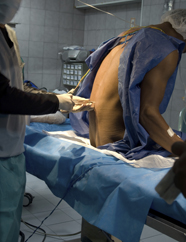 Anaesthetic and pain drugs and techniques
- Anaesthesia - pharmacokinetics and dynamics, interface design and outcomes.
- Matching drug delivery to patient needs.
- Post-surgical acute pain and its transition to chronic pain
- Complex Regional Pain Syndrome
- Neuropathic pain
- Bio-Psychosocial- Rehabilitative model of chronic pain
Intensive Care
- Metabolism and glycaemic control
- Cardiovascular dysfunction and its diagnosis and treatment
- Pulmonary mechanics and management of mechanical ventilation
- Kidney injury in critical illness
Potential topics for PhD and Masters' study
- Transition of Acute Post-traumatic or perioperative pain to chronic pain
- New modes and Routes of Drug Delivery
- New techniques in Regional Anaesthesia/Analgesia
- The Pathogenesis of Complex Regional Pain Syndrome
- Electrical Stimulation Analgesia – new waveforms and frequencies
- Multimodal pharmacological management of neuropathic pain
- Central post stroke pain syndrome
- Opioid consumption in New Zealand
- The role of the Anaesthetist in enhanced recovery programs
- Simulation and Anaesthesia
- Kidney injury in Critical Illness
- Metabolism and glycaemic control
- Cardiovascular monitoring for circulatory dysfunction
- Effect site levels of opioids
- Depth of Anaesthesia and Recovery
We encourage enquiries from enthusiastic and highly motivated postgraduate students regarding PhD study.
Emergency Medicine and Nursing Research Group
The Emergency Medicine and Nursing Research Group in the Emergency Department is chaired by Dr Martin Than, and includes Professor Mike Ardagh, and Dr Paul Gee.
Their research themes include diagnostic decision-making, particularly in relation to the diagnosis of acute coronary syndrome and venous thromboembolism, the health implications of seismic events, toxicology, ethics and emergency nursing.
In addition to grants from the Health Research Council and the Canterbury Medical Research Foundation, the group is supported by the Emergency Care Foundation. The Emergency Care Foundation is a charitable trust dedicated to supporting research, education, and innovation in emergency health care.
General surgery
The department has considerable expertise in clinically-based research, as well as translational research from laboratory-based research programs. The collaborations this department has with other clinicians and researchers from New Zealand's hospitals and universities are one of the strengths of their research program.
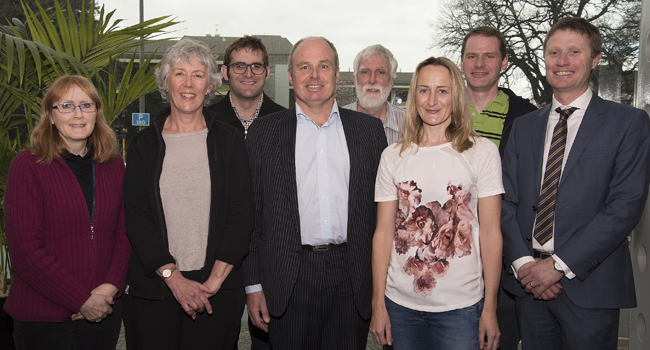
Gastroenterology Research Group 2016
Clinical trials
- ALCCaS RCT. Australasian laparoscopic colon cancer study, a randomized controlled multi-centre trial of laparoscopic versus open surgery for colorectal cancer.
- An individual patient data meta-analysis using the combined databases of major international prospective randomized controlled trials (similar to ALCCaS) to define the patterns of colon cancer disease recurrence following laparoscopic or open surgery.
- A La CaRT. The Australasian multicentre randomised controlled trial of laparoscopic versus open resection for rectal cancer
- Cimetidine trial: A multicentre phase3 randomized controlled trial on effect of Cimetidine on outcomes in patients with colorectal cancer.
- Randomised controlled trial comparing tailored vs standard sphincterotomy for idiopathic fissure in ano.
Clinical studies
- Colorectal function following spinal injuries.
- Various aspects of inflammatory bowel disease in a population-based IBD cohort, including the characteristics of resectional surgery, perianal disease and the outcomes of ileal pouch surgery, in particular cost and disability.
- Management of rectal cancer.
- Prospective studies of elective gastrointestinal operations and outcomes, including AIN, GIST's, diverticular disease and colorectal cancer.
- The natural history of diverticulitis and risk factors for recurrence.
- Multi-national study on the outcomes of patients having surgery for locally recurrent rectal cancer.
Laboratory-based research
- Toxin-producing strains of enteric bacteria and colorectal cancer (J Keenan).
- The role of outer membrane vesicles in modulation of intestinal function by gram-negative bacteria (J Keenan in collaboration with the Departments of Physiology and Medicine, University of Otago).
- Genetic and environmental influences on inflammatory bowel diseases (J Keenan in collaboration with Departments of Pathology and Medicine, University of Otago, Christchurch).
- A study of host iron levels and H. pylori pathogenesis (J Keenan).
- Biomarkers of radiation response in rectal cancer (R Purcell.)
- Investigating the microbiome in diverticulitis (R Purcell).
- The gut microbiome and colorectal cancer (R Purcell).
- Molecular classification of colorectal cancer (R Purcell).
- Non-coding RNAs in the development and progression of colorectal cancer (R Purcell).
Department of Surgery research projects
Frame study
Richards / Frizelle
Assessment of frailty and its impact on recovery from major Colorectal surgery. The unique part of this study relates to the assessment of frailty, as well as the conventional means i.e. “Up and Go” and the Edmonton Scale, we are making use of “Seahorse” to assess patients' metabolic activity and physical activity monitors.
Multi-visceral resection: Reviewing complications after this
McCormick / Frizelle
Multicentre study of T4 rectal cancer, locally recurrent rectal cancer, squamous cell carcinoma and exenteration. All data is part of forming a database, which is being analysed for predictors and patterns of major complications following surgery.
A la cart
Eglinton
Randomised controlled trial of lapascopy versus open surgery for localised rectal cancer. Follow-up to 5 years 2019, ongoing.
Exenteration rectus flap
Wakeman
Combined study with Ding cases from Plastics Department.
The issue of VRAM after major pelvis resection, studying patterns of failure and complications.
Mindfulness / CALM
Frizelle / McCombie
Randomised controlled trial of Mindfulness versus psycho education after surgery, for colorectal cancer. In second year of recruitment.
10Ten: Quality of life with pelvic bowel cancer recurrence
Frizelle / McCombie
Multicentre internal study of quality of life after surgery, or not, for recurrent rectal cancer. Involving Australia, Singapore, USA (Mayo Clinic), UK, Ireland and Sweden. Centres match ten patients who have surgery with those who do not. Assessment of quality of life until death or 5 years.
10Ten: Extension (human factors)
Frizelle / Pal
Extension of above study with assessment of how surgical teams work with regard to team dynamics.
Vitamin C
Eglinton
The absorption of Vitamin C into cancers when given preoperatively.
Closed, preliminary data coming through.
BALL
Eglinton
Based in Middlemore; anastomotic leak study. Finished recruiting end of September 2017. Awaiting analysis and reports
Statins and diverticulitis
Clarke / Frizelle
Pharmac data used to compare the frequency (primary episode and recurrence) and severity of diverticulitis in patients on statins – do they protect or do they reduce severity of episode. Data has been analysed and is being written up.
CRP trajectory study as a predictor of anastomotic leak
Chittleborough / Eglinton
A combined multicentre study.
Organ preservation in rectal cancer
Frizelle
The use of long course chemoradiotherapy treatment in localised early rectal cancer without surgery. Protocol –being developed – likely to start next year
Disability index
McCombie / Eglinton
An index for disability in patients with inflammatory bowel disease - validation study. Data collected and being written up.
Also funding request for variation to assess use in trauma patients
Predict
Frizelle / Purcell
Molecular subtype and clinical behaviour – 300 patients analysed, being written up.
Readmission
De Souza / Eglinton / Frizelle
Why are patients readmitted and what can we do to avoid this after major colorectal surgery.
Mitochondria function in radiotherapy (prediction of biological marker for response to chemo/radiotherapy)
Fischer / Frizelle / Eglinton
The assessment of patients with rectal cancer response to radiotherapy is important in determining who should get this. This study focuses on peroxiredoxins as markers of oxidative stress.
Overcoming workplace disability
McCombie / Eglinton
Study linked to the disability index, patients being recruited.
Over 80's colorectal cancer
Frizelle / Eglinton / McCombie
a.The data from the BCC database on the over 80's, has been assessed and is being written up
b.Now moving to a prospective part, assessing what people of 80 and over want as an outcome, and how does this differ from younger patients.
RCT post-op Ileus
Chittleborough / De Souza
A randomised trial of IV lignocaine during elective bowel surgery.
Sacrectomy
Wakeman / Frizelle
Multicentre internal study addressing the questions - does the level of sacrectomy affect outcome in patients having sacrectomy for rectal cancer (primary and recurrent)?
Burnout and empathy
Frizelle
Study into the relationship of burnout and empathy. Two centres (Toulouse, France and Christchurch, NZ) NZ data collected, awaiting data from France.
Post Traumatic Stress Disorder, trauma
Wakeman / McCombie
Measuring PTSD after trauma, looking at predictors of PTSD, use of Injury Severity Score.
Bugs and bowel cancer
Kennan / Frizelle
This study is assessing the role of bacteria for driving the initial stimulus for sporadic colorectal cancer.
B Fragilis (enterotoxin type) and a toxic producing subtype of E coli are being assessed. This also relates to the Predict study above and the young Colorectal cancer study below.
Young colorectal cancer (epid)
Frizelle
Study looking at NZ, Scottish and Swedish data showing increase in CRC in those under 50.
Young colorectal cancer (aetiology)
Frizelle / Keenan
Looking at colonic bacterial differences in relationship to the development of CRC in <50's.
Molecular subtypes and the microbiome
Purcell / Frizelle
Assessment of the different microbiome bacteria and their relationship to the molecular subtypes when cancer presents.
Funding by HRC.
Biomarkers for colorectal cancer
Kennan/Frizelle
Development and validation of novel biomarkers for CRC.
SPAR
Frizelle
Binational (ANZ) multicentre study looking at the use of statins to reduce complications when giving pre-op chemoradiotherapy tratment for rectal cancers.
Funded by HRC.
Targovax – vaccine trial for recurrent colorectal cancer
Frizelle
Multicentre internal cancer vaccine ranodmised controlled trial for advanced and recurrent rectal cancer.
Pelvex group trails
Frizelle / Wakeman / Eglinton
A collaborative group of 41 international hospital looking at outcomes from extenuative surgery.
Signet cell rectal cancers
Keenan / Frizelle
An international collaborative study with Pakistan.
A study looking at the signet ring rectal cancers from Pakistan, to see if there is an e-cadherin abnormality similar to Maori gastric cancer.
Diverticular disease
Purcell / Frizelle
Long term study looking at predicators of recurrence and complications after diverticulitis, and costs.
Diverticulitis and the microbiome
Purcell / Frizelle
Only 3 percent of people with diverticulosis get diverticulitis. Why do they? Do certain types of bacteria increase your chance of getting diverticulitis?
Dysplasia in Irritable Bowel Disease
Mullaney / Frizelle / Eglinton
A study determining the long term incidence of dysplasia and colorectal cancer in IBD, including the molecular diagnosis.
Low Anterior Resection Syndrome
Eglinton
Incidence of LARS in A La CaRT patients (PI Bisset with Dr Celia Keene, Auckland).
Ophthalmology
The Ophthalmology Department currently has funding from the Health Research Council (NZ) to study “Retinopathy of Prematurity.”
Oral and maxillofacial surgery
This department is involved in a number of research projects, including:
- Demographics of Facial Fractures
- Influence of Alcohol in Facial Injuries
- Patterns of Orbito-zygomatic fractures
- Evaluation of Cone Beam CT scanning in orbital reconstruction
- Oral Epithelial Dysplasia
- Bisphosphonate induced Jaw Necrosis
- Trial of New Delivery System in Management of Xerostomia
Otolaryngology – head and neck surgery
Clinical Research in this department covers most areas of the specialty, including General Otolaryngology, Rhinology, Head and Neck Surgery and Otology-Neurotology. Many members of the department undertake clinical research.
Mr Robert Allison leads much of the clinical research on head and neck cancer. Current studies involve a review of the management of laryngeal cancer in Christchurch, outcomes following lateral temporal bone resection for malignancy, a review of patients undergoing surgery for metastatic cutaneous squamous cell carcinoma to the parotid gland (this study is being carried out in conjunction with Waikato Hospital). He is also involved in an ongoing, prospective study examining the effects of pharyngeal pouch surgery on swallowing.
Associate Professor Phil Bird is involved in outcomes research following cochlear implantation. He is also involved in collaborative research looking at the risk to inner ear function from middle ear surgery and cochlear implantation. This is a major collaboration with Dr Greig O'Beirne from the University of Canterbury, involving two PhD students.
There is also collaborative research with Professor Evan Begg from the Department of Clinical Pharmacology, relating to pharmokinetics of steroids when delivered via the intratympanic route. In conjunction with Mr Jeremy Hornibrook from the Otolaryngology Department, he is undertaking research in to intratympanic gadolinium as a marker for endolymphatic hydrops in the inner ear, comparing it with electrocochleography and clinical indicators of Ménière's Disease.
Paediatric surgery
Professor Spencer Beasley has had a longstanding research interest in studying the effects of Adriamycin on the developing foetus, and refining the rodent model of the VATER association, as a means of investigating the embryogenesis of oesophageal atresia and related congenital structural abnormalities. Until the Christchurch earthquakes, this research focussed on the role of Sonic Hedgehog and its downstream genes both in the normal development of the foregut and hindgut, and in abnormal organogenesis.
A major clinical research project studied the factors that predict outcome and complications after herniotomy and orchidopexy in children, and the relationship between the operative appearance of the hernial sac at herniotomy and prediction of a contralateral hernia. This work included the first comprehensive prospective study of the long-term outcomes after herniotomy in children. A key publication in the British Journal of Surgery provided a benchmark rate for complications of the procedure. Additional clinical studies have included a review of quality of life after laparoscopic ACE procedures, and the predictors of outcome following laparoscopic appendicectomy in children.
Other research, in collaboration with the Royal Australasian College of Surgeons, includes a study of the parameters of operative experience that predict progress in surgical trainees (surgical education), and the use of the operative logbook as a tool to measure the characteristics of accredited training posts (surgical education). Understanding the higher cognitive processes around expert clinical judgement and decision-making has led to a RACS course on clinical decision-making for surgical teachers.
Teaching the complex skills required to correct major congenital structural abnormalities in neonates has been a challenge for paediatric surgeons. An example is oesophageal atresia which is a complex but rare abnormality congenital abnormality where the gullet is missing and the infant cannot swallow anything, including their own saliva! Jon Wells and Spencer Beasley in conjunction with Nick Cook from the CDHB Department of Medical Physics and Bioengineering and Symulus (a surgical simulation collaboration) have invented and tested 3-D printed synthetic neonatal thoracoscopic and open thoracotomy versions of a model of oesophageal atresia. This has been validated to teach and assess acquisition of technical competence for this difficult operation – in the hope that trainees can master (and be shown to have obtained) the skills required to perform the procedure safely in vivo. This model has huge advantages over its competitors in that it is cheap, portable (can be used at home), allows for immediate feedback on performance, and avoids all the ethical and procurement issues around using animal tissues.
The Department of Paediatric Surgery has also undertaken research on the effect of the paediatric surgical outreach programme on improving clinical outcomes for children with surgical conditions. The influence of service configuration on clinical outcomes is described in a lead article in the Journal of Pediatric Surgery (2015).
Plastic surgery
Research in this department includes clinical studies concerning wound healing, skin cancer and hand surgery.
Other collaborative research projects include the study of cutaneous squamous cell carcinoma (with the Department of Pathology), and tetraplegic upper limb surgery (with the Department of Orthopaedics).
Rural Health Academic Centre, Ashburton
The Rural Health Academic Centre (RHAC), Ashburton is a collaboration between University of Otago Christchurch, Canterbury District Health Board and the Advance Ashburton Community Foundation.
Areas of research include inter-professional education, rural teamwork and simulation training, procedural sedation in rural hospitals, self-harm in rural populations, rural models of care and health service delivery, rural nursing workforce projections and planning, rural oncology service scope and outcomes, stroke management, and chest pain assessment in rural hospitals.
Rural Health Academic Centre, Ashburton
Urology
Clinical research is undertaken outside of the University, with support from the privately-funded Urology Trust.
Vascular endovascular and transplant surgery (VETS)
VETS members are engaged in clinical and laboratory-based research, in collaboration with established research groups at University of Otago, Christchurch, and the University of Canterbury.
Clinical research themes include prioritisation for surgery, vascular audit and continuous quality improvement, clinical decision modelling in vascular surgery (focused around abdominal aortic aneurysm), and wound management (in collaboration with Nurse Maude).
Their laboratory-based research includes collaborations with the University of Canterbury Centre for Bioengineering (Prof Tim David) and Biological Sciences (Dr Steve Gieseg) ["The Growth Dynamics of Atherosclerotic Plaque"] and the Angiogenesis Research Group (University of Otago, Christchurch) and the Department of Plastic Surgery [“Skin cancers in renal transplant recipients"].