
Stretching over 30° of latitude, New Zealand’s coastline is more than 15,000km long, and its exclusive economic zone (EEZ) is one of the largest in the world. And yet our understanding of our own big blue backyard, and our impact on it, is extremely limited.
The physical and biological processes that power the Earth system unite in the ocean, determining Earth’s climate, supporting life and sparking our curiosity. Whether it’s finding new species, protecting sensitive habitats or solving our climate change problems, the University of Otago is uniquely placed to study these interlinked processes, and their effects on our lives.
Understanding our ocean planet is essential for meeting the challenges of our collective future.
Why study Marine Science?
The world is waking up to just how important the marine environment is to the survival of our planet. And when your office extends to the seashore and beyond, every day is a new challenge! A qualification in Marine Science from the University of Otago is internationally recognised, and its multidisciplinary nature opens up an ocean of opportunities.
Are you just starting uni?
Learn about studying Marine Science as an undergraduate at Otago.
Choose a study option
Whether you are advancing your career with our specialised graduate qualifications or pursuing in-depth research and expertise through our postgraduate programmes, Otago is here to support your aspirations.
Postgraduate qualifications
Honours, masters’, PhDs, and other advanced degrees for graduates. Just one additional year of study will earn you a valuable postgraduate degree. Or perhaps you want the depth of a full year of research-only time during a master’s or to step up to a PhD.
Bachelor of Science with Honours (BSc(Hons))
A four-year degree focusing on advanced study and culminating in a research project in the final year
Postgraduate Certificate in Science (PGCertSci)
A coursework programme, typically consisting of three papers, that can be completed with full-time (one-semester) or part-time (full-year) study
Postgraduate Diploma in Science (PGDipSci)
A one-year programme which builds on an undergraduate science degree, encompassing coursework and a chosen research topic
Master of Science (Thesis) (MSc(Thesis))
A two-year degree with a wide range of subject options. The MSc(Thesis) may be taken by a combination of coursework and thesis, or by thesis only.
Ready to apply?
Take your expertise to the next level with advanced study.
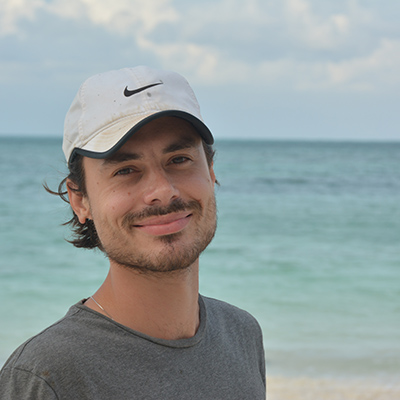
I had the opportunity to study the impacts of climate change on benthic ecosystems, which involved regular scuba diving for fieldwork and close collaboration with internationally recognised researchers. This experience helped me develop essential skills that have set me up for a PhD in community and molecular ecology in France. The supportive environment and hands-on research made all the difference.
Tom Massué
Master of Science (Marine Science)
Programme details
Compare programmes for this subject.
| Papers |
|---|
Note: With approval from the Head of Department, one MARI 400-level paper may be replaced with a 400-level paper from another relevant subject. Prerequisites: |
| Papers |
|---|
Note: With approval from the Head of Department, one MARI 400-level paper may be replaced with a 400-level paper from another relevant subject. |
| Papers and Thesis |
|---|
Note: (i) With approval from the Head of Department, one MARI 400-level paper may be replaced with a 400-level paper from another relevant subject.
Note: (ii) The papers are normally taken before undertaking the thesis. |
Papers
View a list of all related papers below.
MARI papers
| Paper Code | Year | Title | Points | Teaching period |
|---|---|---|---|---|
| MARI112 | 2026, 2027 | Marine Biology: The Living Ocean | 18 points | Semester 2 |
| MARI201 | 2026, 2027 | Oceanography: The Physical Ocean | 18 points | Semester 1 |
| MARI202 | 2026, 2027 | Ecology and Biology of Marine Invertebrates | 18 points | Semester 2 |
| MARI204 | 2026, 2027 | Marine Ecology and Ecosystems | 18 points | Semester 1 |
| MARI250 | 2026, 2027 | Special Topic | 18 points | Not offered in 2026, expected to be offered in 2028, Not offered in 2027, expected to be offered in 2028 |
| MARI302 | 2026, 2027 | Biology and Behaviour of Marine Vertebrates | 18 points | Semester 1 |
| MARI322 | 2026, 2027 | Coastal and Shelf Seas Oceanography | 18 points | Semester 2 |
| MARI350 | 2026, 2027 | Speciall Topic | 18 points | Not offered in 2026, expected to be offered in 2028, Not offered in 2027, expected to be offered in 2028 |
| MARI401 | 2026, 2027 | Advanced Methods in Marine Science | 20 points | Semester 1 |
| MARI403 | 2026, 2027 | Critical Thinking for Environmental Scientists | 20 points | Semester 1 |
| MARI429 | 2026, 2027 | Coastal Marine Environment | 20 points | Full Year |
| MARI431 | 2026, 2027 | Antarctic and Southern Ocean Science | 20 points | Semester 2 |
| MARI450 | 2026, 2027 | Special Topic | 20 points | Not offered in 2026, expected to be offered in 2028, Not offered in 2027, expected to be offered in 2028 |
| MARI451 | 2026, 2027 | Advanced Topics in Marine Science | 20 points | Not offered in 2026, expected to be offered in 2028, Not offered in 2027, expected to be offered in 2028 |
| MARI480 | 2026, 2027 | Independent Project | 40 points | 1st Non standard period (16 February 2026 - 7 November 2026), 2nd Non standard period (22 February 2027 - 22 November 2027) |
| MARI490 | 2026, 2027 | Dissertation | 60 points | 2nd Non standard period (16 February 2026 - 7 November 2026), 2nd Non standard period (22 February 2027 - 22 November 2027) |
| MARI495 | 2026, 2027 | Master's Thesis Preparation | 40 points | 1st Non standard period (16 February 2026 - 4 December 2026), 2nd Non standard period (22 February 2027 - 5 December 2027) |
Contacts
Department of Marine Science
Email marine.courseadvice@otago.ac.nz
Website otago.ac.nz/marinescience
This information must be read subject to the statement on our Copyright & Disclaimer page.
Regulations on this page are taken from the 2026 Calendar and supplementary material.
World-class research
The University of Otago has a global reputation for research excellence. Our expertise is vast across health, society, culture, sustainability and the environment.
Explore our research