Accelerating Care, Capacity and Equity in AID systems for New Zealanders with Type 1 Diabetes
This study is being conducted as a partnership between the University of Otago and Health New Zealand, Te Whatu Ora.
What is the ACCESS-AID study all about?
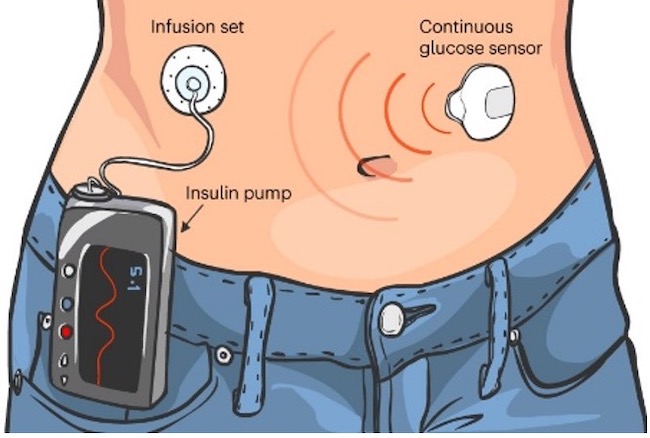 Automated insulin delivery (AID) is recognized as the gold standard treatment for managing blood sugar levels in people with Type 1 Diabetes (T1D). These systems link a pump, glucose sensor and computer algorithm to automate insulin delivery.
Despite substantial evidence for their effectiveness in Aotearoa New Zealand and beyond, access to these technologies is slow and inequitable.
In New Zealand the main barrier to AID uptake has previously been the unfunded glucose sensor component. However in late 2024, PHARMAC funded access to continuous glucose monitors for all people with T1D.
Based on international experience, an estimated 10,000 people with T1D in New Zealand could request one of these systems per year. The current system only trains 500 people onto AID per year so it is expected that hospitals may not cope with the sudden increase in demand. This could lead to greater inequity in access to these technologies based on ethnicity, rural location and socio-economic status.
ACCESS-AID study objective
The purpose of this study is to provide a remote Hub as a new model for health delivery. This will assist the healthcare system to enable individuals with T1D, who are currently using insulin injections, to start using an automated insulin delivery system.
We anticipate that this Hub will allow individuals in regions struggling with appropriate health staffing to access pumps earlier than they would normally be able to.
Who can join the study?
We are inviting individuals to participate who:
- have been diagnosed with Type 1 Diabetes or another type of diabetes that meets the PHARMAC criteria (for example Type 3C/ pancreatogenic)
- have a usual care team who will support you after you have exited the study
- are not currently pregnant.
What does my participation involve?
Once enrolled, you will be in this study for 3 months. You do not need any experience in using an insulin pump or a glucose sensor. We will make sure that the health care providers you usually see are able to continue your care after the study.
You will be asked to complete three online questionnaires about your diabetes and carbohydrate counting assessment. Depending on the result of your carbohydrate counting assessment you will be invited to attend a group or individual carbohydrate counting/awareness education session.
You will then be scheduled for an initial appointment with one of our clinical staff to discuss the AID options – this visit is conducted over a video call. Following this appointment you will be scheduled to start your new AID system.
After the pump is started, study staff will touch base with you regularly. By 3 months you will be transferred back to your usual diabetes care team. Some people will be transferred back sooner.
Qualitative Interview (optional)
We are interested in learning what you think about the process of starting an insulin pump via a remote Hub.
Some participants and their families will be invited for an interview about their experience. Participation in these interviews is voluntary. This one-to one interview with a trained member of the study team which will occur after 4 months of starting the insulin pump.
Participant Information Sheets and Consent Forms
For more detailed information about the ACCESS-AID study, please view the relevant Participant Information Sheet. The consent form is at the end of each document.
Ethical approval
The investigations and procedures involved in this study are planned according to the best available medical knowledge and standards, and have been reviewed and approved by the Health and Disability Ethics Committee (July 2025: 2025 FULL 22346).
Contact us:
If you are interested in the ACCESS-AID Study please contact us:
- Complete the online referral form
- email us directly at access.aid@otago.ac.nz

Our research team:
Primary Investigators
- Professor Ben Wheeler
Paediatric Endocrinologist, Department of Paediatrics and Child health, University of Otago, Dunedin
Email: ben.wheeler@otago.ac.nz
Phone : 0274701980
- Associate Professor Ryan Paul
Endocrinologist, Division of Health, University of Waikato, Hamilton
Email: ryan.paul@waikato.otago.ac.nz
Phone : 021310974
Study Coordinators
- Dr Jennifer Gale
- Tharaka Athukorala
Study Diabetes Nurse Specialists / Prescribers / Educators:
- Claire Lever
- Rachel Sampson
- Solita Donnelly
- Matt Slemint
- Mark Leydon
- Lindsay McTavish
Co-investigators
- Associate Professor Martin de Block
- Associate Professor Craig Jefferies
- Associate Professor Rosemary Hall
- Dr Jennifer Gale
- Dr Alisa Boucsein
- Dr Shelley Rose
- Dr Hamish Crocket
- Dr Shekar Sehgal
- Dr Helen Snell
- Dr Ofa Dewes
- Dr Jonathan Williman
- Dr Chunhuan Lao
- Ms Shirley Jones
Funding
This study is funded by the Health Research Council of New Zealand.