
OERC 2026 Seminar Series
All seminars are free and open to the public.
For further information:
Email oercadmin@otago.ac.nz
Upcoming seminar
Yesterday's answers for today's tomorrow
Presented by Delia Bellaby, Otago Polytechnic
When: Tuesday, 29 September 2026, 11am–12pm
Where: Centre for Sustainability Research Seminar Room (563 Castle Street North, Dunedin) and via Zoom
Attend via Zoom
Meeting ID: 511 405 452
Password: 582894
OERC Symposium
20th Annual Symposium 2026
Powering prosperity: An energy transition for people, business and environment
When: 26–27 November 2026, 9am–5pm
Where: Room 1.17, Otago Business School, University of Otago
Register for the 2026 Symposium
Abstract submission form
Submissions close 20 October
Keynote speakers
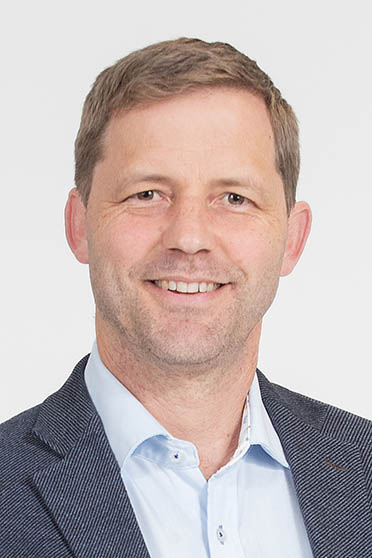 Dr Andrew Sykes
Technical Director, Future Grid at Transpower
Powering prosperity: Te Kanapu, New Zealand’s first grid blueprint
Te Kanapu, Transpower’s future grid blueprint, looks beyond today’s planning horizons to explore how Aotearoa New Zealand can power a prosperous, low-emissions future. Using five scenarios for a growing and thriving economy in 2050, the programme tests what electricity demand, generation choices and network capability could mean for people, business, and the environment. This presentation will share insights from Transpower’s recently published work showing that enabling a geographically and technologically diverse generation mix through transmission and distribution networks can help deliver more affordable, reliable, and sustainable outcomes. It will also outline how the grid blueprint is moving from scenarios and insights to the first set of low-regrets transmission investments, aimed at enabling growth at least cost while maintaining resilience and security. Dr Andrew Sykes will discuss what this means for long-term sector coordination, investment confidence, and the choices needed to power prosperity across New Zealand for communities, industry, and future generations.
Andrew Sykes is Technical Director – Future Grid at Transpower New Zealand, where he leads the technical work for Te Kanapu Future Grid, Transpower’s programme to develop a future grid blueprint for Aotearoa New Zealand. His work focuses on long-term electricity system planning, future demand and generation scenarios, and identifying least-regrets transmission investments to support a reliable, affordable, and resilient energy future. Andrew has experience in grid investment, economic analysis, and strategic electricity sector planning, and holds a PhD in Physics from the University of Queensland.
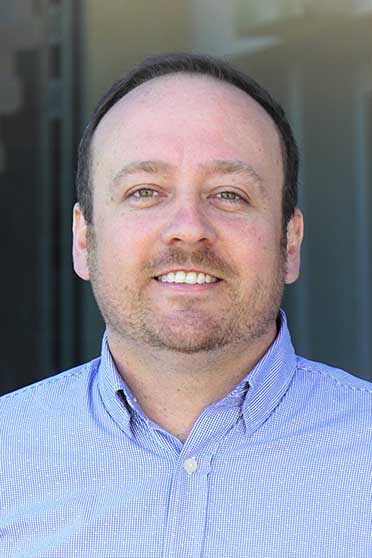 Dr Thomas Longden
Senior Researcher, Urban Transformations Research Centre, Western Sydney University
Energy equity and energy security – The importance of preventing a two-speed energy transition
While the energy transition is well underway, we are increasingly seeing a multi-speed transition that has justice and equity implications for regions, communities and socio-economic groups. In Australia, many more household technologies (such as solar PV and batteries) are being installed in more prosperous postcodes. When focusing on the Cheaper Home Batteries program we found that there were 912 more battery installs in each major city postcode with high socio-economic status and a history of high solar installations. This corresponds with 3.6% more households having installed a battery and an additional 36MWh of capacity installed in each of these more prosperous postcodes. An announced re-design of the program has coincided with a higher rate of battery installations and larger batteries being installed. At the same time, electricity pricing is changing and prepayment for electricity operates in remote Indigenous communities. Despite claims that implementing time-of-use tariffs will change the way that people use electricity, real-world deployments have shown little shifting of electricity use without technological assistance. I will conclude by focusing on the insights provided by interviewing energy experts and their assessments of whether households would be better/worse off under time-of-use tariffs. Experts specified that socio-technical factors shaped by work schedules, care responsibilities, housing characteristics, and energy literacy impacted the likelihood of being worse/better off. While having solar and a battery is a game changer enabling greater agency over energy use, most of the remaining households have limited flexibility and are likely to be worse off with time varying pricing.
Dr Thomas Longden is a Senior Research Fellow at the Urban Transformations Research Centre, Western Sydney University. His work on energy and technological change has been published in leading international journals (including Nature Energy, Climatic Change, Energy Economics, Energy, Technological Forecasting and Social Change, and Energy Policy). This includes research on the Cheaper Home Batteries Program, temperature-related energy insecurity, renewable energy project lead-times, health economics, hydrogen production costs and fugitive emissions, and temperature-related mortality. In partnership with Original Power and other researchers, Tom co-led the first national investigation into First Nations’ experiences of prepayment for electricity, The Right to Power: Keeping First Nations Communities on Prepayment Connected.
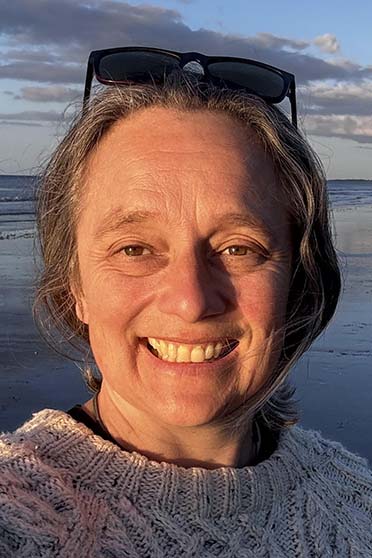 Sam Elder
Founder and Director of Climate Navigator
Towards a new energy democracy – a collective vision to guide Aotearoa's energy transition
Sam will share a bold vision for a more localised and democratised energy system which puts power back in the hands of people and communities AND creates new value opportunities for the energy sector. She will outline why this is a critical opportunity for Aotearoa, explore learnings from here and overseas, seeds of change, barriers holding us back, and potential next steps as we navigate towards a better energy future, together.
Sam is an impact-driven leader with over 30 years' experience applying systems innovation frameworks to complex societal challenges, including international space missions, biosecurity R&D, climate and community resilience, energy, transport and food systems transformation.
Sam qualified as a Chartered Mechanical Engineer in 1999, and in 2013 she completed an MSc in Sustainable Architecture including a thesis exploring smart space and water heating solutions to energy poverty in Aotearoa. She has held senior leadership and governance roles across NZ's energy sector, including gentail, electricity distribution and regulation.
Today, Sam is a recognised thought-leader, activator and facilitator of place-based transitions and local energy systems. Her social enterprise Climate Navigator is on a mission to unlock the power of people and places to accelerate just transitions.
Missed an event?
Watch our recorded seminars and find out about past symposia.