Career opportunities
When you study Music Production you’re preparing for a world where sound and media matter.
Potential career opportunities include:
- Recording and production engineer in studios or remote setups
- Independent music producer or freelance/media technician
- Audio-media creator for film, TV, podcasts or interactive media
- Music industry professional: A&R, label operations, distribution
- Educator or facilitator in music-tech and creative industries
How you will learn
In our Music Production papers you’ll dive into hands-on work, side by side with fellow students and staff who care about music as much as you do.
You’ll use our purpose-built studio spaces, recording booths and digital tools to create, record and produce real tracks. You’ll be encouraged to experiment, share your work, gather feedback, and build a portfolio you can show off.
From beat design to mixing, from mobile-device creation to full-studio production, you’ll graduate ready to create your own sound-world.
Recommended high school subjects for undergraduate study
No formal musical experience required, but you’ll get the most from this subject if you enjoy working with music, tech and creative tools.
Minor-only subject
Please note: this subject can only be taken as a minor.
A minor subject can be included in many of our undergraduate degrees. To earn a minor, you typically must complete a minimum of 90 points in that subject, with at least 18 points at the 300-level.
Your minor can be a subject more commonly taken for a different degree. For example, a BCom majoring in Marketing can include Japanese as a minor subject. To include this subject as a minor in your application, first find a major subject through our Subject Search or Study Match.
You can check what’s required to receive the minor accreditation in the programme details below.
Discover our studios and facilities
Take a video tour of the Performing Arts building, learn about our teaching and and performance spaces, and explore upcoming events and student performances.
Explore Te Korokoro o te Tūī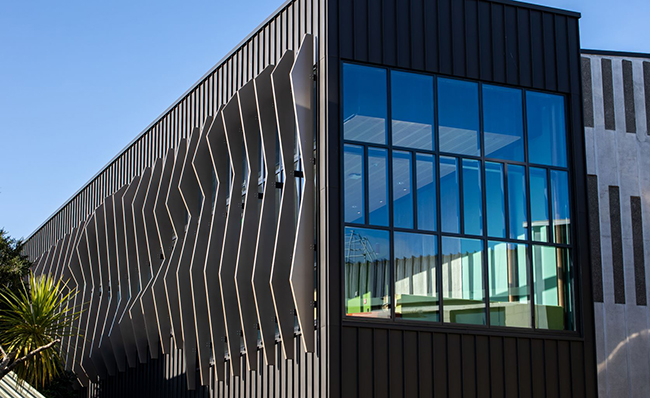
Bring your ideas to life, experiment with sound, and find out just how far your music can go
Our strength lies in what we do well and where we are. At Otago you’ll learn from expert staff in a top-tier environment. Our School of Performing Arts features nine purpose-built studios including a two-storey recording studio designed for everything from solo artists through to full ensembles.
You’ll be part of a lively music community in Dunedin, a city with a strong musical identity and plenty of live, collaborative opportunities. You’ll enjoy small-group support, flexible study options, and the freedom to pursue your own sound in a setting that’s creative, welcoming and ambitious.
Programme details
Compare programmes for this subject.
A minor subject can be included in many of our undergraduate degrees. To earn a minor, you typically must complete a minimum of 90 points in that subject, with at least 18 points at the 300-level.
Your minor can be a subject more commonly taken for a different degree. For example, a BCom majoring in Marketing can include Japanese as a minor subject. To include this subject as a minor in your application, first find a major subject through our Subject Search or Study Match.
You can check what’s required to receive the minor accreditation in the programme details below.
Available as a minor subject for a Bachelor of Arts (BA), Bachelor of Theology (BTheol), Bachelor of Science (BSc), Bachelor of Commerce (BCom), Bachelor of Entrepreneurship (BEntr), Bachelor of Health Science (BHealSc), Bachelor of Arts and Commerce (BACom), Bachelor of Arts and Science (BASc) or Bachelor of Commerce and Science (BComSc) degree
| Papers | Points |
|---|---|
| Must include at least three papers at 200-level or above. | |
| Total | 90 |
Note: This minor subject is not available for students enrolled in the Bachelor of Music (MusB) or Bachelor of Performing Arts (BPA).
Effective 2026 onwards
| Papers | Points |
|---|---|
| Must include at least three papers at 200-level or above. | |
| Total | 90 |
More information
Have a question or need support? AskOtago can connect you with the right team for personalised help.
This information must be read subject to the statement on our Copyright & Disclaimer page.
Regulations on this page are taken from the 2026 Calendar and supplementary material.
Not sure what to study?
Take our short quiz to uncover study options matched to your background and interests.
Take the quiz