
International keynote speaker
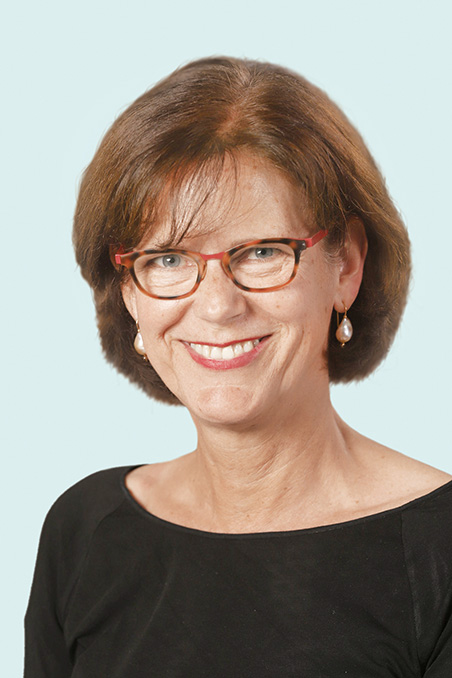 This year’s Symposium will be opened by our international keynote speaker, Emeritus Professor Frauke Müller of the University of Geneva, who is our 2026 Sir Thomas K Sidey Visiting Professor.
Frauke Müller, Prof em. Dr. med. dent. Dr. hc. FDS RCSEd (ad hom)
University of Geneva, Switzerland
Division of Gerodontology and Removable Prosthodontics
Frauke Müller is Professor Emeritus for gerodontology and removable prosthodontics at the University Clinics of Dental Medicine at the University of Geneva, Switzerland. Professor Müller has been President of various learned societies. She co-edited the ITI Treatment Guide no 9 on “Implant therapy in the Geriatric Patient” and the textbook “Oral Healthcare and The Frail Elder”. For many years, she was Associate Editor of the Journal of Oral Rehabilitation and Gerodontology.
Professor Müller is an honorary member of the European College of Gerodontology, the BSSPD and the International Team of Implantology (ITI). She was awarded the IADR Distinguished Scientist Award twice, in 2013 in Geriatric Oral Research and in 2023 in Research in Prosthodontics and Implants. In 2019 she received an Honorary Doctorate from the University of Thessaloniki. In 2024 she received an honorary Fellowship of the Royal College of Surgeons of Edinburgh and an honorary Professorship of the University of Chulalongkorn in Bangkok. She is a member of the Swiss Academy for Medical Sciences. Her research activity is mainly related to gerodontology, oral function as well as complete and implant prosthodontics.
Presentation title: Challenges in oral health care in super‑aging societies
As populations continue to age, increasing life expectancy and improved oral healthcare have resulted in more individuals retaining their natural dentition well into advanced age. While this represents a major public health success, it also presents new challenges for prosthodontic care.
Although tooth loss is still a reality for elderly and very elderly patients, it is increasingly occurring at an age when physiological signs of ageing, frailty and morbidity must be taken into account in prosthetic care. Age-appropriate dentures must also be tailored to the patient's general state of health and socio-economic context; and the patient's motivation, the wishes of their family and their ability to endure dental interventions must also be taken into account. Declining vision, sense of smell and sense of touch, as well as increasingly reduced manual dexterity in old age, require dentures to be designed to be simple, stable and hygienic. Implants are an option but require close monitoring and “retrograding” along with advanced loss of autonomy. As a general rule, extensive changes to dentures or the fabrication of new ones should be avoided in multimorbid patients, as reduced neuroplasticity in old age means that reduced adaptability must be expected. Here, digital technologies and artificial intelligence are transforming prosthodontic care. Digital workflows, data-driven treatment planning, and AI-assisted decision support offer new opportunities to improve diagnostic accuracy, personalise treatment, enhance preventive strategies, and ultimately support healthy aging while maintaining oral function and quality of life.
2026 Symposium schedule
*Presenting remotely
Day 1 – Wednesday, 16 September
10.00am Day 1 welcome
Professor Paul Cooper (Head of Faculty)
Session 1 – Chair: Professor Sunyoung Ma
10.15am International keynote presentation: Professor Frauke Müller, University of Geneva
Challenges in oral health care in super-aging societies
11.15am Ya Zhang, PhD candidate
Reinforcement of glass ionomer cements using ultralong hydroxyapatite nanowires
11.30am Jack Hwang, DClinDent candidate (Endodontics)
How does Type 2 Diabetes (T2D) and hyperglycaemia affect dentine?
11.45am Sponsor presentation: Dentsply Sirona
11.50am Jamie Thomas, DClinDent candidate (Oral Surgery)
Predicting gene perturbation responses in head and neck squamous cell carcinoma using single cell transcriptomics and graph-based machine learning
12.05pm Adam Sheridan, DClinDent candidate (Endodontics)
Beyond the apex: tackling persistent periapical disease using a surgical approach
12.20pm Lunch break
Session 2 – Chair: Dr Noren Nor Hasmun
1.20pm Invited staff presentation: Dr Lowri Jones, Postdoctoral Fellow
Exploring public preferences for dental services
1.50pm Sponsor presentation: Ivoclar
1.55pm Kartika Kajal, PhD candidate
“I’m not ashamed to say I’m scared sh*tless of the dentist”: understanding dental anxiety in a birth cohort
2.10pm Olivia Jones, DClinDent candidate (Orthodontics)
To retrieve or not to retrieve: management of impacted canines in an adult with autism
2.25pm Sponsor presentation: Lumino the Dentists
2.30pm Ahmed Mustafa, DClinDent candidate (Periodontics)
Patient experiences and perceptions of peri-implantitis and its treatment: a mixed-method study
2.45pm Mira Yang, DClinDent candidate (Paediatric Dentistry)*
Molar Incisor Hypomineralisation: knowledge, perceptions, and clinical practices among dental therapists and oral health therapists in New Zealand
3.00pm Afternoon tea break
Session 3 – Chair: Dr Trudy Milne
3.30pm Daniel Sim, DClinDent candidate (Orthodontics)
Stress, personality, and masseter muscle activity: an ambulatory electromyography study
3.45pm Karson Low, DClinDent candidate (Periodontics)
Tissue quality matters: managing root surface exposure
4.00pm Sponsor presentation: MAS
4.05pm Neeraj Anand, DClinDent candidate (Orthodontics)
Do physical and chemical factors affect vacuum-formed retainers?
4.20pm Vaishnavi Yeleswarapu, PhD candidate
Intervention mapping for a comic oral health promotion programme for adults
4.35pm Eisha Imran, PhD candidate*
Development of a sustainable zinc substituted bovine hydroxyapatite for caries management
4.50pm Day 1 close
Day 2 – Thursday, 17 September
9.15am Day 2 welcome
Professor William Levack (Incoming Head of Faculty)
Session 4 – Chair: Associate Professor Carolina Loch
9.25am Invited staff presentation: Professor Mauro Farella, Orthodontics and Clinical Research programme
The person behind the smile: a framework for patient-centred orthodontic care
9.55am Sponsor presentation: Neoss
10.00am Alan Yang, DClinDent candidate (Orthodontics)
Effect of retainer margin design on patient comfort: a pilot randomised clinical trial
10.15am Peng Qiu, PhD candidate
A novel polyacrylic acid-gelatin hydrogel with strong and durable adhesion onto PEEK implant surfaces
10.30am Morning tea break
Session 5 – Chair: Associate Professor KC Li
11.00am Carey Lim, DClinDent candidate (Prosthodontics)
Growing up with Amelogenesis Imperfecta: adhesive dentistry in the transitional years
11.15am Hamza Siddiqui, PhD candidate
The hidden driver of airway change: Evidence from four decades of growth
11.30am Anuj Arora, DClinDent candidate (Periodontics)
Restorative margins and periodontal risk: a clinical and AI perspective
11.45am Sponsor presentation: Pharmaco Dental
11.50am Amila Peramune Arachchilage, PhD candidate
Physicochemical characterisation and apatite-forming potential of a novel bovine hydroxyapatite–montmorillonite endodontic composite
12.05pm Ghsaq Alhamdani, PhD candidate
Collagen-based scaffolds loaded with antimicrobial nanoparticles for periodontal/bone regeneration
12.20pm Lunch break
Session 6 – Chair: Professor Warwick Duncan
1.20pm Invited staff presentation: Dr Daniel Sundaresan, Senior Professional Practice Fellow
Understanding complexity in patients with special health care needs: development and further directions for a novel tool
1.50pm Sponsor presentation: Solventum
1.55pm Short communication: Associate Professor Nick Heng, Molecular Microbiology programme
Staphylococcin YAS1, a novel potent antimicrobial protein (bacteriocin) produced by Staphylococcus aureus
2.10pm Short communication: Dr Stéphane Derruau, University of Reims Champagne-Ardenne
Developing a Raman Spectroscopy workflow for the assessment of oral epithelial dysplasia: from spectral histopathology to clinical translation
2.25pm Sponsor presentation: Straumann
2.30pm Short communication: Dr Chrish Fernando, Senior Professional Practice Fellow
Weaving educational institutions to supporting the mental health and wellbeing of dentistry and oral health: a scoping review
2.45pm Short communication: Professor Santosh Tadakamadla, La Trobe University*
Workforce growth without equity: national trends in the distribution of Australia's dental practitioners
3.00pm Presentation of SJWRI and Symposium Awards
3.15pm Day 2 close