Career opportunities
This major gives you a wide range of career pathways – suited for someone who wants to help others, work with communities, and make health systems better.
Some of the roles you might step into:
- Community health worker or health educator
- Care coordinator or case manager in disability or aged-care services
- Health promotion officer or wellness adviser
- Policy officer or analyst in health agencies or non-profits
- Programme developer for population or public health initiatives
Make a difference in healthcare
Discover how a Bachelor of Health Sciences majoring in Community Health at Otago combines science and social science to prepare you for a rewarding career in healthcare. Hear from graduates and lecturers about why this degree stands out.
Read transcript
Farah Barzak:
Hi guys, my name is Farah, and I’ve just graduated from a Bachelor of Health Science degree majoring in Community Health and minoring in Sociology.
Community Health is a really great degree to have under your belt because it combines papers from STEM subjects like Biology with humanity papers like Sociology and Psychology to give you a really broad understanding of how the healthcare system in New Zealand works. Honestly, I would highly recommend this degree to anyone who wants to enter the healthcare system because it’s so rewarding, so engaging, and the diversity of students you meet during this degree is just so incredible.
So I really hope you consider taking it.
Dr Jude Sligo:
Kia ora, I’m Jude Sligo. I am a convener of two papers in the Community Healthcare major of the Bachelor of Health Sciences.
What can I tell you about it? Well, I think if you like science and you like social science and you really want to make a difference in the world, you want to take our course. It’s really a great selection of papers, spanning the sciences and the social sciences. You can even flick in a few arts or anything else you fancy in those extra papers, but mainly what you’re going to be learning about is the healthcare system, how to help people, how to be a really enthusiastic and supportive worker in the healthcare system—no matter where you go in the healthcare system.
We have expert researchers, we have experts in all of their fields as well as healthcare providers and people who work in the healthcare system who will be talking to you, and you get to hear from people like me when they’re not quite as nervous as I am now.
So basically, I would really recommend this course if you’re someone who wants to make a difference in the world, you want to think outside the box, and you’ve got great skills with science, with writing, and with thinking, and you want to work alongside other people like that as well.
So why don’t you take the Community Healthcare major in the Bachelor of Health Sciences?
How you will learn
You’ll learn through a mix of interactive lectures, small-group seminars, hands-on workshops and community-based experiences. At Otago you’ll connect with people working in the health system and explore real-world issues such as how different services connect, how to navigate health systems, how to enable wellness across lifespans.
You’ll also have scope to think creatively and critically as you blend science and social science, and you’ll work alongside peers who are passionate about making a difference. The environment is energetic, inclusive and supportive.
Recommended high school subjects for undergraduate study
It helps if you’re curious about human biology, social systems and how society and health interact. Good communication skills, empathy, and the ability to think broadly and work collaboratively will also serve you well.
Choose a study option
Whether you're embarking on your academic journey with our comprehensive undergraduate programmes or aiming to reach new heights through our advanced postgraduate offerings, Otago is here to support your aspirations.
Undergraduate qualifications
For new and current students studying towards a Bachelor's or other first degree. Explore undergraduate qualifications at Otago, designed to build a strong foundation in your chosen field, preparing you for a successful career or further study.
Note: this subject can also be studied as a minor.
Bachelor of Health Sciences (BHealSc)
A three-year degree with four areas of specialisation: Community Health Care, Māori Health, Pacific and Global Health, or Public Health
Bachelor of Entrepreneurship (BEntr)
A three-year degree that equips you to change the world as you create new products, services and ideas
Ready to apply?
Take the first step towards your future in this subject.
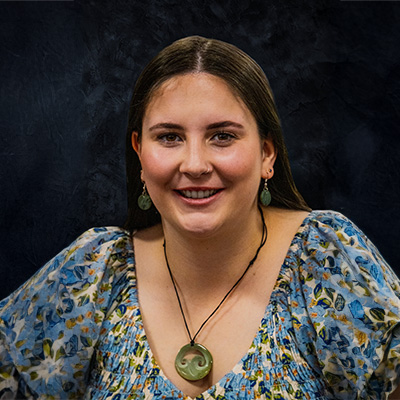
When I first came to Otago, I started in HSFY wanting to head into Physiotherapy. After realising this was no longer the path I wanted to take, I spoke to Otago’s course advisers who introduced me to the BHealSc and the Community Health Care major. I liked the major’s strong focus on helping others and communities. The teaching is on a more personal level. Everyone knows everyone by name and the content is more discussion-based than other papers.
Hayley Sim
Bachelor of Health Sciences (Major: Community Health Care, Minor: Māori Studies)
Related subject areas
Explore all subject areasHealthcare and medicine
Change lives with healthcare – become a medical professional or excel in lab tech, public health, and more
Health and biomedical sciences
Transform the world by learning from top researchers and shaping the future of healthcare, medicine, and the environment
Sport and wellbeing
Study exercise science and nutrition to enhance physical and mental well-being and improve community health outcomes
Spark positive change in community health care
The University of Otago stands out because we offer New Zealand’s widest range of health and biomedical science programmes, which means you’ll be studying alongside students from related fields and have the benefit of interdisciplinary experience and insights.
In the Community Health Care major you’ll benefit from expert staff who bring both research and applied practice into their teaching. The programme emphasises modern challenges in health – from long-term conditions and disability, to services working in the community, and equity-driven care.
Located in Dunedin, you’ll be part of a vibrant student city with a strong history of achievement in advancing health education, and you’ll have access to real community settings shaping health care in New Zealand’s health system.
Programme details
Compare programmes for this subject.
| Level | Papers | Points |
|---|---|---|
| 100-level | EDUC 105 Disability Studies: An Introduction | 18 |
| HUBS 191 Human Body Systems 1 | 18 | |
| HUBS 192 Human Body Systems 2 | 18 | |
| PUBH 192 Foundations of Epidemiology or POPH 192 Population Health | 18 | |
| EDUC 105 may be taken during the second year of study | ||
| 200-level | CMHC 201 Human Health Across the Lifespan | 18 |
| CMHC 211 Enabling Wellness and Ability I | 18 | |
| MAOH 201 Hauora Māori in Practice: Working with Individuals and Whānau | 18 | |
| PACH 201 Pacific Health: New Zealand and the Pacific Region | 18 | |
|
At least two of BITC 201 Bioethics and the Life Sciences GEOG 210 Social Geography PATH 201 Foundations in Human Pathology PUBH 203 Health Policy and Politics: Global and Local PUBH 211 Epidemiology of Global Health Conditions SOCI 205 Social Inequality | 36 | |
| 300-level | CMHC 301 Applied Aspects of Human Health | 18 |
| CMHC 311 Enabling Wellness and Ability II | 18 | |
| MAOH 301 Hauora Māori in Practice: Working with Organisations and Communities | 18 | |
| PACH 301 Pacific Health: Advanced Applied Knowledge | 18 | |
| Plus | 108 further points | 108 |
| The following papers are suggested: ANTH 105, BIOC 192, BITC 101, BSNS 113, CELS 191, CHEM 191, MAOR 102, PACI 101 , PSYC 111, PSYC 112, ANAT 241, BITC 201, MAOR 202, MICR 223 , NEUR 201, NEUR 202, PACI 201, PHAL 241, PHSL 251, PSME 201, PSYC 212, PUBH 202, BITC 301, CRIM 307, INDS 301, PACI 301, PUBH 311, SOCI 307 | ||
| Total | 360 |
A minor subject can be included in many of our undergraduate degrees. To earn a minor, you typically must complete a minimum of 90 points in that subject, with at least 18 points at the 300-level.
Your minor can be a subject more commonly taken for a different degree. For example, a BCom majoring in Marketing can include Japanese as a minor subject. To include this subject as a minor in your application, first find a major subject through our Subject Search or Study Match.
You can check what’s required to receive the minor accreditation in the programme details below.
Available as a minor subject for a Bachelor of Arts (BA), Bachelor of Music (MusB), Bachelor of Performing Arts (BPA), Bachelor of Theology (BTheol), Bachelor of Science (BSc), Bachelor of Commerce (BCom), Bachelor of Entrepreneurship (BEntr), Bachelor of Health Sciences (BHealSc), Bachelor of Arts and Commerce (BACom), Bachelor of Arts and Science (BASc) or Bachelor of Commerce and Science (BComSc) degree
| Level | Papers | Points |
|---|---|---|
| 100-level | EDUC 105 Disability Studies: An Introduction | 18 |
| 200-level | CMHC 201* Human Health Across the Lifespan CMHC 211 Disability and Health I *Prerequisites for CMHC 201 also include HUBS 191, 192 | 18 18 |
| 300-level | CMHC 301 Applied Aspects of Human Health CMHC 311 Disability and Health II | 18 18 |
| Total | 90 |
Papers
View a list of all related papers below.
CMHC papers
| Paper Code | Year | Title | Points | Teaching period |
|---|---|---|---|---|
| CMHC201 | 2026, 2027 | Human Health Across the Lifespan | 18 points | Semester 1 |
| CMHC211 | 2026, 2027 | Enabling Wellness and Ability I | 18 points | Semester 2 |
| CMHC301 | 2026, 2027 | Applied Aspects of Human Health | 18 points | Semester 2 |
| CMHC311 | 2026, 2027 | Enabling Wellness and Ability II | 18 points | Semester 1 |
More information
Have a question or need support? AskOtago can connect you with the right team for personalised help.
This information must be read subject to the statement on our Copyright & Disclaimer page.
Regulations on this page are taken from the 2026 Calendar and supplementary material.
Not sure what to study?
Take our short quiz to uncover study options matched to your background and interests.
Take the quiz