Career opportunities
Our graduates go on to exciting careers in a diverse range of fields including:
- Performance
- Recording industry
- Teaching
- Media
- Music industry
Shape your sound at Otago
Explore the vibrant music programme at Otago, offering opportunities in music production, performance, composition, culture, and theory. Learn from top practitioners and enjoy flexible study options in world-class facilities.
Read transcript
Nathaniel Otley:
Kia ora, my name is Nathaniel, and I studied music at the University of Otago. I’ve had a great time studying at Otago, learning from some of Otago’s leading practitioners in the field of music. I’ve had the opportunity to study performance violin through to honours level, and I’ve done the same with my composition.
The opportunities provided at Otago through this have been through lunchtime concerts, as well as external opportunities performing with organisations such as the Dunedin Symphony Orchestra, Otago Symphonic Band, and Southern Youth Choir. I’ve also had the privilege of taking many papers outside of my major fields, including conducting and singing, as well as music theory and musicology, learning about how the music world around us works.
I’ve really enjoyed my time studying at Otago, and I hope you will too.
Professor Anthony Ritchie:
Tēnā koutou katoa, I’m Anthony Richie, Head of the School of Performing Arts, and I’m here today to talk to you about our music program. Here at Otago, we offer a wide range of types of music that you can study. You can learn anything from violin to guitar, to taiko drums and tango porto. You can learn to create music on your laptop or in the studio, and you can write avant-garde works for symphony orchestra and a whole host of things here.
To help you do this, we have leaders in the field, a team that mixes youth and experience. As well as that, we have top-notch facilities such as this wonderful new multi-million dollar studio and performing arts wing, where you can record ensembles and bands, learn to use a mic, and learn how to produce music.
Down the road, we have Marama Hall, which is our performing arts venue where lunchtime concerts happen every week. You might have a chance to play. At Otago, you can study towards a music degree or a BA in music. We’re sort of half and half: music and other subjects. There’s also the minor in music and other options as well. We designed it to be as flexible as possible to suit your needs.
We have three main types of performance here: one classical music, the other contemporary and popular music, and then also traditional or ethnomusicology. But it’s not all about practical music making. Here at Otago, we like to discuss and talk about music. We like to explain why music matters so much in society.
In fact, we have a first-year paper called Music Matters, and in this, we discuss things such as mental well-being and emotional intelligence. We look at why music is good for communication, good for creativity and critical thinking, and we even discuss why music is good for jobs, which it can be. Some of our graduates have jobs in studios, on the radio, in orchestras, music centres, and elsewhere.
So, I’d encourage you to follow your dream and come to Otago and study music with us.
How you will learn
You’ll hone your skills through lectures, tutorials, seminars, and practical workshops. Our close-knit community of staff and students encourages and supports personal growth and self-expression. Our classes are small, so you’ll get more time with your lecturers and tutors.
Recommended high school subjects for undergraduate study
Entry to some Performance Music papers is by audition.
Choose a study option
Whether you're embarking on your academic journey with our comprehensive undergraduate programmes or aiming to reach new heights through our advanced postgraduate offerings, Otago is here to support your aspirations.
Undergraduate qualifications
For new and current students studying towards a Bachelor's or other first degree. Explore undergraduate qualifications at Otago, designed to build a strong foundation in your chosen field, preparing you for a successful career or further study.
Note: this subject can also be studied as a minor.
Bachelor of Music (MusB)
A three-year degree that may be completed without specialisation or may be endorsed in Composition, Performance, or Music Production
Bachelor of Arts (BA)
A three-year degree offering flexibility to explore a major in Arts along with other subjects
Bachelor of Arts and Commerce (BACom)
Combine two majors, one in Arts and one in Commerce, into a four-year degree and expand your future career prospects
Bachelor of Arts and Science (BASc)
Combine two majors, one in Arts and one in Science, into a four-year degree and expand your future career prospects
Bachelor of Entrepreneurship (BEntr)
A three-year degree that equips you to change the world as you create new products, services and ideas
Ready to apply?
Take the first step towards your future in this subject.
Further study opportunities
Whether you are looking to bridge your undergraduate studies to advanced knowledge or aiming to specialise in a specific field, Otago offers a range of graduate and postgraduate options to suit your aspirations.
Diploma for Graduates (DipGrad)
The Diploma for Graduates (DipGrad), requiring study of at least seven papers (at least four of which are at 300-level o...
Postgraduate Study in Music
Explore postgraduate study in Music at Otago. Gain advanced knowledge, skills, and research opportunities in a supportiv...

Students are involved in the local music scene, from playing in orchestras and singing in operas to performing at local music venues. The people at the School of Performing Arts were really supportive and fantastic.
Nathaniel Otley
Bachelor of Music with Honours
2024 SOUNZ Contemporary Award Te Tohu Auaha winner
Composer in Residence, NZSO National Youth Orchestra

My performance career has included playing roles like Sandy in Grease, Rapunzel in Into the Woods and Sophie in Mamma Mia. I’ve toured in a lot of shows – I was the first female to tour with The Ten Tenors. My work has taken me to stages across New Zealand, Australia and Asia, from theatres to major stadiums where I’ve sung national anthems for international sporting events. I am grateful for my years at Otago – not only did I develop my voice, but I also gained the confidence and versatility to perform and present in many different contexts.
Sophie Morris
Master of Music, Bachelor of Commerce (Marketing), Bachelor of Music with Honours (Musical Performance)
Discover our studios and facilities
Take a video tour of the Performing Arts building, learn about our teaching and and performance spaces, and explore upcoming events and student performances.
Explore Te Korokoro o te Tūī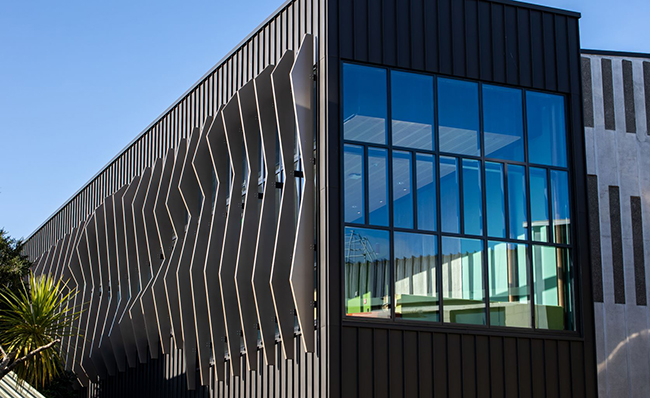
Driven by our passion for music and unique industry knowledge
We have a thriving University music culture: there are weekly lunchtime music and performances, as well as opportunities to perform in local bands, musical productions, orchestras, and community groups.
Learn from inspiring academic staff with diverse backgrounds and unique industry knowledge.
Our facilities include state-of-the-art music studios with specialist music software for creative projects and assessments.
Programme details
Compare programmes for this subject.
| Level | Papers | Points |
|---|---|---|
| 100-level | MUSI 101 Materials of Music 1 | 18 |
|
One of: MUSI 103 Popular Music MUSI 104 World Music MUSI 105 Music Matters in Human Life | 18 | |
| Above 100-level | 126 further MUSI points of which at least 72 must be above 200-level | 126 |
| PERF 205 or PERF 305 may be substituted for 18 MUSI points | ||
| Plus | 198 further points; must include 54 points at 200-level or above | 198 |
| Up to 90 points may be taken from outside Arts | ||
| Total | 360 |
| Level | Papers | Points |
|---|---|---|
| 100-level | MUSI 101 Materials of Music 1 | 18 |
|
One of MUSI 103 Popular Music MUSI 104 World Music MUSI 105 Music Matters in Human Life | 18 | |
| 200-level and above | MUSI 201 Materials of Music 2 or MUSI 310 Materials of Music 3 | 18 |
| 36 further 200- or 300-level MUSI points | 36 | |
| 72 300-level MUSI points | 72 | |
| Plus | 198 further points, including at least 54 above 100-level, comprising: | |
| 108 further MUSI points (for 18 of which MAOR 108, PERF 205 or PERF 305 may be substituted), and | 108 | |
| 90 further points (any subject) | 90 | |
This programme does not have provision for major subjects. A programme may be completed without endorsement, or may be endorsed in one of the following areas of specialisation if it includes the papers specified below.
CompositionMUSI 331 Composition Projects PerformanceMUSI 343 Instrumental or Vocal Performance 3 Music ProductionMUSI 332 Music Production 3 and one of | ||
| Total | 360 |
A minor subject can be included in many of our undergraduate degrees. To earn a minor, you typically must complete a minimum of 90 points in that subject, with at least 18 points at the 300-level.
Your minor can be a subject more commonly taken for a different degree. For example, a BCom majoring in Marketing can include Japanese as a minor subject. To include this subject as a minor in your application, first find a major subject through our Subject Search or Study Match.
You can check what’s required to receive the minor accreditation in the programme details below.
Available as a minor subject for a Bachelor of Arts (BA), Bachelor of Theology (BTheol), Bachelor of Science (BSc), Bachelor of Commerce (BCom), Bachelor of Entrepreneurship (BEntr), Bachelor of Health Science (BHealSc), Bachelor of Arts and Commerce (BACom), Bachelor of Arts and Science (BASc) or Bachelor of Commerce and Science (BComSc) degree
| Level | Papers | Points |
|---|---|---|
| 100-level | Two MUSI papers, one of which may be replaced with MAOR 108 Waiata: Te Timatanga | 36 |
| 200-level | 36 MUSI points at 200-level or above | 36 |
| 300-level | 18 300-level MUSI points | 18 |
| PERF 205 or PERF305 may be substituted for one MUSI paper | ||
| Total | 90 |
Note: This minor subject is not available for students enrolled in the Bachelor of Music (MusB) or Bachelor of Performing Arts (BPA).
Papers
View a list of all related papers below.
MUSI papers
| Paper Code | Year | Title | Points | Teaching period |
|---|---|---|---|---|
| MUSI101 | 2026, 2027 | Materials of Music 1 | 18 points | Semester 2 |
| MUSI103 | 2026, 2027 | Popular Music | 18 points | Semester 2 |
| MUSI104 | 2026, 2027 | World Music | 18 points | Not offered in 2026, Semester 1 |
| MUSI105 | 2026, 2027 | Music Matters in Human Life | 18 points | Semester 1, Not offered in 2027 |
| MUSI131 | 2026, 2027 | Composition 1 | 18 points | Semester 2 |
| MUSI132 | 2026, 2027 | Music Production 1 | 18 points | Semester 1, Semester 2 |
| MUSI135 | 2026, 2027 | Songwriting | 18 points | Semester 1 |
| MUSI140 | 2026, 2027 | Performance Studies 1 | 18 points | Semester 1, Semester 2, Full Year |
| MUSI143 | 2026, 2027 | Instrumental or Vocal Performance 1 | 18 points, 36 points | Full Year |
| MUSI144 | 2026, 2027 | Music Ensemble 1 | 18 points | Semester 2, Semester 1, Full Year |
| MUSI147 | 2027 | Group Lessons 1 | 18 points | Semester 1, Semester 2 |
| MUSI148 | 2027 | Popular Music Group Performance 1 | 36 points | Full Year |
| MUSI191 | 2026, 2027 | Introduction to Music | 18 points | Semester 1 |
| MUSI201 | 2026, 2027 | Materials of Music 2 | 18 points | Semester 1 |
| MUSI207 | 2026, 2027 | Radical Works | 18 points | Not offered in 2026, Semester 1 |
| MUSI232 | 2026, 2027 | Music Production 2 | 18 points | Semester 2 |
| MUSI233 | 2026, 2027 | Electronic Music Production | 18 points | Semester 1 |
| MUSI234 | 2026, 2027 | Contemporary Composition | 18 points | Semester 2 |
| MUSI240 | 2026, 2027 | Performance Studies 2 | 18 points | Semester 1, Semester 2, Full Year |
| MUSI243 | 2026, 2027 | Instrumental or Vocal Performance 2 | 18 points, 36 points | Full Year |
| MUSI244 | 2026, 2027 | Music Ensemble 2 | 18 points | Semester 2, Semester 1, Full Year |
| MUSI247 | 2027 | Group Lessons 2 | 18 points | Semester 1, Semester 2 |
| MUSI248 | 2027 | Popular Music Group Performance 2 | 36 points | Full Year |
| MUSI249 | 2026, 2027 | Contemporary Vocal Pedagogy: How to Teach Contemporary Voice | 18 points | Not offered in 2026, Not offered in 2027 |
| MUSI259 | 2026, 2027 | Special Topic | 18 points | Not offered in 2026, Not offered in 2027 |
| MUSI260 | 2026, 2027 | Special Topic | 18 points | Summer School |
| MUSI266 | 2026, 2027 | Film Music | 18 points | Semester 2, Not offered in 2027 |
| MUSI267 | 2026, 2027 | Music in Aotearoa | 18 points | Semester 1, Not offered in 2027 |
| MUSI268 | 2026, 2027 | Performance in Asia and the Pacific | 18 points | Not offered in 2026, Semester 2 |
| MUSI269 | 2026, 2027 | Popular Music 2 | 18 points | Not offered in 2026, Not offered in 2027 |
| MUSI307 | 2026, 2027 | Radical Works (Advanced) | 18 points | Not offered in 2026, Semester 1 |
| MUSI310 | 2026, 2027 | Materials of Music 3 | 18 points | Semester 1 |
| MUSI331 | 2026, 2027 | Composition Projects | 36 points | Full Year |
| MUSI332 | 2026, 2027 | Music Production 3 | 18 points | Semester 1 |
| MUSI333 | 2026, 2027 | Electronic Music Production (Advanced) | 18 points | Semester 1 |
| MUSI334 | 2026, 2027 | Music Production Projects | 18 points | Semester 2 |
| MUSI340 | 2026, 2027 | Performance Studies 3 | 18 points | Semester 1, Semester 2, Full Year |
| MUSI343 | 2026, 2027 | Instrumental or Vocal Performance 3 | 36 points | Full Year |
| MUSI344 | 2026, 2027 | Music Ensemble 3 | 18 points | Semester 2, Semester 1, Full Year |
| MUSI347 | 2027 | Group Lessons 3 | 18 points | Semester 1, Semester 2 |
| MUSI348 | 2027 | Popular Music Group Performance 3 | 36 points | Full Year |
| MUSI349 | 2026, 2027 | Contemporary Vocal Pedagogy: How to Teach Contemporary Voice | 18 points | Not offered in 2026, Not offered in 2027 |
| MUSI366 | 2026, 2027 | Film Music | 18 points | Semester 2, Not offered in 2027 |
| MUSI367 | 2026, 2027 | Music in Aotearoa (Advanced) | 18 points | Semester 1, Not offered in 2027 |
| MUSI368 | 2026, 2027 | Performance in Asia and the Pacific | 18 points | Not offered in 2026, Semester 2 |
| MUSI369 | 2026, 2027 | Popular Music 3 | 18 points | Not offered in 2026, Not offered in 2027 |
| MUSI371 | 2026, 2027 | Research Methods and Approaches | 18 points | Semester 2 |
| MUSI375 | 2026, 2027 | Music Performance Pedagogy | 18 points | Semester 2, Not offered in 2027 |
| MUSI379 | 2026, 2027 | Performance, Health and Well-being | 18 points | Not offered in 2026, Semester 2 |
| MUSI386 | 2026, 2027 | Community Project | 18 points | Semester 1 |
| MUSI440 | 2026, 2027 | Performance Studies 4 | 30 points | Semester 1, Semester 2, Full Year |
| MUSI443 | 2026, 2027 | Creative Project 1 | 60 points | Full Year, 1st Non standard period (13 July 2026 - 15 February 2027), 1st Non standard period (13 July 2027 - 15 February 2028) |
| MUSI471 | 2026, 2027 | Research Methods and Approaches (Advanced) | 30 points | Semester 2 |
| MUSI475 | 2026, 2027 | Music Performance Pedagogy (Advanced) | 30 points | Semester 2, Not offered in 2027 |
| MUSI479 | 2026, 2027 | Performance, Health and Well-being (Advanced) | 30 points | Not offered in 2026, Semester 2 |
| MUSI486 | 2026, 2027 | Community Project (Advanced) | 30 points | Semester 1 |
| MUSI487 | 2026, 2027 | Creative Practice | 30 points | Semester 2 |
| MUSI490 | 2026, 2027 | Dissertation | 60 points | Full Year, 1st Non standard period (13 July 2026 - 15 February 2027), 1st Non standard period (13 July 2027 - 15 February 2028) |
| MUSI540 | 2027 | Individual Performance Lessons 5B | 30 points | Semester 1, Semester 2, Full Year |
| MUSI543 | 2026, 2027 | Creative Project 2 | 60 points | 1st Non standard period (1 March 2026 - 28 February 2027), 2nd Non standard period (1 July 2026 - 30 June 2027), 1st Non standard period (5 March 2027 - 25 February 2028), 2nd Non standard period (16 July 2027 - 7 June 2028) |
| MUSI590 | 2026, 2027 | Research Dissertation | 60 points | 1st Non standard period (27 February 2026 - 19 February 2027), 2nd Non standard period (17 July 2026 - 9 July 2027), 1st Non standard period (5 March 2027 - 25 February 2028), 2nd Non standard period (16 July 2027 - 7 July 2028) |
More information
Have a question or need support? AskOtago can connect you with the right team for personalised help.
This information must be read subject to the statement on our Copyright & Disclaimer page.
Regulations on this page are taken from the 2026 Calendar and supplementary material.
Not sure what to study?
Take our short quiz to uncover study options matched to your background and interests.
Take the quiz